

Building a Museum-Grade Crystal Collection: Expert Guide
A museum-grade crystal collection is defined by three non-negotiable qualities: material integrity, verified provenance, and rarity. Serious collectors pursue this standard not just for aesthetics but for long-term investment value. Institutions like the Smithsonian National Museum of Natural History set the benchmark for what qualifies as a true specimen-grade piece. Building a museum-grade crystal collection means choosing undamaged, naturally formed minerals from documented localities, then displaying them with the same intention a gallery curator brings to fine art. This guide covers every stage of that process.
What qualifies a crystal as a museum-grade specimen?
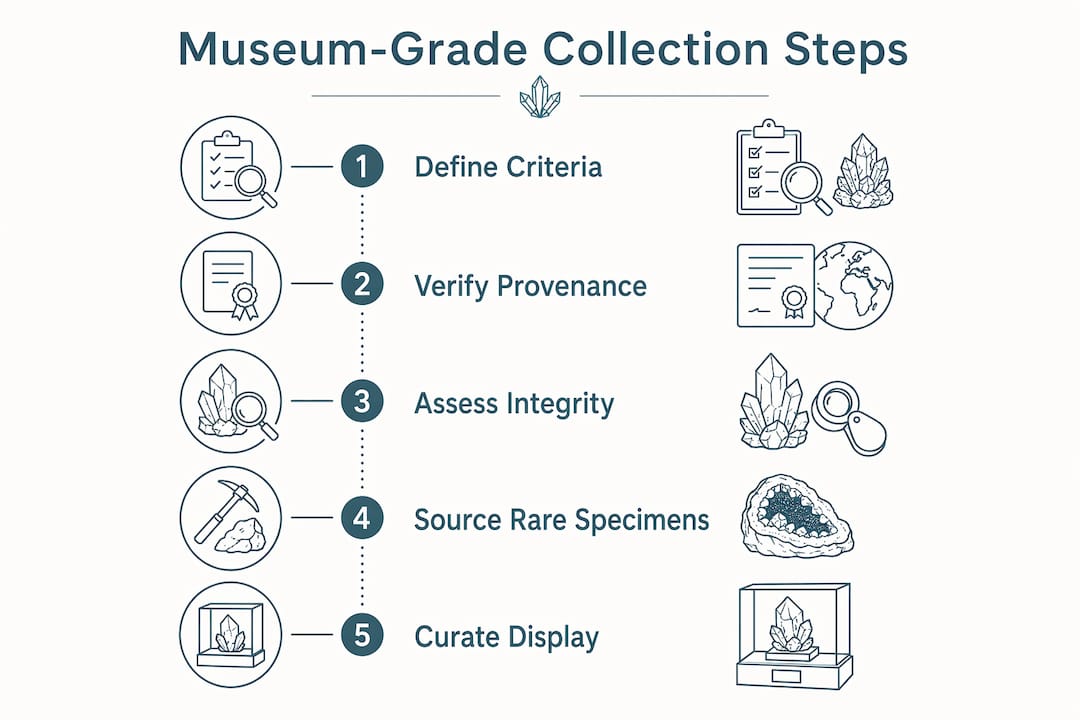
Museum-grade is the recognized industry term for specimens that meet the highest standards of condition, rarity, and documentation. Not every beautiful crystal earns that designation. The difference between a collector-grade piece and a museum-grade specimen comes down to four specific criteria.
- Material integrity. The crystal must be naturally formed, free of repairs, chips, or artificial enhancement. Any fracture fill, repolishing, or color treatment disqualifies a specimen from museum status. Collectors and curators inspect pieces under magnification to confirm this.
- Rarity and locality. Specimens from exhausted or geologically unique localities carry the highest value. The Yaogangxian mine in China is largely exhausted, making surviving fluorite specimens among the most prized in the world. When a source is gone, the surviving pieces become permanent records of a geological moment.
- Provenance documentation. A specimen without a verified source locality is worth a fraction of one with full documentation. Provenance includes the mine name, region, collection date, and chain of ownership. This paper trail protects both authenticity and resale value.
- Aesthetic quality. Color saturation, crystal habit, and matrix presentation all factor into museum-grade status. Prized varieties include fluorite, amethyst, rare geodes, and azurite. A De’an fluorite cluster with UV reactivity and full provenance represents exactly the kind of specimen serious collectors target.
The gap between collector-grade and museum-grade is not always visible to the untrained eye. It shows up in the documentation, the condition report, and the source locality. Buy the story as much as the stone.
How to source and acquire rare crystals for your collection
Sourcing museum-quality crystal specimens requires patience, research, and a clear acquisition strategy. The market for top-tier pieces is small, and the best specimens rarely appear twice.
- Work with reputable specialist dealers. General gem shows carry mostly commercial-grade material. Specialist mineral dealers, auction houses focused on natural history, and curated online platforms with documented provenance are where museum-grade pieces surface. Legacycrystalsandminerals sources and lists specimens with locality data and condition notes, which is the baseline standard serious collectors should require from any seller.
- Prioritize specimens from exhausted localities. Collectors wait years for pieces from specific depleted mines rather than buying common specimens. Acquiring from known exhausted pockets ensures rarity and long-term investment value, since supply cannot increase.
- Understand the capital requirements. High-end collecting requires significant investment. Richard Berger’s collection of over 100 specimens is valued in the millions, illustrating that the buyer pool at that scale is extremely limited. Plan your budget with an exit strategy in mind from the start.
- Verify condition before purchase. Request detailed photographs under multiple lighting conditions, including UV if relevant. Ask for any repair history. A cracked specimen sold as intact destroys both value and trust.
- Resist the impulse to fill gaps quickly. A collection of ten exceptional pieces outperforms a collection of fifty mediocre ones in every measurable way: aesthetically, financially, and in terms of long-term preservation.
Pro Tip: When evaluating a specimen for purchase, ask the seller for the specific pocket or vein designation within the mine, not just the mine name. That level of detail separates serious provenance from marketing language.
How to display crystals like a museum: curation and lighting techniques
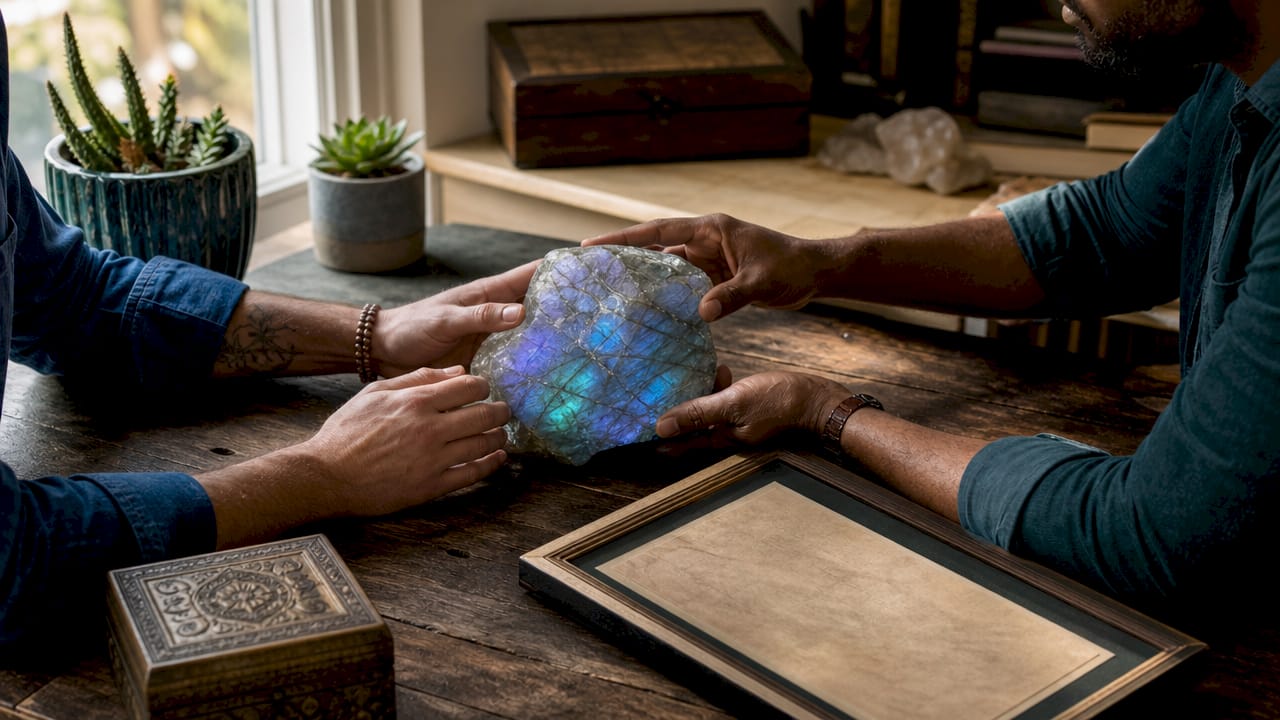
Shifting from category-focused collecting to aesthetic-focused curation is the single most important upgrade a serious collector can make. Museums do not organize specimens by mineral family. They arrange them by visual weight, color contrast, and spatial balance.
Using negative space and visual anchors
Negative space is the deliberate absence of objects around a focal piece. It forces the viewer’s eye to rest on the specimen rather than scan a crowded shelf. Place your largest or most visually dominant piece first. Then build outward using a visual triangle: three points of varying height that create movement without chaos. A Shangbao fluorite with quartz makes an ideal anchor piece because its color and form command attention without competing with smaller specimens nearby.
Lighting and display surfaces
LED lighting prevents UV damage and allows precise directional control. Position lights at a 30–45-degree angle above specimens to create shadow depth and highlight crystal faces. Avoid fluorescent overhead lighting, which flattens color and washes out translucency.
Display surfaces matter as much as lighting. Wood and marble plinths work because they do not compete visually with the specimen. Avoid mirrored bases, which create visual noise. Glass-topped cases with clean interiors keep dust off specimens while maintaining visibility.
- Never place crystals on sunny windowsills. Sunlight causes permanent fading in amethyst, kunzite, and other color-sensitive minerals within weeks of exposure.
- Use mounts that support the specimen’s natural base without adhesive contact on crystal faces.
- Rotate display pieces seasonally to reduce cumulative light exposure on any single specimen.
Pro Tip: Before committing to a permanent arrangement, photograph your display from the doorway of the room. That distance reveals compositional imbalances that are invisible up close.
Best storage and preservation methods for long-term protection
Proper storage protects the physical condition of specimens and preserves their value. The most common damage in private collections comes not from accidents but from poor storage decisions made over years.
Segregate specimens by Mohs hardness. Soft minerals rated 1–6 on the Mohs scale scratch easily when stored alongside harder minerals rated 7 and above. Quartz, for example, rates 7 and will abrade fluorite (rated 4) if the two share a drawer or tray without separation.
| Storage method | Best for | Cost level |
|---|---|---|
| Acid-free tissue in divided trays | Soft minerals, delicate points | Low |
| Egg cartons lined with tissue paper | Small specimens, travel storage | Very low |
| Foam-lined display cases | Medium to large cabinet pieces | Medium |
| Enclosed glass-door cases with silica gel | Full collections, humidity control | Medium to high |
“Egg cartons offer cushioned compartments that prevent scratching and cost almost nothing. Add silica gel packets to manage humidity cheaply and effectively.” — Crystal Almanac
Humidity is a silent threat to certain minerals. Halite dissolves, pyrite oxidizes, and selenite clouds in high-moisture environments. Silica gel packets inside enclosed cases keep relative humidity stable. Replace or recharge them every three to six months depending on your climate.
Routine inspection matters. Check specimens quarterly for any signs of oxidation, efflorescence, or surface change. Catching a problem early prevents irreversible damage.
Common mistakes that undermine a museum-grade collection
Most collection-building mistakes fall into predictable patterns. Recognizing them early saves both money and regret.
- Overcrowding displays. Packing too many specimens into a case destroys the visual impact of every piece in it. Museum curators remove pieces to make the remaining ones stronger. Apply the same discipline.
- Buying without provenance. A specimen with no documented locality is a decorative object, not a museum-grade mineral. The absence of provenance permanently caps its value and authenticity.
- Ignoring condition reports. Chips, repairs, and matrix damage that seem minor at purchase become significant liabilities at resale. Always request a written condition statement.
- Financial overextension. Richard Berger’s collection illustrates the upper end of this risk: a collection valued in the millions has a very limited buyer pool. Scaling a collection beyond what you can realistically insure, store, and eventually sell creates long-term problems.
- Lack of collecting focus. Collectors who buy across every mineral family without a clear theme end up with a general assortment rather than a coherent collection. Define your focus early, whether by mineral family, locality, color palette, or geological era.
The most consistent trait among serious collectors is patience. Waiting for the right piece from the right source, rather than filling space with available stock, defines the difference between a collection and an accumulation.
Key takeaways
Building a museum-grade crystal collection requires material integrity, verified provenance, and deliberate curation treated as a long-term discipline rather than a purchasing habit.
| Point | Details |
|---|---|
| Define museum-grade criteria | Prioritize undamaged specimens with verified locality and full provenance documentation. |
| Source from exhausted localities | Specimens from depleted mines like Yaogangxian carry permanent rarity and stronger investment value. |
| Curate aesthetically, not categorically | Use negative space, LED lighting, and visual triangles to display specimens as high art. |
| Store by Mohs hardness | Separate soft and hard minerals to prevent scratching; use silica gel for humidity control. |
| Avoid overcrowding and impulse buying | A focused collection of ten exceptional pieces outperforms fifty mediocre ones in every metric. |
What I’ve learned from treating crystals as art, not inventory
I’ve watched collectors make the same mistake for years: they buy volume before they buy vision. A shelf packed with specimens from a dozen localities, in every color and form, looks impressive for about a week. Then it looks like a warehouse.
The shift that changes everything is treating each specimen as a permanent art acquisition. That means asking whether a new piece belongs compositionally before asking whether it’s a good deal. A Brazilian amethyst cluster with deep color saturation and clean terminations earns its place in a focused collection. The same mineral in a washed-out, chipped form does not, regardless of price.
Material integrity is the quality I return to most. A repaired specimen is not a museum-grade specimen. Full stop. I’ve seen collectors rationalize minor repairs as acceptable, but the moment you allow one exception, the standard collapses. The Smithsonian doesn’t display repaired specimens as primary examples of a species. Neither should your collection.
The long-term view also changes how you think about exit strategies. Very large collections with millions in value face a genuinely limited buyer pool. The collectors I respect most build with intention from the start: a defined focus, a manageable scale, and a clear sense of what they would do with the collection in twenty years. That clarity produces better acquisitions and better displays.
Finally, the emotional dimension is real and worth honoring. These are objects that formed over millions of years under conditions we can barely simulate. Displaying them with care, in proper light, with documented provenance, is a form of respect for what they are. That’s not sentiment. That’s the foundation of serious collecting.
— Simon
Rare specimens worth adding to your collection
Legacycrystalsandminerals carries a curated selection of specimens that meet the standards outlined here: documented locality, verified condition, and the kind of visual presence that anchors a serious display.
Whether you’re building your first focused collection or adding a statement piece to an established one, the catalog includes fluorite clusters, UV-reactive minerals, and rare geode formations sourced with provenance in mind. A clear quartz cluster from Brazil or a zeolite formation from India represents exactly the kind of investment-grade, display-ready piece that belongs in a museum-quality collection. Each listing includes locality data and condition notes so you can buy with confidence.
FAQ
What makes a crystal specimen museum-grade?
A museum-grade specimen is naturally formed, undamaged, and accompanied by verified provenance documenting its source locality. Material integrity and rarity from exhausted localities are the two defining factors.
How do I find rare crystals with verified provenance?
Work with specialist mineral dealers and curated platforms that provide locality documentation, condition reports, and chain-of-ownership records. General gem shows rarely carry material that meets this standard.
What is the best lighting for displaying crystals?
LED lighting positioned at a 30–45 degree angle above specimens provides the best color rendering and shadow depth without UV damage. Avoid direct sunlight, which causes permanent fading in amethyst, kunzite, and other sensitive minerals within weeks.
How should I store crystals to prevent damage?
Store soft minerals (Mohs 1–6) separately from hard minerals (Mohs 7 and above) to prevent scratching. Use acid-free tissue, cushioned compartments, and silica gel packets inside enclosed cases to control humidity.
Is crystal collecting a good investment?
High-quality specimens from exhausted localities hold and appreciate in value over time because supply is permanently fixed. The investment case is strongest for pieces with full provenance, excellent condition, and rarity tied to a specific geological source.
Recommended
- Crystal Knowledge Base: Mineral Education, Collecting, and Meaning – Legacy Crystals and Minerals
- Natural Amethyst Crystal Cluster Tower Approx. 7 cm x 5 cm - Legacy Crystals and Minerals – Legacy Crystals and Minerals
- Magnetic Iron Rose Hematite Mushketovite with Quartz from Jinlong Hill – Legacy Crystals and Minerals
- Natural Light Pink Amethyst Crystal Cluster tower from Brazil Approx. 6 cm x 5 cm x 5 cm - Legacy Crystals and Minerals – Legacy Crystals and Minerals


