
Crystals for creativity and inspiration: 2026 guide
The top crystals for creativity and inspiration are Carnelian, Citrine, Labradorite, Lapis Lazuli, Orange Calcite, Tigers Eye, Rainbow Moonstone, Apatite, Bloodstone, Celestine, Clear Quartz, Pyrite, Fluorite, Blue Goldstone, Iolite, and Red Jasper. Each stone is linked to a different part of the creative process, from breaking through inaction to deepening artistic vision.
Quick reference by creative need:
- Carnelian — sacral chakra; activation, momentum, overcoming procrastination
- Citrine — solar plexus chakra; confidence, idea sharing, brainstorming
- Labradorite — third eye chakra; imagination, intuition, unconscious creative access
- Lapis Lazuli — throat and third eye chakras; creative wisdom, artistic depth
- Orange Calcite — sacral chakra; playful energy, joy in making
- Tigers Eye — solar plexus chakra; willpower, follow-through, decision-making
- Rainbow Moonstone — crown chakra; new beginnings, emotional openness
- Apatite — throat chakra; goal clarity, motivation, creative direction
- Bloodstone — root chakra; endurance, grounded creative output
- Celestine — crown chakra; calm focus, access to higher creative thought
- Clear Quartz — all chakras; intention amplification, universal focus tool
- Pyrite — solar plexus chakra; initiative, confidence, starting momentum
- Fluorite — heart and third eye chakras; mental clarity, organising ideas
- Blue Goldstone — throat chakra; ambition, self-expression, artistic confidence
- Iolite — third eye chakra; creative vision, inner guidance
- Red Jasper — root chakra; sustained energy, creative endurance
Detailed profiles follow for each stone.
Crystals for creativity and inspiration: full stone profiles
1. Carnelian
Carnelian is the most universally recommended crystal for creativity, and its reputation stretches back thousands of years. This warm orange-red stone is tied to the sacral chakra, the energy centre associated with creative drive, motivation, and bold action.
- Colour: orange to red-orange
- Chakra: sacral
- Best for: writers, painters, musicians, anyone stuck in inaction or self-doubt
- Carry method: pocket, non-dominant hand during creative sessions, desk placement
Carnelian is the stone to reach for when ideas exist but execution stalls. It addresses the gap between knowing what to make and actually making it.
2. Citrine
Citrine is a yellow-to-golden quartz associated with the solar plexus chakra, the centre of personal power and confidence. In creative contexts, it targets a specific block: not the inability to create, but the fear of sharing what has been created.
- Colour: pale yellow to deep amber
- Chakra: solar plexus
- Best for: brainstorming, idea sharing, sustained creative motivation
- Carry method: desk placement, worn as jewellery, held during planning sessions
Citrine also supports long-term creative projects that require consistent energy rather than short bursts of inspiration.
3. Labradorite
Labradorite is a feldspar mineral known for its iridescent flash of blue, green, gold, and violet. It is linked to imagination and the unconscious mind, making it the stone most associated with the kind of creativity that comes from dreams and unexpected associations.
- Colour: grey-green base with iridescent flash (labradorescence)
- Chakra: third eye
- Best for: fiction writers, abstract artists, anyone experiencing creative depletion
- Carry method: held during meditation, placed on a desk or creative workspace
When the well feels dry and effort produces nothing, labradorite is the traditional recommendation for reconnecting with the unconscious creative source.
4. Lapis Lazuli
Lapis Lazuli is a deep blue stone flecked with gold pyrite, associated with both the throat and third eye chakras. It carries one of the longest creative histories of any mineral: the pigment ultramarine, used by Michelangelo and Vermeer for their most significant works, was ground from lapis lazuli.
- Colour: deep blue with gold pyrite flecks
- Chakra: throat and third eye
- Best for: mature creative vision, depth, artistic resonance, finding authentic voice
- Carry method: worn as a pendant, placed near a writing or painting space
Lapis lazuli addresses not just the impulse to create but the capacity to understand the depth and meaning of what is being made.
5. Orange Calcite
Orange Calcite is a bright, translucent carbonate mineral associated with the sacral chakra. Where Carnelian is about bold action, Orange Calcite is about playful, spontaneous creative energy and the joy of making without attachment to outcome.
- Colour: translucent orange
- Chakra: sacral
- Best for: creative burnout, loss of joy in making, blocks caused by over-seriousness
- Carry method: held during free creative play, placed in a studio or creative space
Orange Calcite is the first choice when creative work has started to feel like a chore.
6. Tigers Eye
Tigers Eye is a fibrous quartz with a distinctive golden-brown chatoyance. Roman soldiers reportedly carried it into battle for courage. In creative practice, it is recommended for projects requiring persistence rather than bursts of inspiration.
- Colour: golden-brown with silky chatoyant sheen
- Chakra: solar plexus
- Best for: long projects, decision-making, following through on creative commitments
- Carry method: pocket stone, bracelet, desk placement near a planner
Tigers Eye is the stone for finishing, not starting. It supports the sustained willpower that long creative projects demand.
7. Rainbow Moonstone
Rainbow Moonstone is a feldspar mineral with a blue-white adularescence, traditionally linked to new beginnings, emotional openness, and cyclical creative renewal.
- Colour: white to translucent with blue flash
- Chakra: crown
- Best for: starting new creative projects, emotional openness, accessing intuitive creativity
- Carry method: worn as jewellery, placed on a meditation cushion
Rainbow Moonstone is particularly useful at the start of a new creative cycle or when transitioning between projects.
8. Apatite
Blue Apatite is a calcium phosphate mineral associated with the throat chakra. Crystal traditions link it to goal clarity and the ability to define creative direction plainly.
- Colour: blue-green to teal
- Chakra: throat
- Best for: goal articulation, creative planning, motivation when direction is unclear
- Carry method: desk placement, held during journalling or planning
Apatite is the stone for the moment when creative energy exists but lacks a clear target.
9. Bloodstone
Bloodstone is a dark green chalcedony with red iron oxide spots. It is associated with the root chakra and traditionally linked to endurance, vitality, and grounded output.
- Colour: dark green with red spots
- Chakra: root
- Best for: sustained creative work, physical endurance during long sessions, grounding scattered energy
- Carry method: pocket stone, held during extended creative sessions
Bloodstone suits creatives who need to maintain output over long periods rather than generate a single burst of inspiration.
10. Celestine
Celestine (also called Celestite) is a pale blue strontium sulphate mineral associated with the crown chakra. It is linked to calm mental clarity and access to higher creative thought.
- Colour: pale blue, sometimes white or grey
- Chakra: crown
- Best for: quieting mental noise, accessing calm creative focus, meditation before creative work
- Carry method: placed near a meditation space or creative desk, not ideal for pocket carry due to its softness
Celestine is fragile (hardness 3–3.5), so it is best kept stationary rather than carried.
11. Clear Quartz
Clear Quartz is silicon dioxide at its purest, and in virtually every crystal tradition worldwide it is described as an amplifier. It does not carry a specific energy of its own but intensifies whatever intention is brought to it.
- Colour: transparent to white
- Chakra: all chakras
- Best for: intention anchoring, universal focus tool, amplifying the effect of other stones
- Carry method: desk placement, held during intention setting, worn as jewellery
The amplifier tradition is metaphor, but the underlying practice of tying a goal to a physical object is a technique behavioural psychologists call “implementation intention,” and research supports its effectiveness.
12. Pyrite
Pyrite is an iron sulphide mineral that forms naturally into perfect cubes, a geometric precision that makes it one of the most visually striking stones on any desk. Crystal traditions link it to confidence, initiative, and the spark for starting something that has been avoided.
- Colour: metallic gold
- Chakra: solar plexus
- Best for: overcoming creative inertia, confidence before sharing work, motivation to begin
- Carry method: desk placement (keep dry; moisture causes tarnish), held briefly before starting a session
Pro Tip: A pyrite cube is also a conversation piece. Its natural geometry draws attention and curiosity from anyone who sees it, which makes it an effective environmental anchor in a shared creative workspace.
13. Fluorite
Fluorite is a calcium fluoride mineral known in crystal traditions as “The Genius Stone.” Practitioners across Chinese, European, and North American traditions consistently link it to structured thinking, absorbing new information, and organising complex ideas.
- Colour: purple, green, blue, yellow, or multicoloured
- Chakra: heart and third eye
- Best for: mental organisation, decision-making, studying, planning creative projects
- Carry method: desk placement, study space, small pocket piece (hardness 4, handle with some care)
Fluorite is the stone for the creative mind that generates too many ideas and needs help sorting them into a workable order.
14. Blue Goldstone
Blue Goldstone is a man-made glass infused with copper particles that create a deep blue sparkle. Despite its synthetic origin, it is widely used in crystal practice and associated with the throat chakra, ambition, and self-expression.
- Colour: deep blue with copper sparkle
- Chakra: throat
- Best for: artistic confidence, self-expression, communicating creative ideas
- Carry method: worn as jewellery, pocket stone, desk placement
Blue Goldstone suits creatives who struggle to articulate or present their work to others.
15. Iolite
Iolite is a magnesium iron aluminium silicate with a distinctive blue-violet colour and strong pleochroism (it shows different colours from different angles). It is associated with the third eye chakra and linked to creative vision and inner guidance.
- Colour: blue-violet, shifting with angle
- Chakra: third eye
- Best for: accessing creative vision, inner guidance, overcoming creative confusion
- Carry method: held during meditation, worn as jewellery
Iolite was historically used by Viking navigators to locate the sun on overcast days. In creative practice, it carries the same association: finding direction when the path is unclear.
16. Red Jasper
Red Jasper is an opaque red chalcedony associated with the root chakra. It is linked to sustained physical and creative energy, endurance, and the grounded commitment needed to complete long projects.
- Colour: brick red to deep red
- Chakra: root
- Best for: creative endurance, grounding, maintaining energy through long creative sessions
- Carry method: pocket stone, held during work, desk placement
Red Jasper is the practical workhorse of the creativity crystal list. It does not spark inspiration so much as keep the engine running.
How to use these stones to boost creative energy
The most effective approach is simple: pick one stone, build a short ritual around it, and repeat it consistently. Psychologist Peter Gollwitzer’s research on implementation intentions shows that tying a goal to a specific physical cue significantly increases follow-through compared to vague intentions. A crystal on your desk, consciously associated with a creative session, functions as exactly this kind of cue.
Step-by-step ritual for creative sessions
- Choose one stone that appeals to you visually and feels good in your hand. Weight, texture, and colour matter more than metaphysical reputation.
- Before starting creative work, hold the stone briefly in your non-dominant hand.
- State a specific intention out loud or silently: “Write the opening paragraph” works better than “be creative today.”
- Place the stone where you can see it during the session.
- When attention wanders, pick up the stone instead of reaching for your phone. Notice its texture, temperature, and weight. This is a grounding technique used in Cognitive Behavioural Therapy to redirect attention from anxious thought loops back to sensory processing.
- At the end of the session, set the stone down deliberately. This closes the ritual and reinforces the association for next time.
Holding a crystal in the non-dominant hand during focused work engages novel sensory input that helps prevent mind wandering, a practical reason why this placement is consistently recommended across crystal traditions.
Placement options
- Desk: position Carnelian or Citrine in your line of sight. Left side suits receptive, idea-gathering work; right side suits active output.
- Hand: non-dominant hand during meditation or the opening minutes of a creative session.
- Meditation cushion: Labradorite or Celestine placed nearby during a pre-work meditation.
- Studio or workspace: larger specimens like Fluorite clusters or Lapis Lazuli points work well as environmental anchors.
Pairing with proven productivity methods
Crystals work best as part of a structured routine, not as standalone objects. Pair a crystal ritual with a Pomodoro timer (25 minutes of focused work, 5-minute break): pick up the stone at the start of each cycle, set it down when the timer rings. Over time, the brain associates the weight of the stone with the state of focused creative work. That is conditioning, and it is one of the most reliable findings in behavioural psychology.
For a broader creative environment, creating a dedicated space with intentionally placed stones reinforces the mental shift from everyday mode to creative mode each time you enter it.
Cleansing and charging
Crystals used regularly as tactile anchors benefit from periodic cleansing to reset the ritual association:
- Moonlight: place stones on a windowsill overnight during a full moon. Safe for all stones.
- Running water: rinse briefly under cool water. Avoid for soft stones (Celestine, Fluorite) and porous minerals.
- Sound: a singing bowl or tuning fork near the stone works for any crystal regardless of hardness.
- Sunlight: brief exposure charges many stones, but avoid prolonged sun for Amethyst and Labradorite, which can fade.
- Selenite plate: placing stones on a Selenite slab overnight is a low-effort, safe option for all stone types.
Cleanse a stone when it feels energetically “flat” or when starting a new creative project and wanting a fresh ritual association.
For those interested in wearing crystals as jewellery, bracelets and pendants keep the tactile anchor present throughout the day without requiring a dedicated ritual moment.
What science and psychology say about crystals and creative focus
Scientific studies find no inherent creative powers in crystals. The improvements people report are due to behavioural effects: ritual, intention setting, and placebo. That is not a dismissal. It is an explanation of how crystals actually work, and it is a useful one.
Judy Hall’s point is practical, not mystical. Creativity often stalls because the brain is locked in habitual thought patterns. A physical object with a distinct texture, weight, and visual quality interrupts that loop. The crystal does not generate creative energy. It creates a pause, and the pause is where the shift happens.
Three behavioural mechanisms explain most of what people experience when using crystals for creative work:
Ritual reinforcement. A consistent pre-work ritual, even a ten-second one, creates a transition boundary between “not working” and “working.” Without a transition, the brain drifts. With one, it shifts modes. The crystal is the prop; the ritual is the active ingredient.
Tactile grounding. Holding a smooth, cool, weighted object and focusing on its physical properties is a grounding technique used in Cognitive Behavioural Therapy. It redirects neural activity from anxious thought loops back to sensory processing and executive function. A polished stone is an effective grounding object for exactly this reason.
Implementation intention. Tying a specific goal to a physical cue (“when I pick up this stone, I will begin writing”) dramatically increases follow-through compared to vague intentions. The crystal becomes a conditioned cue, and the conditioning strengthens with every consistent repetition.
Crystal use is a complementary practice, not a clinical treatment. Persistent focus or creative difficulties that affect daily functioning warrant professional evaluation. Crystals support habit formation and ritual; they do not replace medical or psychological care.
A Sunday sanctuary routine that combines sensory grounding objects with intentional rest can reinforce the same behavioural mechanisms that make crystal rituals effective during the week.
Ready to build your creative crystal practice?
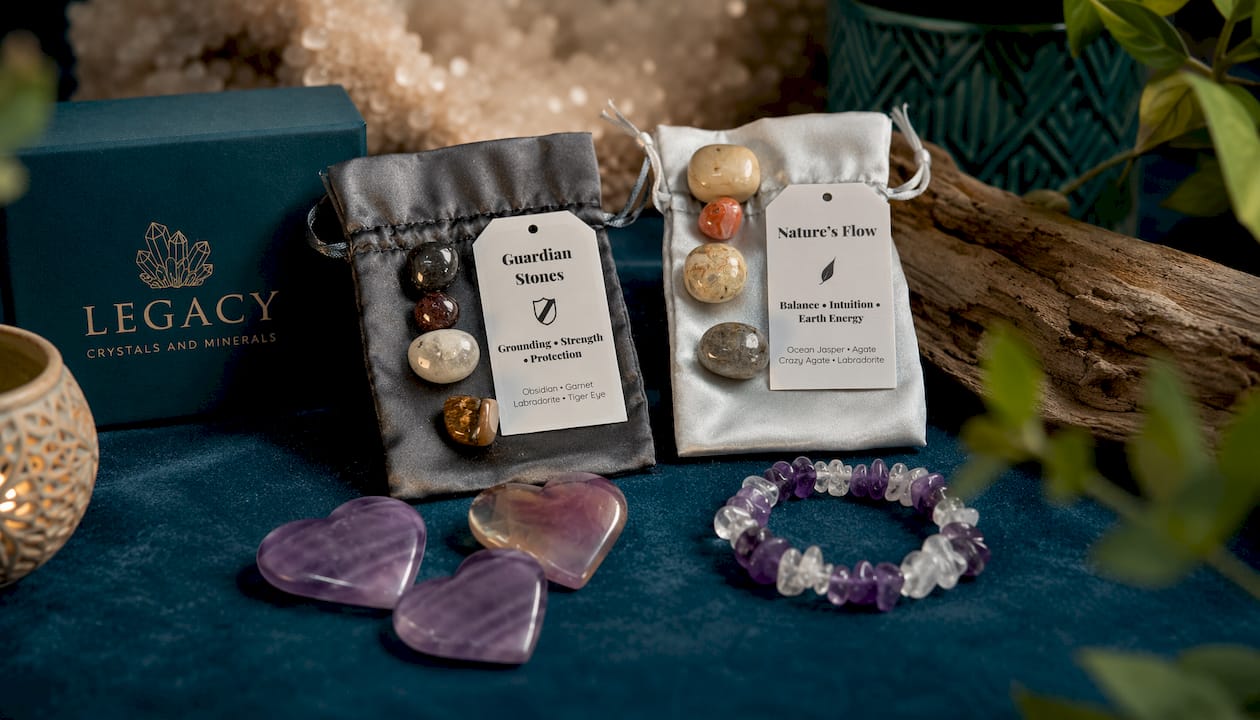
Legacy Crystals and Minerals offers museum-quality specimens selected for authenticity, geological provenance, and tactile appeal. For readers starting a creative crystal practice, the healing crystal intention sets provide a curated starting point with stones matched to specific intentions including creativity and focus. The small Fluorite heart is a practical pocket piece for mental clarity during creative sessions. For an all-day wearable option, the Amethyst and Clear Quartz bracelet keeps both a calming and an amplifying stone in contact throughout the day.
Key takeaways
The most effective crystals for creativity work through behavioural mechanisms: ritual, tactile grounding, and conditioned intention, not inherent mineral properties.
| Point | Details |
|---|---|
| Top stones by creative need | Carnelian for action, Citrine for confidence, Labradorite for imagination, Lapis Lazuli for depth. |
| One stone, one ritual | Choose a single crystal and use it consistently; conditioned associations strengthen with repetition. |
| Behavioural science backs ritual | Implementation intention research shows physical cues tied to specific goals increase follow-through. |
| Science is clear on mechanism | No clinical evidence supports inherent crystal powers; benefits come from ritual, placebo, and grounding. |
| Cleansing maintains the ritual | Reset stones with moonlight, sound, or a Selenite plate when starting a new creative project. |
FAQ
Which crystal is best for creativity?
Carnelian is the most widely recommended crystal for creativity, particularly for overcoming inaction and building momentum. For creative depth and artistic vision, Lapis Lazuli is the traditional choice.
Which gemstone is best for inspiration?
Labradorite is most specifically associated with inspiration. It is linked to the unconscious mind, dream logic, and the unexpected creative leap that does not respond to effort but to openness.
What is the stone of creativity?
Carnelian holds that title in most crystal traditions, tied to the sacral chakra and associated with bold creative action, motivation, and breaking through procrastination.
What chakra focuses on creativity?
The sacral chakra, located below the navel, governs creativity, pleasure, and creative flow in crystal healing traditions. Carnelian and Orange Calcite are the primary stones associated with activating it.
Recommended
- Crystals for chakra alignment: your 2026 guide – Legacy Crystals and Minerals
- How crystal altars work: a practical guide for 2026 – Legacy Crystals and Minerals
- Benefits of wearing crystal jewelry: a wellness guide – Legacy Crystals and Minerals
- What is crystal attunement: a guide for beginners – Legacy Crystals and Minerals


