

How to incorporate crystals into Reiki practice
Crystal Reiki is defined as the combined use of natural crystal vibrations and Reiki energy to amplify healing, support chakra alignment, and encourage emotional release. When you incorporate crystals into Reiki practice, you add a second layer of vibrational frequency to the session. Clients commonly report warmth, tingling, and deep emotional release during 30–60 minute sessions. Clear Quartz, Rose Quartz, and Amethyst are the three foundational stones used by practitioners worldwide, each serving a distinct energetic function.
How to incorporate crystals into Reiki practice: essential preparation
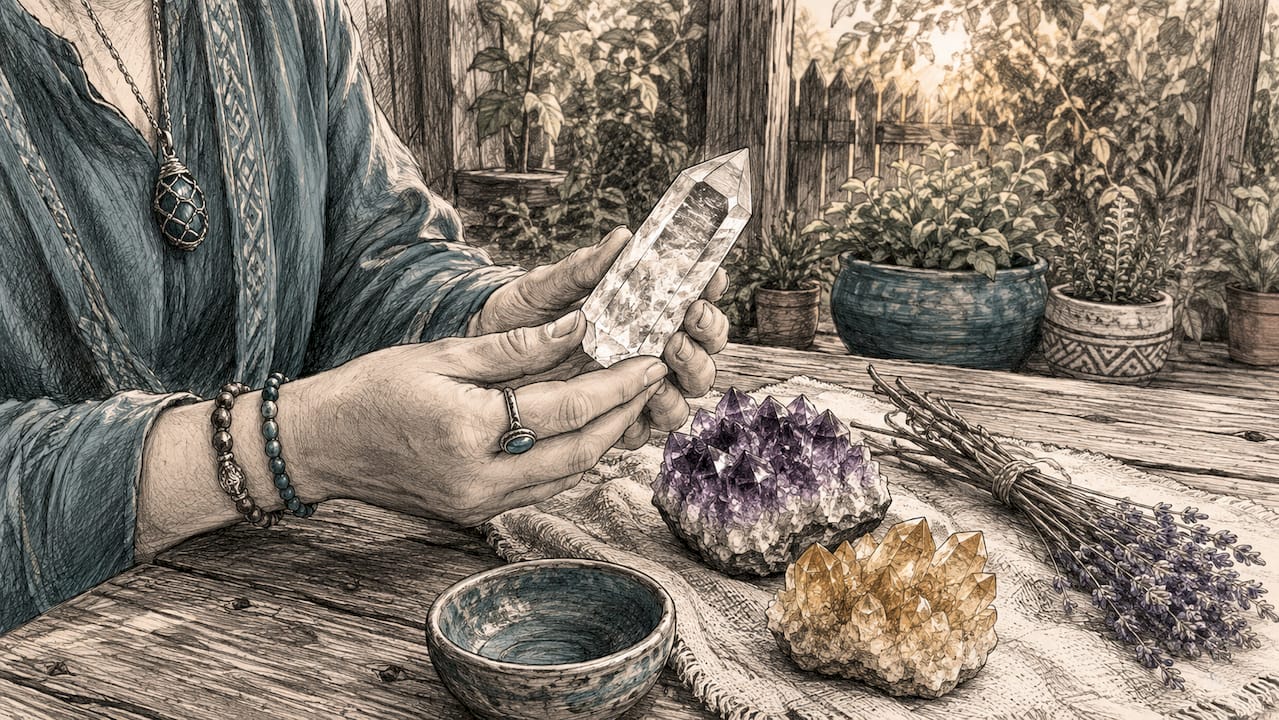
Preparation is the step most practitioners skip, and it is also the step that determines session quality. Natural, untreated stones resonate best with Reiki’s high-vibrational energy. Treated or synthetic stones carry altered frequencies that can interfere with the practitioner’s intention.
The “Big 3” crystals and their functions
Clear Quartz is the default amplifier. Nearly all practitioners use it to strengthen healing intentions, and it can be programmed to substitute for any stone you do not have on hand. Rose Quartz targets the heart chakra, supporting emotional healing and compassion work. Amethyst connects to the crown and third eye chakras, deepening spiritual awareness during sessions.
Beyond the basics, specialised stones add precision. Pyrite softens tense or guarded bodies, making it useful at the start of a session when a client is physically rigid. Tibetan Black Quartz clears energetic blockages that resist standard Reiki flow. Rutilated Quartz directs energy precisely to targeted areas, functioning like a focused beam rather than a broad field.
| Crystal | Chakra | Primary function |
|---|---|---|
| Clear Quartz | All | Amplification and intention programming |
| Rose Quartz | Heart (4th) | Emotional healing and compassion |
| Amethyst | Crown and third eye (6th–7th) | Spiritual connection and clarity |
| Black Tourmaline | Root (1st) | Grounding and practitioner protection |
| Sodalite | Throat (5th) | Communication and truth |
| Lepidolite | Third eye (6th) | Calm and transition support |
| Pyrite | Solar plexus (3rd) | Tension relief and energy activation |
The 4-step preparation protocol
Every crystal used in a session requires the same four steps: cleanse, charge, activate, and set intention. Cleansing removes residual energy from previous sessions or handling. Accepted methods include smoke cleansing, Himalayan salt beds, sound bowls, moonlight, and the Reiki power symbol Cho Ku Rei applied directly to the stone. Charging restores the crystal’s natural frequency, most commonly through sunlight or moonlight exposure. Activation uses the Cho Ku Rei symbol to align the stone with Reiki energy. The final step is setting a clear, specific intention for the session.
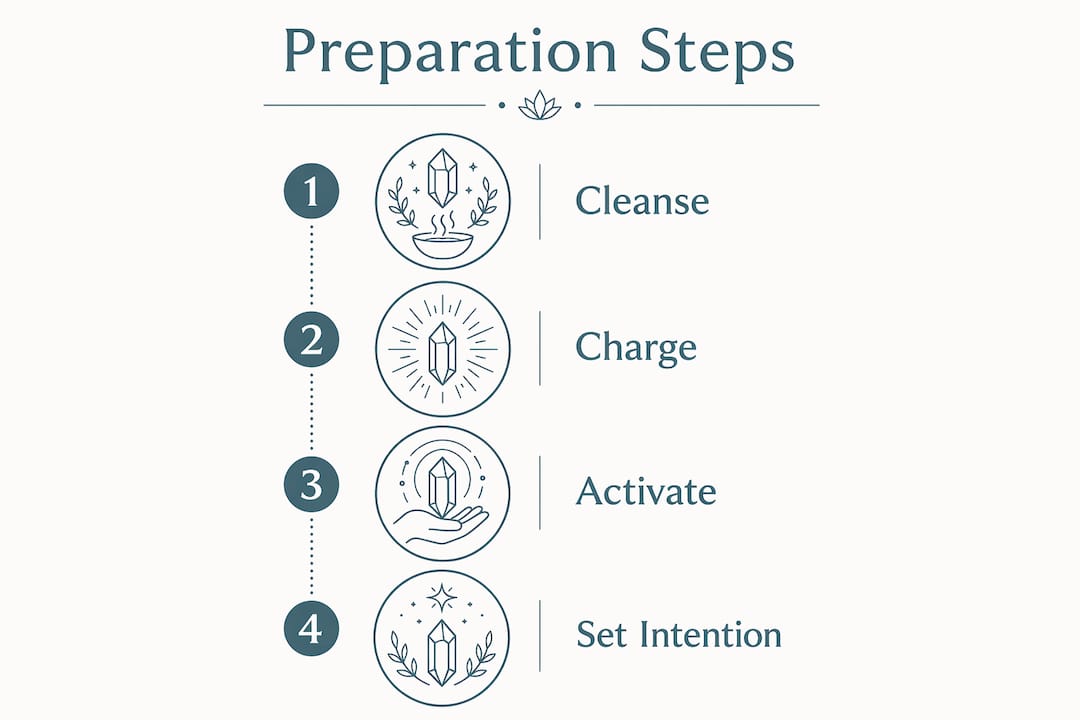
Pro Tip: Cleanse every crystal after each client session, not just weekly. Residual emotional energy accumulates quickly, and a stone that feels “heavy” or dull is signalling it needs attention.
What are the best methods for using crystals in Reiki sessions?
Placement is the core technique in Reiki and crystal therapy. Aligning stones with the seven chakra points creates a structured energetic field that supports balanced energy flow from root to crown. Each stone placed on or near a chakra point acts as a resonator, creating stable frequencies that help the body access its own healing intelligence.
Step-by-step integration process
- Set the space. Place a grounding stone such as Black Tourmaline near the client’s feet before they lie down. This protects both the client and the practitioner from energetic residue accumulating during the session.
- Lay the chakra grid. Position one stone per chakra point, moving from root to crown. Use your prepared and activated stones. Clear Quartz towers work well at the crown.
- Activate with Cho Ku Rei. Draw or visualise the Cho Ku Rei symbol over each stone to connect it to the Reiki channel. Water content within quartz enhances its physical energy conduction when programmed this way.
- Begin the Reiki session. Move through your standard hand positions. The crystals hold the energetic field while you direct Reiki through your hands.
- Use directional tools where needed. A Rutilated Quartz point or a Reiki-engraved pendulum can screen specific chakras and provide physical feedback on blockage locations.
- Close and ground. Remove stones from crown to root at session end. Reapply Cho Ku Rei to seal the client’s energy field. Thank and cleanse each stone immediately after.
Pro Tip: If a client reports feeling “too open” or ungrounded after a session, add a second piece of Black Tourmaline or a Red Jasper near the feet during future sessions. Grounding stones placed near the feet protect practitioners from absorbing energetic residue as well.
Session length typically runs 30–60 minutes. Clients most often describe sensations of warmth at stone placement points, tingling along the spine, or sudden emotional release. These responses confirm the crystals are functioning as resonators, not as direct healers.
Common challenges when combining crystals with Reiki
The most widespread misconception is that expensive or rare crystals produce better results. Crystals amplify practitioner energy; they do not replace it. A modest, well-prepared Clear Quartz point outperforms an expensive, poorly cleansed specimen every time.
Signs a crystal needs attention
- The stone feels unusually warm, heavy, or dull between sessions.
- Clients report feeling unsettled or scattered rather than calm.
- The practitioner notices their own energy dropping faster than usual during sessions.
- A stone that previously felt active now seems inert or unresponsive.
Common mistakes and corrections
- Skipping cleansing between clients. Correct this by cleansing immediately after each session, not at the end of the day.
- Using too many stones at once. Start with three to five stones maximum. A crowded grid creates competing frequencies rather than a coherent field.
- Relying on crystals to compensate for weak intention. Practitioner intention is the primary healing force. Crystals amplify what is already present.
- Ignoring practitioner grounding. Place Black Tourmaline at your own feet as well as the client’s. Energetic fatigue is real and cumulative.
- Choosing crystals by appearance alone. Hold each stone before a session. If it feels neutral or off, set it aside regardless of how visually appealing it is.
Adjusting crystal selection based on the client’s energetic state on any given day is standard practice, not a sign of inconsistency. A client presenting with grief needs Rose Quartz at the heart centre. The same client presenting with anxiety the following week may benefit more from Amethyst at the third eye.
How do you choose crystal sets for Reiki practitioners?
A standard 7-chakra crystal set covers the foundational stones: Red Jasper or Garnet for the root, Carnelian for the sacral, Citrine or Pyrite for the solar plexus, Rose Quartz for the heart, Sodalite for the throat, Amethyst or Lepidolite for the third eye, and Clear Quartz for the crown. This set handles the majority of client needs and is the logical starting point for any practitioner building a working collection.
Reiki Master Danielle Stimpson advises focusing on selected “crystal allies” rather than amassing large collections. The reasoning is practical: a practitioner who knows five stones deeply will use them more effectively than one who owns fifty stones with surface-level familiarity.
Starter sets vs. advanced practitioner collections
| Feature | Starter set | Advanced collection |
|---|---|---|
| Stone count | 7 (one per chakra) | 15 or more |
| Stone types | Clear Quartz, Rose Quartz, Amethyst, Black Tourmaline, Citrine, Carnelian, Red Jasper | Adds Tibetan Black Quartz, Rutilated Quartz, Pyrite, Lepidolite, Selenite, specialty specimens |
| Best for | New practitioners, general sessions | Specialised work, complex energetic presentations |
| Sourcing priority | Natural, untreated, intuitively resonant | Museum-grade, provenance-verified, rare specimens |
| Flexibility | Fixed chakra grid | Modular, session-specific selection |
When sourcing crystals, prioritise natural origin and untreated status above all other factors. Provenance matters. A curated selection for chakra alignment from a verified supplier removes the guesswork around authenticity. Intuitive resonance is the final filter: hold the stone, and trust your response.
Key takeaways
Incorporating crystals into Reiki practice requires prepared, natural stones, intentional placement across the seven chakras, and consistent cleansing to maintain energetic integrity.
| Point | Details |
|---|---|
| Preparation is non-negotiable | Cleanse, charge, activate with Cho Ku Rei, and set intention before every session. |
| Start with three core stones | Clear Quartz, Rose Quartz, and Amethyst cover amplification, emotional healing, and spiritual connection. |
| Practitioner intention leads | Crystals amplify energy; they do not replace trained Reiki intention and skill. |
| Grounding protects both parties | Black Tourmaline near the feet shields practitioners and clients from energetic residue. |
| Quality over quantity | A small set of well-sourced, natural stones outperforms a large collection of treated specimens. |
What I have learned after years of working with crystal Reiki
The practitioners I respect most carry fewer stones than you would expect. One Reiki Master I know works almost every session with four stones: Clear Quartz, Rose Quartz, Amethyst, and Black Tourmaline. Her client results are consistently strong. The lesson is not that other stones lack value. The lesson is that depth of relationship with a stone matters more than breadth of collection.
What I have found is that the moment practitioners start treating crystals as the primary healing agent, sessions lose coherence. The crystal is a resonator. It holds and amplifies the frequency you bring. If your intention is scattered or your own energy is depleted, no stone corrects that. Clear Quartz placed with a clear mind and a focused intention will outperform a rare specimen placed with distraction.
Client responses also teach you more than any guide can. When a client’s breathing deepens the moment you place Amethyst at the crown, that is real feedback. When someone reports feeling “stuck” despite a full chakra grid, that is a signal to reassess your stone preparation, not to add more crystals.
My honest recommendation: build your collection slowly. Start with the Big 3 plus Black Tourmaline. Work with those stones across twenty sessions before adding anything new. You will understand their behaviour, their limits, and their strengths in a way that no amount of reading replicates. Intuitive attunement is not mystical. It is pattern recognition built through repetition.
— Simon
Quality crystals for your Reiki sessions at Legacy Crystals and Minerals
Reiki practitioners need stones they can trust: natural origin, clear provenance, and consistent energetic quality. Legacy Crystals and Minerals carries a curated range of specimens suited to active healing work, from Clear Quartz clusters from Brazil that serve as the primary amplifier in any chakra grid, to Pyrite specimens that support tension release and solar plexus activation.
Each specimen is sourced for natural quality and described with precise provenance details, so you know exactly what you are placing on a client. The collection also includes specialty cluster formations well suited to ambient energy work in a healing space. Browse the full range at Legacy Crystals and Minerals to find stones that match your practice style and client needs.
FAQ
What crystals are best for Reiki beginners?
Clear Quartz, Rose Quartz, and Amethyst are the three foundational stones for Reiki beginners. Clear Quartz amplifies all intentions, Rose Quartz supports heart healing, and Amethyst deepens spiritual connection.
How do you cleanse crystals between Reiki sessions?
Cleanse crystals after every session using smoke, sound, moonlight, a Himalayan salt bed, or the Cho Ku Rei Reiki symbol applied directly to the stone. Cleansing between clients prevents residual energy transfer.
Can you use crystals in Reiki without Reiki training?
Crystals amplify practitioner energy and do not replace trained Reiki skill. Using crystals without Reiki training produces a different modality, not Crystal Reiki, and the amplification effect depends on the practitioner’s developed intention.
How many crystals should you use in one Reiki session?
Three to seven stones is the standard range for a single session. More than seven stones can create competing frequencies rather than a coherent energetic field.
Do crystals need to be expensive to work in Reiki?
Natural, untreated stones resonate best with Reiki energy regardless of price. A well-prepared, modest Clear Quartz point is more effective than an expensive treated specimen that has not been properly cleansed and activated.
Recommended
- Crystals for chakra alignment: your 2026 guide – Legacy Crystals and Minerals
- What Are Elestial Crystals: Properties and Healing Uses – Legacy Crystals and Minerals
- Mixed Crystal Chip Bracelet — Chakra Spectrum - Legacy Crystals and Minerals – Legacy Crystals and Minerals
- Top 3 Unique Crystal Alternatives for earthinspiredgifts.com.au 2026 – Legacy Crystals and Minerals


