
Malachite toxicity: what collectors need to know
Malachite can be hazardous, primarily through dust inhalation during cutting or grinding, and through ingestion of copper ions leached into water. Casual handling of polished, sealed pieces carries low risk. The key rules: never make crystal elixirs with malachite, avoid soaking it in water, do not dry-cut or dry-sand it, and wash hands after handling raw or dusty specimens. For urgent concerns, Health Canada, the Canadian Centre for Occupational Health and Safety (CCOHS), and provincial poison centres are the primary resources.
Immediate actions:
- Do not drink water that has soaked malachite
- Do not inhale dust from cutting, sanding, or grinding
- Wash hands after handling raw or unpolished specimens
- Keep malachite away from children and food preparation areas
- Call a provincial poison centre if ingestion or significant dust exposure occurs
Key Takeaways
Malachite’s primary hazards are dust inhalation during cutting or grinding and copper ion ingestion from water contact; polished, sealed pieces carry low risk for casual collectors who follow basic hand hygiene.
| Point | Details |
|---|---|
| Dust is the main occupational risk | Cutting or grinding malachite without wet methods or extraction generates respirable copper carbonate dust. |
| Water contact leaches copper | Soaking malachite, especially in acidic water, can raise copper concentrations toward or above the EPA action level of 1.3 mg/L. |
| Malachite green dye is a separate substance | Genotoxicity and aquatic toxicity data in the literature refers to the synthetic dye, not the mineral. |
| Children and people with liver or kidney conditions face higher risk | Lower body weight and impaired copper clearance increase vulnerability to the same dose. |
| Legacy Crystals and Minerals offers polished quartz alternatives | For collectors who prefer jewellery with no copper compound handling caveats, polished quartz pieces are available directly. |
This article is general information, not a substitute for advice from a qualified doctor. Consult a qualified healthcare professional about your own circumstances before acting on anything here.
Table of Contents
- What makes malachite toxic and how it differs from malachite green
- How exposure happens and who faces the greatest risk
- Symptoms and health effects to watch for
- What the toxicology evidence actually shows
- Safe handling and household practices
- First aid and when to seek help in Canada
- Occupational controls and Canadian regulatory resources
- Key safety points every collector should remember
- Polished crystal jewellery with no handling caveats
- Sources
- FAQ
What makes malachite toxic and how it differs from malachite green
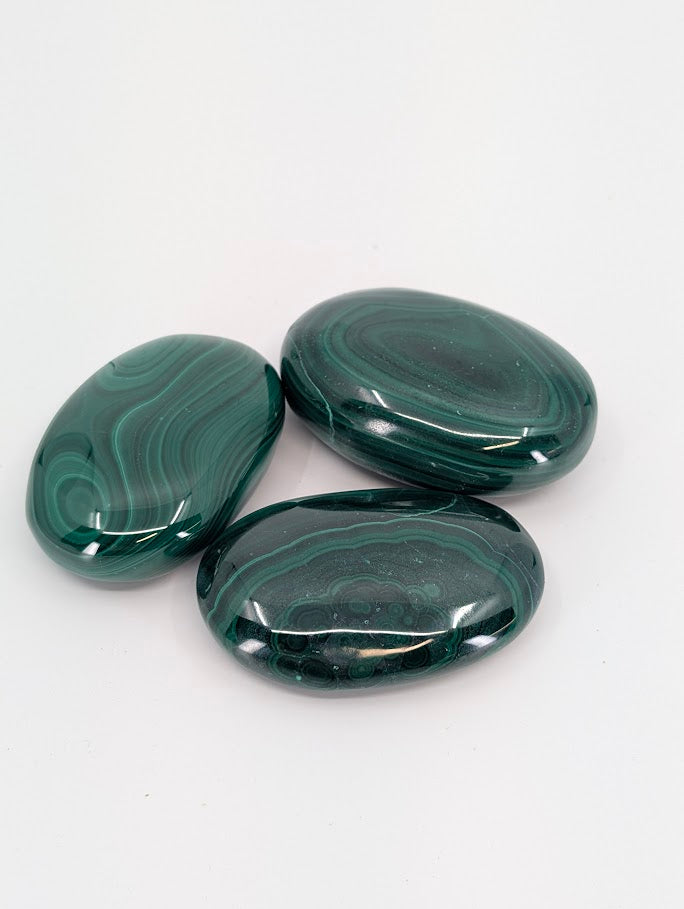
Malachite is a copper carbonate hydroxide mineral with the chemical formula Cu₂(CO₃)(OH)₂. On the Mohs hardness scale it rates approximately 3.5–4, which is soft enough that cutting, sanding, or even rough handling can generate fine respirable dust. That softness also means surface damage, scratches, and prolonged water contact all increase the rate at which copper ions leach from the stone.
The hazard is copper. In neutral water, malachite is largely insoluble. Introduce an acid — stomach acid, vinegar, lemon juice, or common household cleaners — and copper ions release more readily. Polished and sealed pieces leach less than raw or unpolished specimens, but neither is entirely inert under acidic conditions. According to the CLEAPSS safety sheet for basic copper carbonate, malachite is classified as an irritant to eyes and skin, harmful if swallowed or inhaled, and toxic to aquatic life.
Malachite (mineral) vs. malachite green (dye): a critical distinction
These are two entirely different substances that share only a name and a colour.
- Malachite — the mineral Cu₂(CO₃)(OH)₂, found in copper ore deposits, used in jewellery and specimens
- Malachite green — a synthetic triphenylmethane dye used historically in aquaculture and textile dyeing, with no copper carbonate chemistry
Toxicology studies on malachite green chloride document genotoxic effects in multiple animal models, serious eye damage potential, and aquatic toxicity at very low concentrations. The NCBI review of malachite green and leucomalachite green summarises DNA adduct formation and reproductive concerns from the dye. These findings do not apply directly to the mineral, but they do reinforce why ingesting any water contaminated with copper compounds — or the dye itself — is unsafe.
The practical takeaway: strong toxicology data about “malachite” in scientific literature often refers to the dye. Read the source carefully before drawing conclusions about mineral safety.
How exposure happens and who faces the greatest risk
Routes of exposure
Ingestion is the most significant route for collectors. Malachite and azurite dissolve in stomach acid, releasing copper ions that the body absorbs. The most common ingestion scenarios are crystal elixirs (water infused by soaking malachite), contaminated rinse water, and hand-to-mouth contact after handling dusty raw specimens.
Inhalation is the primary occupational risk. Cutting, sanding, or polishing malachite without wet methods or extraction produces fine copper carbonate dust. Particles small enough to reach the lower airways carry both irritant and systemic copper exposure potential.
Eye and skin contact with dust causes irritation. Prolonged skin contact with damp or dusty malachite may cause localised irritation, though intact skin is a reasonable barrier for brief, dry contact.
Who should take extra care
- Children — more likely to mouth stones; lower body weight means a smaller dose causes proportionally greater copper exposure
- Pregnant people — copper compounds are suspected of developmental effects at higher doses
- People with liver or kidney conditions — copper metabolism depends on both organs; impaired clearance raises systemic risk
- Hobby lapidaries and jewellery makers — regular dust generation during cutting, grinding, and polishing creates repeated low-level inhalation exposure
- Collectors handling raw specimens frequently — unpolished surfaces shed more particulate and leach more readily
Pro Tip: When handling raw malachite specimens or azurite-malachite combinations, work on a surface that can be wiped clean, and wash hands before eating, drinking, or touching your face.
Symptoms and health effects to watch for
Copper toxicity symptoms depend heavily on dose and route. Most casual collectors will never experience them. Lapidaries and anyone who has ingested copper-contaminated water should know the signs.
After ingestion
Acute copper ingestion produces a recognisable gastrointestinal pattern:
- Nausea and vomiting (often early and prominent)
- Abdominal cramps and diarrhoea
- Metallic taste in the mouth
At higher doses, PubChem’s hazard data for copper compounds documents more serious effects: haemolytic anaemia, liver injury (hepatotoxicity), and kidney damage (nephrotoxicity). Methemoglobinaemia has been reported in severe cases. These outcomes are dose-dependent and generally associated with significant ingestion, not incidental contact.
Red flags requiring urgent care:
- Persistent or severe vomiting
- Confusion or altered consciousness
- Jaundice (yellowing of skin or eyes)
- Dark or cola-coloured urine
- Difficulty breathing
After dust inhalation or eye contact
Inhaled copper carbonate dust causes respiratory tract irritation: coughing, throat irritation, and in heavy exposures, possible systemic copper uptake. Eye contact with dust produces irritation, redness, and tearing. Serious eye damage is possible with significant exposure, consistent with the classification in the CLEAPSS copper carbonate safety sheet.
Minor, brief exposures are generally self-limited. Symptoms that persist beyond a few hours, or any of the red flags listed above, warrant medical attention.
What the toxicology evidence actually shows
Most of the strongest toxicology data in the literature refers to malachite green dye, not the mineral. Separating these two bodies of evidence is necessary for accurate risk assessment.
Malachite green dye: key findings
The NTP Toxicology Report TOX 71 documents acute and subchronic toxicity data for malachite green chloride and leucomalachite green across multiple species. Key findings include dose-dependent organ effects in rodents and fish LC50 values in the low µg/L range, indicating very high aquatic toxicity. The NCBI review adds genotoxicity data: DNA adduct formation and chromosomal effects in animal models.
These findings are relevant to anyone using malachite green in aquaculture or textile work. For mineral collectors, they serve as a caution against conflating the two substances, and as context for why copper-contaminated water should not be consumed.
Copper mineral toxicity: reference data
| Substance | Endpoint | Value | Source |
|---|---|---|---|
| Copper (drinking water) | EPA action level | 1.3 mg/L | EPA NPDWR |
| Basic copper carbonate | Hazard classification | Harmful if swallowed or inhaled; irritant | CLEAPSS SDS |
| Malachite green (dye) | Aquatic LC50 (fish) | Low µg/L range | NTP TOX 71 |
The U.S. EPA action level of 1.3 mg/L for copper in drinking water provides a useful comparator: water that has soaked malachite for an extended period, particularly if the water is slightly acidic, can plausibly approach or exceed this threshold.
- Most published LD50 and LC50 data applies to the synthetic dye, not the mineral.
- Mineral toxicity data comes primarily from safety data sheets and occupational hazard classifications, not controlled human studies.
- The absence of large clinical studies on mineral malachite ingestion does not mean it is safe; it means the risk is assessed from copper compound toxicology broadly.
- Polished, sealed jewellery presents a lower but not zero leaching risk under acidic conditions.
Safe handling and household practices
Storage and display
- Keep raw specimens out of reach of children and pets
- Store dusty or unpolished pieces in sealed containers or display cases
- Do not store loose specimens near food preparation surfaces
- Chrysocolla-malachite specimens and large botryoidal formations benefit from enclosed display to limit ambient dust
Cleaning malachite
Dry cleaning is the default. Use a soft, dry cloth or a soft brush. Brief, careful rinses under cool water are acceptable for polished pieces, but prolonged soaking is not. Dispose of rinse water down the drain; do not use it on plants or discharge it to natural waterways, as copper is toxic to aquatic organisms even at low concentrations.
Avoid vinegar, lemon juice, or any acidic cleaner. The Flinn Scientific SDS for copper(II) carbonate notes that acids increase solubility and copper ion release, which applies directly to household cleaning scenarios.
Working with malachite: a step-by-step sequence for hobby lapidary
- Set up a wet-cutting station. Use a saw or grinder with an integrated water feed to suppress dust at the source.
- If wet cutting is not possible, use a vacuum extraction system with a HEPA filter positioned at the cutting point.
- Put on an N95 or P100 respirator before generating any dust. A standard dust mask is not adequate for fine copper carbonate particles.
- Wear safety glasses or goggles. Dust particles cause serious eye irritation.
- Use nitrile gloves. Change them before touching your face or food.
- Work in a ventilated space. Open windows or use a local exhaust ventilation (LEV) unit directed away from the breathing zone.
- After finishing, wipe down all surfaces with a damp cloth. Do not dry-sweep; this re-suspends settled dust.
- Wash hands and forearms thoroughly with soap and water before eating, drinking, or leaving the workspace.
Pro Tip: Never dry-sand malachite. The WebExhibits technical note on malachite confirms that wet methods and vacuum extraction are the professional standard for copper carbonate minerals. Even a brief dry-sanding session in an unventilated space can generate a meaningful dust load.
Wearing malachite jewellery
Polished, sealed malachite jewellery is generally safe for everyday wear. Remove rings and bracelets before:
- Washing dishes or using household cleaners
- Swimming in chlorinated or saltwater pools
- Applying lotions, sunscreens, or perfumes directly over the stone
Chips and cracks in the surface increase leaching potential. Inspect pieces periodically and have damaged stones re-polished or replaced.
First aid and when to seek help in Canada
Ingestion
- Do not induce vomiting unless a medical professional specifically instructs you to.
- Rinse the mouth with water immediately.
- Call your provincial poison centre. In Canada, the national referral number is 1-800-268-9017 (Ontario Poison Centre, which handles national referrals), or contact your provincial centre directly. The Canadian Association of Poison Control Centres lists all provincial numbers.
- Have the following information ready: what was ingested (malachite mineral or water that contacted malachite), estimated amount, and the person’s age and weight.
- Follow the poison centre’s instructions. If they direct you to an emergency department, go immediately.
Inhalation or skin exposure
- Move to fresh air right away.
- Remove contaminated clothing.
- Wash exposed skin with soap and water for at least 15 minutes.
- If respiratory symptoms (coughing, shortness of breath, chest tightness) persist after moving to fresh air, seek medical care.
Eye contact
- Flush eyes continuously with clean, lukewarm water for at least 15 minutes.
- Remove contact lenses before flushing if easily removable.
- Seek urgent medical attention if irritation, redness, or blurred vision persists after flushing.
When to go to the emergency department:
- Severe or persistent vomiting
- Confusion, dizziness, or loss of consciousness
- Jaundice or dark urine
- Difficulty breathing or chest pain
Tell the treating clinician about possible copper exposure or malachite ingestion. This helps them assess for copper toxicity specifically, including haemolytic anaemia and liver effects documented in PubChem’s copper compound hazard data.
Occupational controls and Canadian regulatory resources
For anyone cutting, polishing, or grinding malachite in a workshop setting, a hierarchy of controls applies.
Elimination and substitution: choose pre-cut or pre-polished specimens where possible to avoid generating dust. For display-only collectors, this removes the hazard entirely.
Engineering controls: wet-cutting systems and local exhaust ventilation (LEV) are the most effective technical measures. The WebExhibits malachite technical note confirms that wet methods substantially reduce airborne copper carbonate dust. HEPA-filtered vacuum extraction at the point of generation is the next best option when wet methods are impractical.
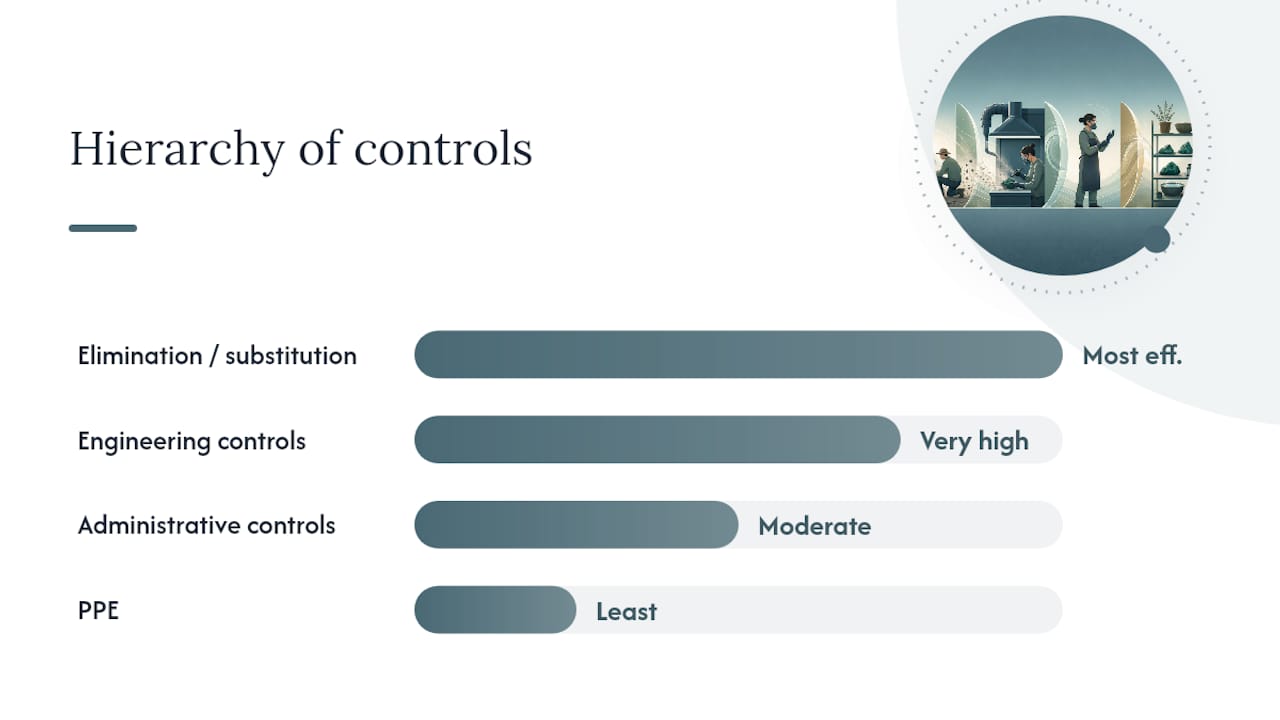
Administrative controls: limit the time spent on dusty tasks, schedule grinding work when others are not present in the space, and establish a hand-washing protocol before breaks.
PPE: N95 or P100 respirator, safety goggles, nitrile gloves, and a lab coat or dedicated work clothing that is laundered separately.
Canadian regulatory resources:
- CCOHS (ccohs.ca) publishes occupational exposure limits (OELs) for copper compounds and guidance on dust control for mineral processing
- Provincial workers’ compensation boards (e.g., WorkSafeBC, WSIB Ontario, CNESST Québec) set jurisdiction-specific OELs and inspection standards for small workshops
- Health Canada provides consumer product safety guidance relevant to jewellery and mineral specimens
- Provincial poison centres offer 24-hour guidance for acute exposures
Workplace exposure limits for copper compounds vary by province. CCOHS guidance and your provincial WCB are the authoritative sources for the limit that applies in your jurisdiction.
Key safety points every collector should remember
- Never ingest malachite or water that has soaked it. Copper ions leach into water, especially acidic water, and can reach unsafe concentrations.
- Avoid generating dust. Dry-cutting, dry-sanding, or dry-grinding malachite is the highest-risk activity for collectors and lapidaries.
- Keep specimens away from children. Children are more vulnerable to copper toxicity by weight, and are more likely to mouth stones.
- Use wet methods for any cutting or polishing work. This is the professional standard and is feasible for hobby benches.
- Wash hands after handling raw or dusty specimens. This prevents hand-to-mouth transfer.
- Malachite green dye and malachite mineral are different substances. Strong genotoxicity and aquatic toxicity data in the literature refers to the synthetic dye, not the mineral.
Polished crystal jewellery with no handling caveats
Collectors who want the aesthetic of natural stone without malachite’s dust and leaching considerations have straightforward options. Legacy Crystals and Minerals carries polished quartz pieces that require no special handling protocols: no wet-cutting precautions, no acid-avoidance rules, no hand-washing reminders after contact.
The White Sea Urchin Quartz Bracelet (12mm, AAA Grade) is a polished, sealed piece with none of the copper compound chemistry that makes malachite a mineral to handle carefully. For collectors who want something equally striking but without the safety considerations, it is a direct alternative. Legacy Crystals and Minerals also offers a Clear Crackle Quartz Bracelet in 6mm and 8mm bead sizes, and a Mixed Crystal Chip Bracelet spanning the full chakra spectrum. All are available for direct purchase at legacycrystalsandminerals.com.
Sources
- Malachite Green and Leucomalachite Green - Gentian Violet, Leucogentian Violet, Malachite Green, Leucomalachite Green, and CI Direct Blue 218 - NCBI Bookshelf
- Copper(II) carbonate hydroxide (Basic copper carbonate, malachite) IRRITANT ENVIRON. HAZARD
- PubChem compound summary (Copper(II) carbonate/hydroxide related toxicity notes)
- Flinn Scientific SDS for copper(II) carbonate
- Can Malachite Go in Water? No — Here’s the Safety Reason – AJLuxe
- WebExhibits technical note on malachite (pigment history and handling)
FAQ
Why is malachite toxic?
Malachite contains copper carbonate hydroxide (Cu₂(CO₃)(OH)₂), which releases copper ions when dissolved in acids, including stomach acid and household cleaners. Copper at sufficient doses is harmful to the liver, kidneys, and red blood cells.
Who should avoid malachite?
Children, pregnant people, and individuals with liver or kidney conditions should avoid handling raw or dusty specimens and should never ingest malachite or water that has soaked it. Hobby lapidaries who cut or grind malachite regularly face the highest ongoing exposure risk.
Why do you have to wash your hands after touching malachite?
Raw and unpolished malachite sheds fine copper carbonate particles that can transfer from hands to mouth during eating or face-touching. Hand washing removes this residue and prevents incidental ingestion of copper compounds.
What are the side effects of malachite exposure?
Ingestion of copper from malachite can cause nausea, vomiting, abdominal pain, and diarrhoea. At higher doses, PubChem’s copper compound data documents haemolytic anaemia, liver injury, and kidney damage. Dust inhalation causes respiratory irritation; eye contact causes irritation and possible serious eye damage.
Can malachite get wet?
Brief rinsing of polished pieces is low risk, but prolonged soaking is not recommended. Water that has soaked malachite can leach copper ions, particularly if the water is acidic, and should not be consumed. Crystal elixirs made with malachite are unsafe.
Recommended
- Chrysocolla with Malachite from the Congo: Nature’s Turquoise Treasure – Legacy Crystals and Minerals
- Large Congo Chrysocolla with Malachite – Botryoidal Veined Specimen (620g, 6.5") - Legacy Crystals and Minerals – Legacy Crystals and Minerals
- Congo Chrysocolla with Malachite – Botryoidal Specimen with Exposed Veins & Growth Rings (434g) - Legacy Crystals and Minerals – Legacy Crystals and Minerals


