

Cristaux pour l'alignement des chakras : votre guide 2026
Les cristaux pour l'alignement des chakras sont des pierres spécifiques qui entrent en résonance avec les sept centres d'énergie de votre corps pour soutenir l'équilibre et le bien-être spirituel. Chaque chakra correspond à une couleur et à une fréquence vibratoire, et des pierres comme le Jaspe Rouge, la Citrine, le Quartz Rose, l'Améthyste et le Quartz Clair sont associées à ces fréquences pour stabiliser le flux d'énergie. Cette pratique est officiellement connue sous le nom de thérapie par les cristaux, et elle fonctionne en plaçant des pierres sur ou près des points des chakras pour créer un environnement énergétique stable. Les cristaux agissent comme des diapasons énergétiques, mais votre intention et votre respiration sont les véritables moteurs de l'alignement.
1. Jaspe rouge pour le chakra racine
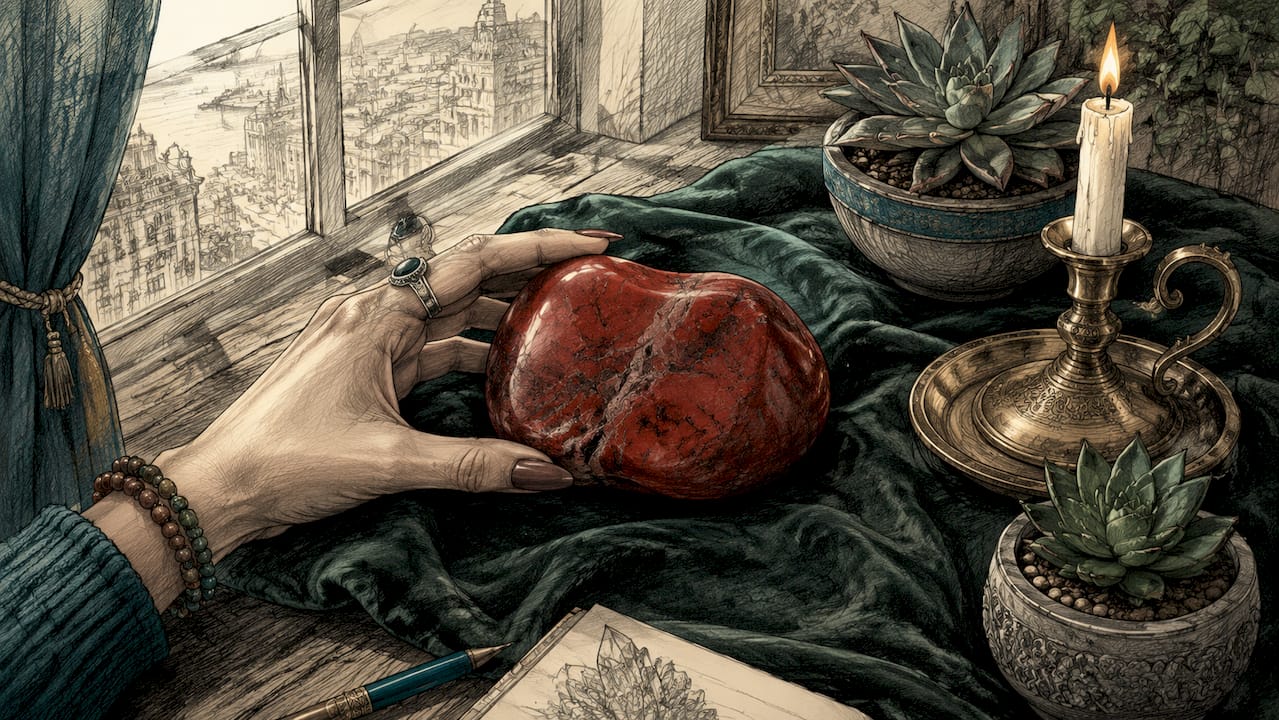
Le Jaspe rouge est la pierre standard pour le chakra racine, situé à la base de la colonne vertébrale. Sa couleur rouge profond correspond à la fréquence vibratoire du chakra racine, et il est largement utilisé pour favoriser l'ancrage et réduire l'anxiété. Le Jaspe rouge stabilise le chakra racine et est l'un des points de départ les plus recommandés pour les débutants. Si vous vous sentez dispersé, agité ou physiquement déséquilibré, c'est la pierre à choisir en premier.
2. Cornaline pour le chakra sacré
La Cornaline est la pierre de prédilection pour le chakra sacré, qui régit la créativité, l'émotion et la sensualité. Sa couleur orange chaude s'aligne directement avec la signature énergétique du chakra sacré. Les praticiens utilisent la Cornaline pour restaurer la motivation et soulager la stagnation émotionnelle. Elle s'harmonise bien avec les bijoux de couleur cuivre et constitue un excellent choix pour quiconque travaille sur des blocages créatifs.
3. Citrine pour le chakra du plexus solaire
La Citrine cible le chakra du plexus solaire, le centre du pouvoir personnel et de la confiance en soi. Sa couleur jaune correspond à la fréquence du plexus solaire, et c'est l'une des pierres les plus accessibles pour un usage quotidien. La Citrine nécessite moins de nettoyage énergétique que la plupart des variétés de quartz, ce qui la rend facile d'entretien et pratique. Placez-la sur votre abdomen pendant une séance ou portez-la dans une poche tout au long de la journée.
4. Quartz rose pour le chakra du cœur
Le Quartz Rose est la pierre classique du chakra du cœur. Sa couleur rose tendre correspond à la fréquence de compassion et d'ouverture émotionnelle du cœur. Le Quartz Rose adoucit les murs émotionnels et est recommandé aux débutants, tout comme le Jaspe Rouge. Si vous débutez dans la thérapie par les cristaux, travailler avec le Quartz Rose pendant deux à quatre semaines avant d'ajouter d'autres pierres jette une base solide.
Conseil de pro : Un amas de cristaux de lithium rose du Brésil est une excellente alternative au Quartz Rose standard pour le travail sur le chakra du cœur. Sa teneur en lépidolite ajoute une influence apaisante du lithium à la séance.
5. Agate Bleue pour le chakra de la gorge
L'Agate Bleue est la norme acceptée pour le chakra de la gorge, qui régit la communication et l'expression de soi. Ses bandes bleu pâle correspondent à la fréquence fraîche et expressive de la gorge. Les praticiens l'utilisent pour faciliter l'expression de la vérité ou pour réduire la tension avant des conversations importantes. C'est une pierre douce et bien adaptée aux praticiens sensibles.
6. Améthyste pour le chakra du troisième œil
L'Améthyste est la pierre la plus largement utilisée pour le chakra du troisième œil, situé entre les sourcils. Sa couleur violette s'aligne avec la fréquence d'intuition et de clarté mentale du troisième œil. Un amas d'améthyste drusy de haute qualité placé près de la tête pendant la méditation amplifie cet effet. Cependant, toutes les pierres ne conviennent pas à toutes les personnes. La Sodalite ou la Labradorite peuvent mieux résonner que l'Améthyste pour certains praticiens travaillant sur le troisième œil.
7. Quartz clair pour le chakra couronne
Le Quartz Clair est la pierre maîtresse du chakra couronne, qui vous connecte à une conscience supérieure et à la clarté spirituelle. Sa structure transparente amplifie toute énergie qu'elle rencontre. Cette amplification est puissante mais demande de la prudence. Le Quartz Clair amplifie également les intentions négatives, il est donc important de fixer une intention claire et positive avant chaque séance. Un amas de Quartz Clair brésilien est un excellent choix pour le travail sur le chakra couronne et sert également d'amplificateur pour toute autre pierre de votre collection.
8. Tourmaline noire comme ancre protectrice
La Tourmaline Noire ne fait pas partie de la carte des couleurs standard des sept chakras, mais elle est largement utilisée comme ancre protectrice pendant les séances. Elle est placée sous les pieds ou à la racine pour créer une barrière énergétique. Cela est particulièrement utile lorsque l'on travaille avec des pierres amplificatrices comme le Quartz Clair. Un amas de Tourmaline Noire du Brésil fournit une énergie d'ancrage forte et est un ajout pratique à tout ensemble de cristaux de chakra.
9. Lapis-lazuli comme pont gorge et troisième œil
Le Lapis-lazuli agit sur les chakras de la gorge et du troisième œil. Sa couleur bleu profond parsemée de paillettes dorées établit un pont entre la communication et l'intuition. Les praticiens qui se sentent déconnectés entre ce qu'ils pensent et ce qu'ils disent trouvent souvent le Lapis-lazuli plus efficace qu'une pierre à chakra unique. C'est un excellent choix pour toute personne occupant un poste de direction ou exerçant une profession créative.
10. Sélénite pour un nettoyage complet du corps
La Sélénite est utilisée pour nettoyer et réinitialiser toute la colonne des chakras avant ou après une séance. Elle ne correspond pas à un seul chakra. Au lieu de cela, elle balaye l'énergie stagnante de tout le champ énergétique. Passez lentement une baguette de Sélénite des pieds à la couronne pour préparer votre corps à un travail plus profond avec les cristaux. De nombreux praticiens l'utilisent comme première et dernière étape de chaque séance.
Comment choisir les bons cristaux pour l'équilibre des chakras
La correspondance des couleurs est la méthode de sélection la plus rapide pour la plupart des débutants. La correspondance des couleurs permet d'obtenir une précision d'environ 80 % pour l'appariement des pierres aux chakras. Cela signifie des pierres rouges pour le Chakra Racine, orange pour le Sacré, jaune pour le Plexus Solaire, vert ou rose pour le Cœur, bleu pour la Gorge, indigo ou violet pour le Troisième Œil, et clair ou blanc pour la Couronne. Commencez par là et vous aurez raison la plupart du temps.
Au-delà de la couleur, la résonance personnelle est importante. Tenez une pierre avant de l'acheter. Si elle semble lourde, inconfortable ou tout simplement inappropriée, choisissez-en une autre. La pierre classique pour un chakra n'est pas toujours la bonne pierre pour vous.
Suivez cette séquence pour construire votre pratique :
- Commencez par une seule pierre. Choisissez le Jaspe Rouge pour l'ancrage ou le Quartz Rose pour le travail émotionnel. Travaillez avec une seule pierre quotidiennement pendant deux à quatre semaines avant d'en ajouter d'autres.
- Remarquez ce qui change. Suivez les changements d'humeur, de sommeil ou de tension physique. Cela vous indique si la pierre se connecte.
- N'ajoutez une deuxième pierre que lorsque la première vous semble familière. L'appariement des pierres du Racine et du Cœur est une étape naturelle suivante.
- Construisez progressivement un ensemble complet. Un ensemble complet de sept pierres de chakra est l'objectif, pas le point de départ.
Conseil de pro : Si une pierre classique ne vous convient pas après deux semaines, essayez une alternative. La Sodalite fonctionne bien pour le Troisième Œil si l'Améthyste ne résonne pas. La Labradorite est une autre option forte pour le même chakra.
Comment utiliser les cristaux lors des séances d'alignement des chakras
Une séance standard de tout le corps consiste à placer une pierre sur chacun des sept points des chakras en position allongée. Les séances durent généralement de 15 à 30 minutes, en se déplaçant de la Racine à la Couronne. Le processus complet, y compris la préparation et le temps de repos, dure de 20 à 40 minutes. La fréquence dépend de votre objectif : des séances hebdomadaires conviennent à l'entretien général, tandis que des séances quotidiennes sont préférables pour un déséquilibre spécifique.
Le tableau ci-dessous décrit une structure de séance simple :
| Étape | Action | Durée |
|---|---|---|
| Préparation | Nettoyer les pierres, fixer l'intention, s'allonger | 5 minutes |
| Placement | Placer les pierres de la Racine à la Couronne sur les points des chakras | 2-3 minutes |
| Repos | Se concentrer sur la respiration, permettre le calme | 15-20 minutes |
| Clôture | Retirer les pierres de la Couronne à la Racine, s'ancrer | 5 minutes |
Placer les cristaux sur les points des chakras tout en se reposant et en se concentrant sur la respiration est la technique principale. Certains praticiens ajoutent des sons doux, tels que des bols chantants, pour approfondir la séance. Un grand ensemble de sept bols chantants pour les chakras complète le travail avec les cristaux en ajoutant une couche de fréquence sonore à chaque point de chakra.
Porter des cristaux entre les séances prolonge les bienfaits. Les bijoux en cristal offrent un soutien énergétique durable au-delà de la méditation. Les colliers conviennent bien aux chakras de la Couronne, du Cœur et de la Gorge. Les bracelets sont mieux adaptés au travail sur le chakra Sacré et le Plexus Solaire en raison de leur proximité avec le champ énergétique du bas du corps.
Défis courants lors du travail avec les cristaux de chakra
L'erreur la plus courante que font les débutants est d'utiliser les sept pierres en même temps. L'utilisation simultanée de toutes les pierres de chakra peut submerger le système énergétique d'un débutant. La profondeur avec une seule pierre l'emporte sur l'étendue avec sept. Développez votre familiarité avant de construire un ensemble complet.
Principaux défis et comment les gérer :
- Trop de pierres à la fois. Commencez par une ou deux. N'ajoutez des pierres que lorsque les actuelles sont bien intégrées.
- Amplification du Quartz clair. Le Quartz clair amplifie tout, y compris les tensions non résolues ou les schémas de pensée négatifs. Fixez une intention claire et calme avant chaque séance qui inclut cette pierre.
- Sauter le nettoyage. La plupart des pierres absorbent l'énergie et ont besoin d'un nettoyage régulier. Rincez-les sous l'eau froide, placez-les au soleil ou utilisez une baguette de Sélénite pour les réinitialiser.
- Attendre des résultats instantanés. Le travail sur les chakras est un processus interne. Gérer les attentes concernant les résultats instantanés fait partie de la pratique. Des séances cohérentes sur plusieurs semaines produisent des changements plus notables qu'une seule longue séance.
« Les cristaux facilitent l'alignement en stabilisant les fréquences énergétiques. L'intention active du praticien est ce qui entraîne le changement réel. »
La Citrine est l'exception à la règle du nettoyage. C'est l'une des rares variétés de quartz qui n'accumule pas l'énergie stagnante au même rythme que les autres, ce qui en fait un choix pratique pour un usage quotidien sans entretien intensif.
Points clés à retenir
L'approche la plus efficace de la thérapie par les cristaux pour les chakras consiste à associer les pierres aux chakras par couleur, à commencer par une seule pierre et à établir une pratique cohérente avant d'étendre à un ensemble complet.
| Point | Détails |
|---|---|
| La correspondance des couleurs fonctionne | L'association de la couleur de la pierre à la couleur du chakra permet d'atteindre environ 80 % de précision pour les débutants. |
| Commencez par une pierre | Travaillez avec le Jaspe rouge ou le Quartz rose quotidiennement pendant deux à quatre semaines avant d'ajouter d'autres pierres. |
| La durée de la séance est importante | Les séances standard durent de 15 à 30 minutes ; hebdomadaires pour l'entretien, quotidiennes pour les déséquilibres spécifiques. |
| Le Quartz clair nécessite des précautions | Il amplifie toute énergie, y compris les intentions négatives, il est donc important de fixer une intention claire avant chaque séance. |
| La résonance personnelle l'emporte sur les règles | Si une pierre classique ne vous convient pas après deux semaines, passez à une alternative comme la Sodalite ou la Labradorite. |
Ce que j'ai appris en observant les débutants travailler avec les cristaux de chakra
Le plus grand écart que j'observe se situe entre les personnes qui placent des pierres et celles qui pratiquent réellement. Placer sept cristaux sur son corps et faire défiler son téléphone pendant 20 minutes n'est pas un travail de chakra. Les pierres créent un environnement de fréquence, mais vous devez vous y engager. La respiration, le calme et une intention claire sont ce qui active la séance.
J'ai également remarqué que les débutants qui commencent avec une seule pierre progressent plus rapidement que ceux qui achètent un ensemble complet immédiatement. Une pierre vous oblige à être attentif. Vous remarquez ce qui change et ce qui ne change pas. Cette boucle de rétroaction est ce qui construit une véritable compréhension de la façon dont la thérapie par les cristaux fonctionne pour votre système énergétique spécifique.
Ma recommandation honnête : commencez par le Quartz clair ou le Quartz rose. Les deux sont indulgents, largement disponibles et efficaces sur plusieurs chakras. Le Quartz clair en particulier vous apprend beaucoup sur l'intention car son effet d'amplification rend votre état mental pendant une séance très évident. Si vous êtes distrait, vous le sentirez. C'est en fait une information utile.
La progression d'une seule pierre à un ensemble complet de cristaux de chakra n'est pas une course. Les praticiens que j'ai vus tirer le meilleur de ce travail sont ceux qui ont traité chaque pierre comme une relation à construire, et non comme un outil à déployer.
— Simon
Cristaux de chakra authentiques de Legacy Crystals and Minerals
Legacy Crystals and Minerals propose des spécimens de qualité muséale, sélectionnés pour leur qualité énergétique et leur beauté naturelle. Que vous commenciez avec une seule pierre d'ancrage ou que vous construisiez un ensemble complet, la collection comprend des pièces authentiques adaptées à chaque chakra.
L'amas de Quartz Clair du Brésil est un excellent point de départ pour le travail sur le Chakra Couronne et l'amplification générale. Pour les séances sur le Troisième Œil, la formation drusique d'Améthyste brésilienne offre une clarté et une qualité de formation exceptionnelles. Chaque spécimen chez Legacy Crystals and Minerals est sélectionné pour sa provenance et son authenticité, afin que vous sachiez exactement avec quoi vous travaillez.
FAQ
Quels sont les meilleurs cristaux pour l'alignement des chakras ?
L'ensemble universellement accepté comprend le Jaspe Rouge (Racine), la Cornaline (Sacré), la Citrine (Plexus Solaire), le Quartz Rose (Cœur), l'Agate Bleue (Gorge), l'Améthyste (Troisième Œil) et le Quartz Clair (Couronne). Ces pierres sont associées à chaque chakra par la couleur et la fréquence vibratoire.
Combien de temps doit durer une séance de cristaux de chakra ?
Une séance standard dure de 15 à 30 minutes, les pierres étant placées sur chaque point de chakra, de la Racine à la Couronne. Le processus complet, y compris la préparation et l'ancrage, dure généralement de 20 à 40 minutes.
Les débutants peuvent-ils utiliser un ensemble complet de sept pierres de chakra ?
Commencer par une seule pierre est plus efficace pour les débutants. L'utilisation des sept pierres à la fois peut submerger le système énergétique d'un nouveau praticien. Travaillez avec une seule pierre pendant deux à quatre semaines avant d'élargir.
À quelle fréquence faut-il utiliser des cristaux de guérison pour les chakras ?
Des séances hebdomadaires conviennent bien pour l'entretien énergétique général. Des séances quotidiennes sont recommandées pour traiter un déséquilibre de chakra spécifique. Une régularité dans le temps produit des résultats plus perceptibles que des séances longues et peu fréquentes.
Le Quartz clair fonctionne-t-il pour tous les chakras ?
Le Quartz clair est la pierre principale du Chakra Couronne, mais ses propriétés amplificatrices le rendent utile pour les sept chakras. Fixez une intention claire et positive avant toute séance incluant du Quartz clair, car il amplifie toute l'énergie présente, y compris les schémas de pensée négatifs.
Recommandé
- Base de connaissances sur les cristaux : Éducation, collecte et signification des minéraux – Legacy Crystals and Minerals
- Amas de cristaux de Tourmaline Noire sur support du Brésil env. 10,5 cm x 5 cm - Legacy Crystals and Minerals – Legacy Crystals and Minerals
- Tour de grappe de cristaux d'améthyste rose clair naturelle du Brésil, environ 6 cm x 5 cm x 5 cm - Legacy Crystals and Minerals – Legacy Crystals and Minerals
- Tour de grappe de cristaux d'améthyste naturelle, environ 7 cm x 5 cm - Legacy Crystals and Minerals – Legacy Crystals and Minerals


