
Collectors and Practitioners: Vanadinite Meaning, Formula & Provenance
Vanadinite is a lead vanadate mineral, chemical formula Pb5(VO4)3Cl, known for its bright red-orange hexagonal crystals. In metaphysical practice, its principal meaning centres on grounding, focus, and action, the stone practitioners reach for when a plan needs to become sustained effort. Because it contains lead, raw specimens should be handled with clean hands and never ingested or ground into dust.
TL;DR:
- Only high-quality Moroccan vanadinite with saturated color and sharp hexagonal crystals commands premium prices, often many times more than dull or damaged specimens.
- Provenance documentation from reputable mines like Mibladen or Zimapán significantly increases a specimen’s value and collector desirability over unmarked or unverified pieces.
- Vanadinite’s industrial importance as a vanadium ore links to its role in steel strengthening and energy storage, highlighting its practical significance beyond mineral collecting.
- Handling raw vanadinite requires careful precautions due to its lead content, recommending gentle cleaning, storing in stable conditions, and opting for polished pieces in jewelry.
- Top-tier specimens are rare even though vanadinite globally is not scarce; the most valuable crystals exhibit intense coloration, well-formed habit, and verified origin.
Table of Contents
- What does vanadinite mean in crystal healing?
- Vanadinite crystal characteristics: composition and geology
- The history and naming behind vanadinite
- How to handle and display vanadinite safely
- Provenance you can verify before you buy
- Why vanadinite specimens vary so much in value
- Vanadinite’s role beyond the collector’s cabinet
- Shop vanadinite and companion crystals
- Sources
- FAQ
What does vanadinite mean in crystal healing?
Vanadinite’s reputation in crystal work is built almost entirely around one idea: energy that gets things done. Practitioners associate it with the root and sacral chakras, the two energy centres tied to survival, stability, and creative drive. Where a stone like citrine is often framed as pure inspiration, vanadinite is framed as the follow-through, the piece that turns an idea sitting in your sacral chakra into a project sitting on your desk.
That framing shows up consistently in how crystal guides describe the stone, often calling it the crystal of drive and action, a label that fits its typical use case better than any generic “energy stone” tag would.
Mental and emotional effects. Crystal practitioners commonly describe vanadinite as a support for focus, discipline, and moving out of the planning stage into actual work. It gets recommended for people who generate plenty of ideas but struggle to finish them, and for long projects where motivation tends to fade around the halfway mark.
Physical and energetic effects. The stone’s energy is often described as sustainable rather than explosive. That distinction matters in practice: a stimulant gives you a short burst, while vanadinite’s reputation is built on steady, regulated output you can maintain over hours, not minutes, which is why some practitioners keep it nearby during long work sessions rather than short bursts of activity.
Practical ways to work with vanadinite:
- Keep a small raw cluster on your desk during focused work blocks or study sessions.
- Hold a tumbled piece during meditation when you’re trying to move from reflection into a concrete next step.
- Pair it with hematite or smoky quartz for deeper grounding, or with citrine when you want drive paired with optimism.
- Place a specimen near your workspace entrance as a daily visual cue toward action rather than procrastination.
Pro Tip: If you’re new to working with vanadinite, try it during a single defined task rather than an entire workday. Practitioners generally credit it with sustained focus over hours, so a two or three hour writing, study, or project block is a realistic first test.
None of this is scientifically documented. Metaphysical claims around vanadinite come from practice and tradition, not laboratory study, and they’re best treated as a personal framework rather than medical or psychological fact.
Vanadinite crystal characteristics: composition and geology
Vanadinite belongs to the apatite group of phosphate minerals, sharing structural traits with more familiar apatite species even though its own formula centres on vanadium rather than phosphorus. Its chemical formula is Pb5(VO4)3Cl, a lead chlorovanadate that forms distinctive hexagonal crystals in shades ranging from deep red to orange and brown, according to USGS documentation.
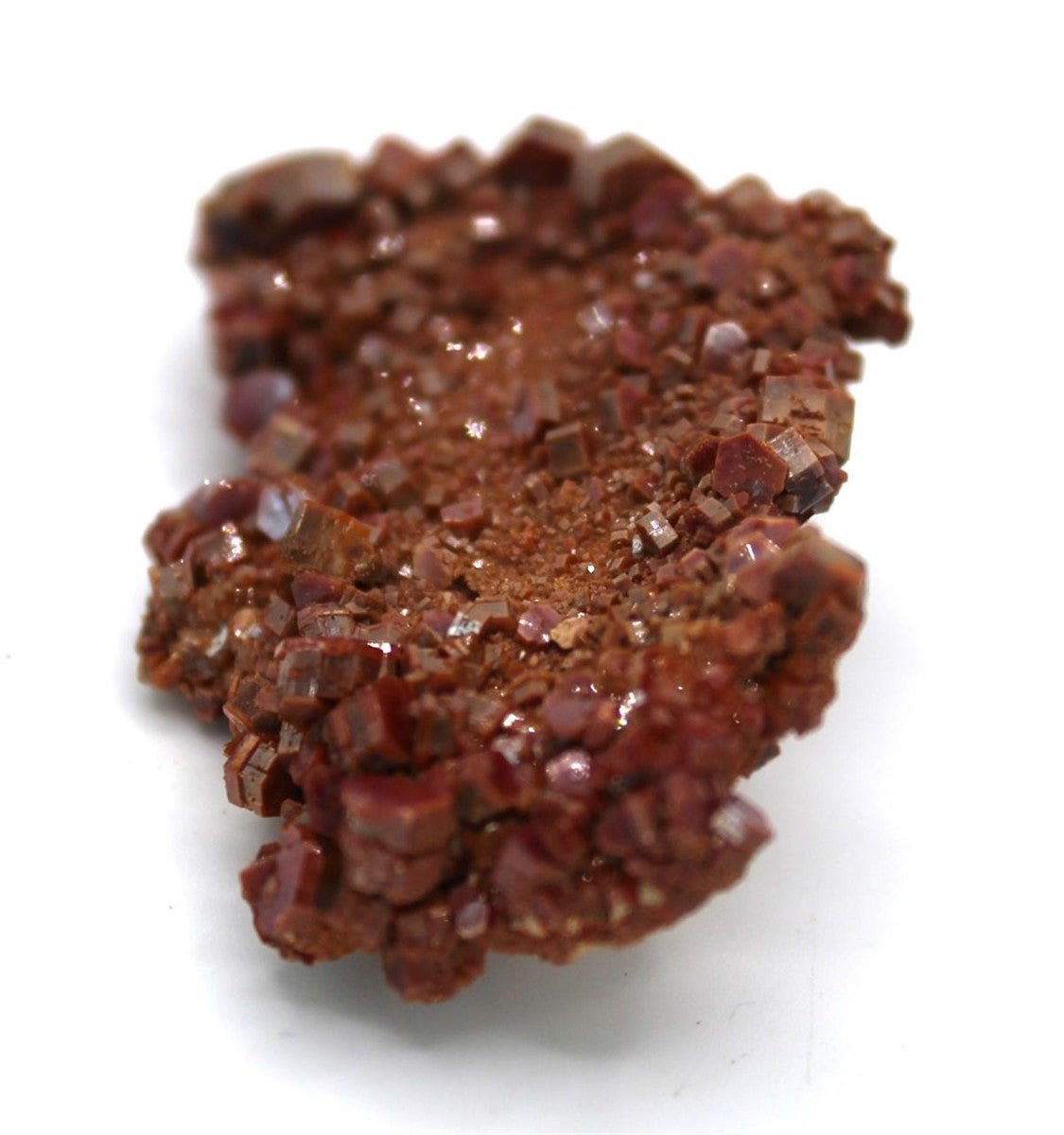
The mineral forms in the oxidized zones of lead ore deposits, where circulating groundwater carrying vanadium reacts with existing lead minerals over geological time. This process favours arid and semi-arid climates, where slow, mineral-rich groundwater has time to deposit vanadinite crystals rather than washing them away. It typically appears alongside galena, wulfenite, and limonite, the other minerals common to weathered lead deposits.
Where vanadinite forms and what it typically yields:
- Morocco (Mibladen and Touissit districts): intensely saturated red-orange crystals, often the benchmark colour for the species.
- Mexico (Zimapán, Hidalgo): historically significant deposits, frequently producing sharp hexagonal crystal habits.
- Namibia (Erongo region): darker reddish-brown crystals, sometimes on contrasting matrix.
- Arizona, United States: smaller, well-formed crystals associated with historic lead-silver mining districts.
Vanadinite serves as a genuine ore of vanadium, an element used in steel alloys and battery technology, and as a minor source of lead. Collector value tracks three factors above all else: colour saturation, crystal habit, and documented locality, since specimen worth depends heavily on provenance and clarity rather than size alone.
Moroccan material commands particular attention among collectors precisely because its colour intensity tends to outperform vanadinite from other regions, a point worth understanding before you compare prices across specimens from different countries.
The history and naming behind vanadinite
Vanadinite’s story starts with a case of scientific near-miss. Spanish mineralogist Andrés Manuel del Río identified a new element in Mexican lead ore in the early 1800s, but his findings were initially dismissed, and the element wasn’t properly credited and named until vanadium was independently rediscovered years later. Vanadinite itself takes its name directly from that element, a mineral literally named for its vanadium content once the connection was firmly established.
- Early identification in Mexico, where del Río’s work on Zimapán ore laid groundwork later tied to vanadium.
- Formal naming after vanadium once the element’s identity was confirmed and standardized in mineralogical nomenclature, a detail confirmed in mineralogical references.
- Expansion of known deposits through the 1800s and 1900s across Morocco, Namibia, Arizona, and Australia, each adding distinct crystal habits to the collector record.
- Modern collector demand, driven largely by Moroccan and Mexican material, cementing vanadinite’s place in mineral cabinets worldwide.
That scientific origin story, a mineral born from an overlooked discovery, feeds naturally into its modern metaphysical framing as a stone of unrecognized potential that is finally put into motion.
How to handle and display vanadinite safely
Vanadinite is a lead mineral, and that fact should guide every decision you make about handling it. Raw specimens can shed fine particles, so avoid activities that create dust, such as grinding, cutting, or aggressive brushing, and always wash your hands after handling a raw piece. Never place vanadinite in your mouth, and keep raw specimens away from children and pets who might handle them casually.
Safe handling and display checklist:
- Store raw clusters in a dry, stable spot away from high traffic to prevent chipping or dust release.
- Clean gently with a dry, soft brush; avoid water soaking, which can affect fragile crystal terminations.
- Wrap raw pieces in cloth before carrying them in a pocket or bag rather than letting them rub against skin or other stones.
- Choose polished, sealed, or wire-wrapped pieces for jewellery instead of unfinished raw crystal against skin.
- Ask sellers for locality documentation and provenance details before buying, particularly for higher-value Moroccan or Mexican specimens.
Pro Tip: If you want vanadinite for meditation or carry use, a small tumbled piece is a safer everyday choice than a raw cluster. You get the same metaphysical association with far less contact with unfinished mineral surfaces.
If you’ve handled a large quantity of raw vanadinite regularly without precautions and have concerns about lead exposure, talk to a physician rather than relying on crystal forums for health guidance. This applies equally whether the concern comes from long-term handling or from an incident like accidental ingestion.
Provenance you can verify before you buy
Documentation separates a trustworthy vanadinite specimen from a mystery rock with a nice colour. Some retailers build their catalogue around museum-grade sourcing, meaning specimens carry locality information and provenance notes rather than generic labels with no background.
The Vanadinite Cluster from Mexico on the Legacy Crystals and Minerals site is documented as a natural specimen with locality-specific detail, the kind of record collectors need to confirm authenticity. That same documentation standard appears across the catalogue, including pieces like the Amethyst scepter from Namibia and Amethyst with analcime, both showing how locality notes accompany the actual product listing rather than sitting buried in a separate catalogue.
What to check on any specimen listing before buying:
- A named mine district or region, not just a country.
- Photos of the actual specimen, not stock imagery.
- Any notes on matrix, associated minerals, or crystal habit specific to that locality.
Collectors and educators alike benefit from prioritizing documented provenance over price alone, since a well-documented specimen holds both scientific and resale value that an undocumented one simply can’t match.
Why vanadinite specimens vary so much in value
Rarity in vanadinite is relative, not absolute. The species isn’t scarce globally in the way, say, painite is, but fine vanadinite, meaning saturated colour, sharp crystal terminations, and generous size, is genuinely hard to find. Most vanadinite on the market consists of small, dull crystals on unremarkable matrix, which sell cheaply and don’t attract serious collector interest.
The gap between that common material and a top-tier specimen is enormous. A well-formed Moroccan cluster with deep red-orange crystals and clean terminations can sell for many times the price of a similarly sized piece with washed-out colour or damaged points. Crystal habit plays into this too: sharp, distinct hexagonal prisms command more interest than crystals that appear rounded or poorly formed, even when the colour is comparable.
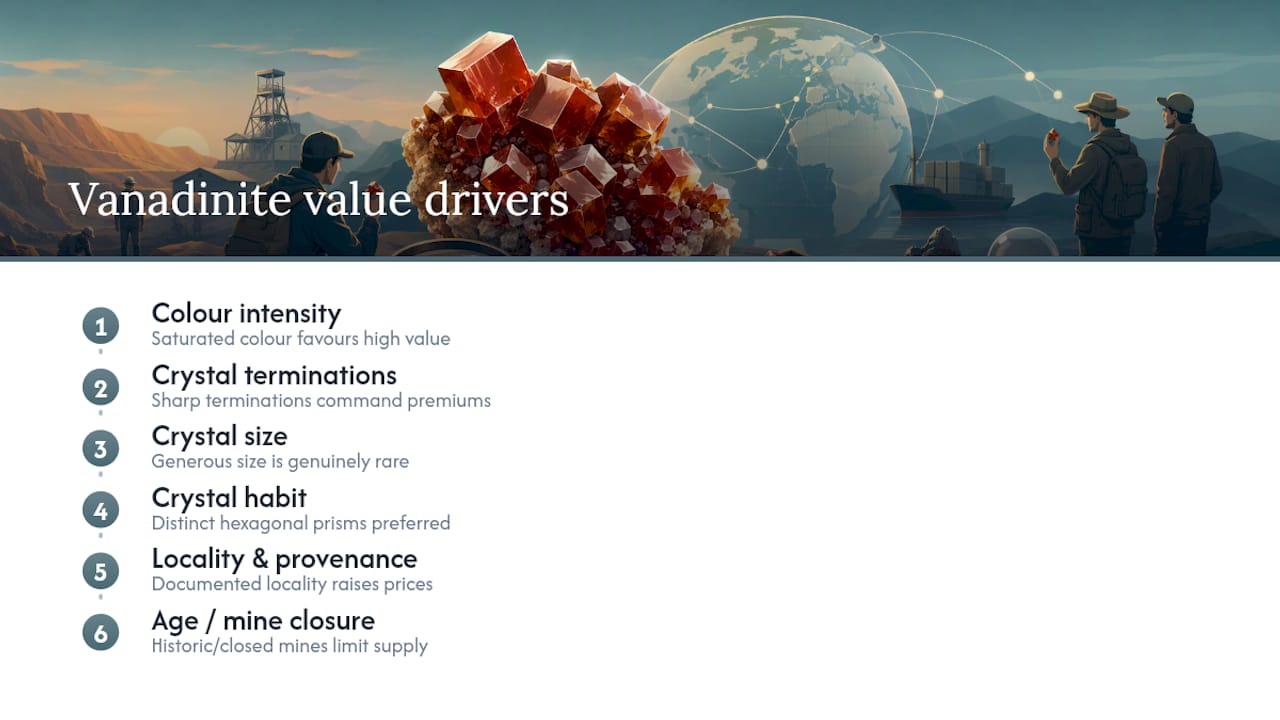
Locality also drives value in a way that surprises newer collectors. Two specimens can look nearly identical yet carry very different prices simply because one has documented provenance from a known, historically significant deposit and the other doesn’t. Serious buyers treat that documentation as part of the specimen itself, not an optional extra, which is why unlabelled vanadinite tends to sell at a steep discount regardless of how good it looks. Age and mine closure status matter too. Some historic Mexican deposits are no longer actively worked, which puts a ceiling on new supply from that specific locality and can push older, well-documented pieces higher over time.
Vanadinite’s role beyond the collector’s cabinet
Outside mineral collecting and metaphysical practice, vanadinite has a straightforward industrial identity: it’s a genuine ore of vanadium, an element with outsized importance relative to how little most people know about it. Vanadium is used to strengthen steel alloys, particularly in construction and tooling applications where added toughness matters, and it plays a growing role in vanadium redox battery technology used for large-scale energy storage.
Vanadinite itself isn’t the dominant global source of vanadium today. Most commercial vanadium comes from processing byproducts of other ores, particularly certain iron and titanium deposits, rather than from mining vanadinite directly. But historically and regionally, vanadinite deposits have supplied meaningful vanadium output, and the mineral remains a minor secondary source of lead as well.
That dual industrial role, contributing to steel production and battery storage technology, adds an interesting layer to vanadinite’s metaphysical branding as a “stone of action.” The same mineral that practitioners use to symbolize sustained effort also literally strengthens steel and stores energy at industrial scale. It’s a coincidence of chemistry, not design, but it’s the kind of detail that makes the stone’s symbolism feel less arbitrary once you know it.
For most readers, this industrial context matters less as a practical concern and more as a piece of the full picture: vanadinite isn’t just decorative or spiritual, it’s a working mineral with a real place in modern materials science.
Shop vanadinite and companion crystals
If you’re ready to bring a documented vanadinite specimen into your collection or practice, the Vanadinite Cluster from Mexico from Legacy Crystals and Minerals is a strong starting point. It’s a natural specimen with locality documentation attached, which matters whether you’re buying it for display, for metaphysical work, or simply because you want a mineral you can actually vouch for.
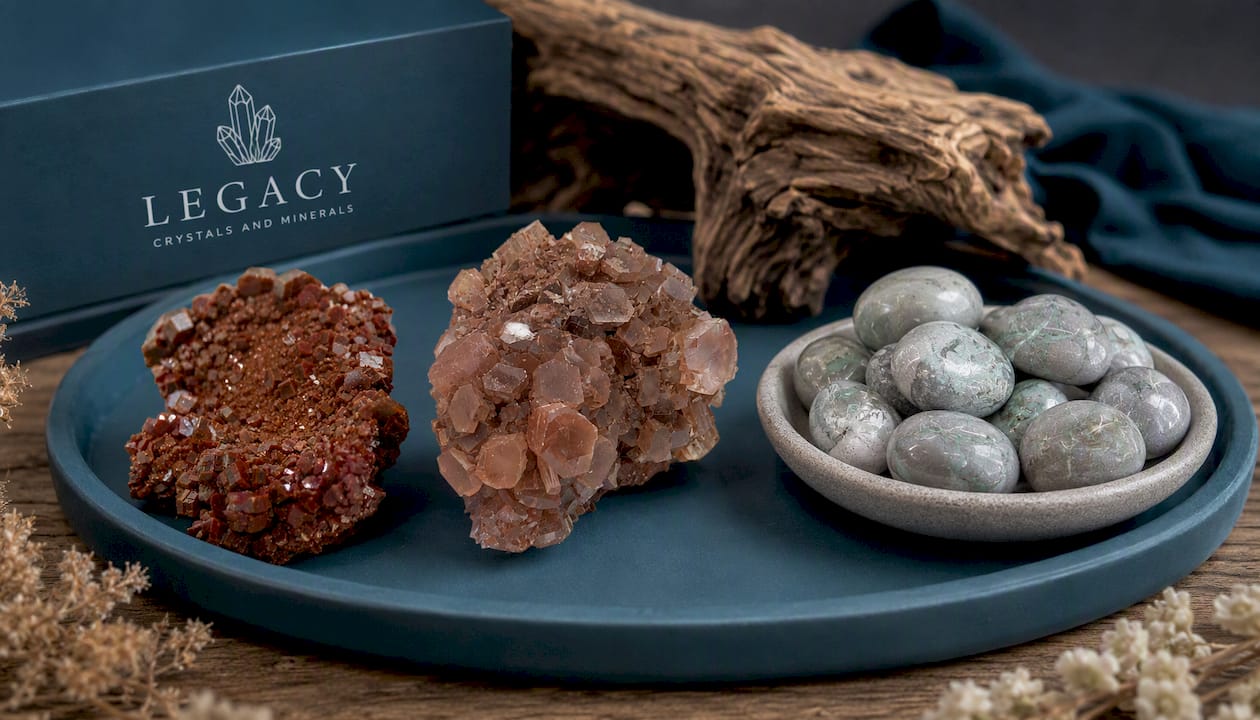
Vanadinite pairs naturally with companion stones that round out a grounding practice. The Aragonite Star Cluster from Morocco, with its distinctive sputnik-like crystal formation, makes a striking display piece alongside a vanadinite cluster, while the Variscite Tumbled Stone offers a smooth, tactile grounding stone that’s easy to carry daily without the handling concerns of a raw specimen. Browse the full catalogue at Legacy Crystals and Minerals to compare documented specimens side by side before you decide, and check each product page for the specific locality and provenance notes attached to that piece.
Sources
For readers who want the underlying mineral science beyond metaphysical practice, consult the USGS vanadinite record for formula and imaging, Britannica’s mineral entry for formation and classification, and Geology.com for collector-focused specimen criteria. Each source covers a different angle of the same mineral, and cross-referencing them gives a fuller picture than any single page.
FAQ
What are the spiritual benefits of vanadinite?
Vanadinite is associated with the root and sacral chakras and is commonly used for grounding, sustained focus, and turning plans into consistent action. Practitioners describe its energy as steady and long-lasting rather than a quick burst, making it a common choice for long projects.
Is vanadinite crystal toxic?
Vanadinite contains lead, so raw specimens shouldn’t be ingested, ground into dust, or handled without washing your hands afterward. Polished or sealed pieces used in jewellery reduce direct skin contact, and anyone with concerns about lead exposure from heavy handling should consult a physician.
How rare is vanadinite?
Vanadinite as a species isn’t especially scarce, but fine specimens with saturated colour, sharp crystal habit, and documented locality are genuinely hard to find. Value differences between common and top-tier material can be substantial, driven largely by colour intensity and provenance.
What is Moroccan vanadinite?
Moroccan vanadinite, mainly from the Mibladen and Touissit districts, is prized for producing some of the most intensely saturated red-orange crystals of any known locality. It’s often considered the benchmark colour standard collectors compare other vanadinite specimens against.


