

Crystal room decor: styling ideas and where to buy in Canada
TL;DR:
- Crystals can be used to decorate rooms effectively, starting with one statement piece on a single surface. Smaller accents should be layered in groups of three at different heights, with lighting and placement tailored to each crystal type. Authentic specimens from reputable sources like Legacy Crystals and Minerals provide safe and visually appealing options for Canadian buyers.
Yes, you can decorate a room with crystals. Start with one statement piece on a single surface, then layer smaller accents around it. A large amethyst cluster on a mantel, a rose quartz sphere on a nightstand, or a zeolite formation on a coffee table each works as an anchor. From there, smaller pieces fill in.
Quick picks by purpose:
- Amethyst — deep purple colour, strong visual weight, works in bedrooms and living rooms
- Rose quartz — soft pink tone, suits bedrooms and dressing tables
- Clear quartz — reflects light, pairs with almost any palette
- Black tourmaline — dark, grounding, good for entryways and high-traffic spots
- Citrine — warm yellow-orange, suits shelves and reading nooks
Choose one surface first: a mantel, a console table, or a bedside table. Place one focal crystal there before adding anything else.
Table of Contents
- What does crystal room decor look like by room and mood?
- Which crystal shapes work best for home decor?
- How should you display crystals at home?
- How do you clean and safely place decorative crystals?
- How do you buy crystal decor in Canada?
- Curated crystal decor picks available to Canadian buyers
- Simple DIY displays and budget ways to add crystal accents
- Key takeaways
- Crystal decor available from Legacy Crystals and Minerals
- Useful sources
- FAQ
What does crystal room decor look like by room and mood?
Decorating with crystals is a technique used by high-end designers including Kelly Wearstler, who treats raw natural specimens as textural counterpoints to refined interiors. The approach works across styles, from bohemian to minimalist, when the placement is deliberate.
Living room showpiece. A large geode or cluster on a mantel or console table reads as sculpture. Anchor it with a stack of books on one side and a lamp or candle on the other. The lamp draws the eye and lights the crystal from the side, which is more flattering than overhead light.
Bedroom sanctuary. Amethyst, rose quartz, celestite, and moonstone are common bedroom picks. Place them on a dresser or nightstand where they are visible but not crowding the sleep surface. A soft-lit lamp nearby brings out colour without harsh glare.
Entryway statement. Black tourmaline or a dark cluster in a shallow bowl near the door creates a durable, dramatic welcome. Dark stones are less fragile than pale ones and hold up well in high-traffic zones.
Shelf vignettes. Group crystals in threes at varied heights. Use a small riser or a stack of books to lift one piece above the others. Grouping by height and colour keeps a shelf from reading as a random collection.
Coffee table tablescape. A low cluster, a candle, and a small tray create layered texture at eye level when seated. Keep the tray as a boundary so the grouping reads as intentional.
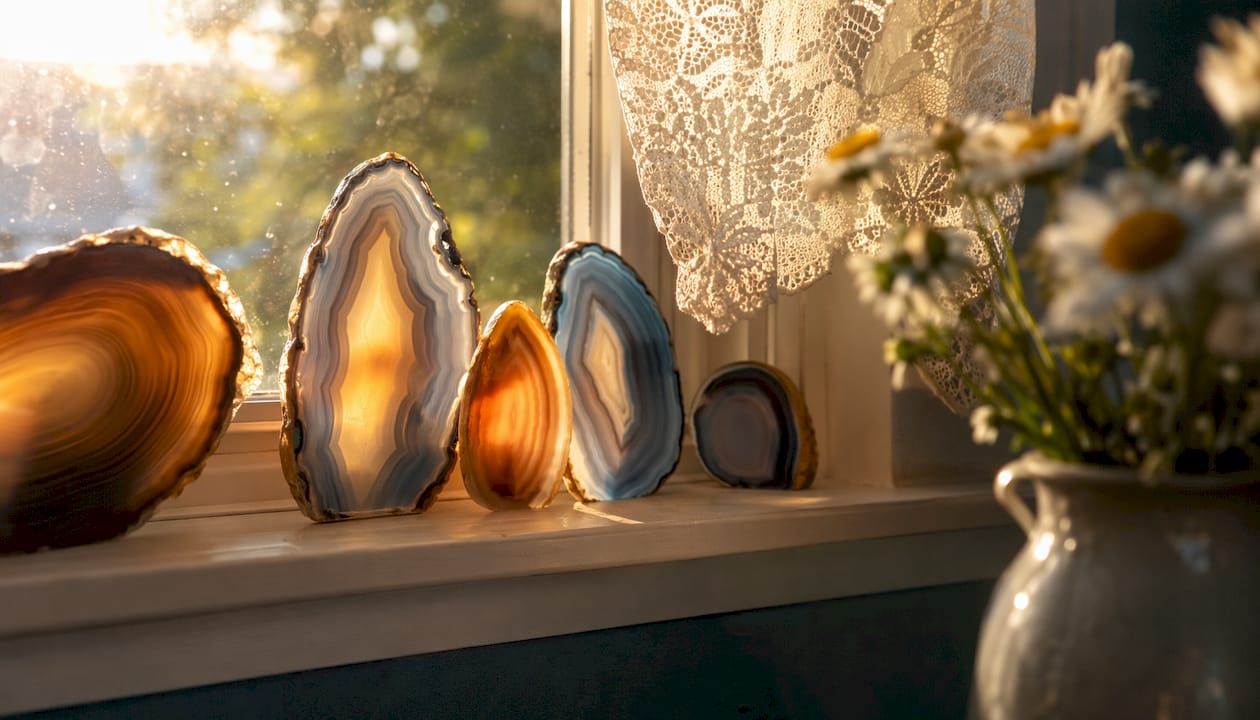
Windowsill and backlit agate slices. Thin agate slices transmit light beautifully when placed in a south- or east-facing window. Avoid placing colour-sensitive stones like amethyst in direct sun for extended periods, as UV exposure can fade them over time.
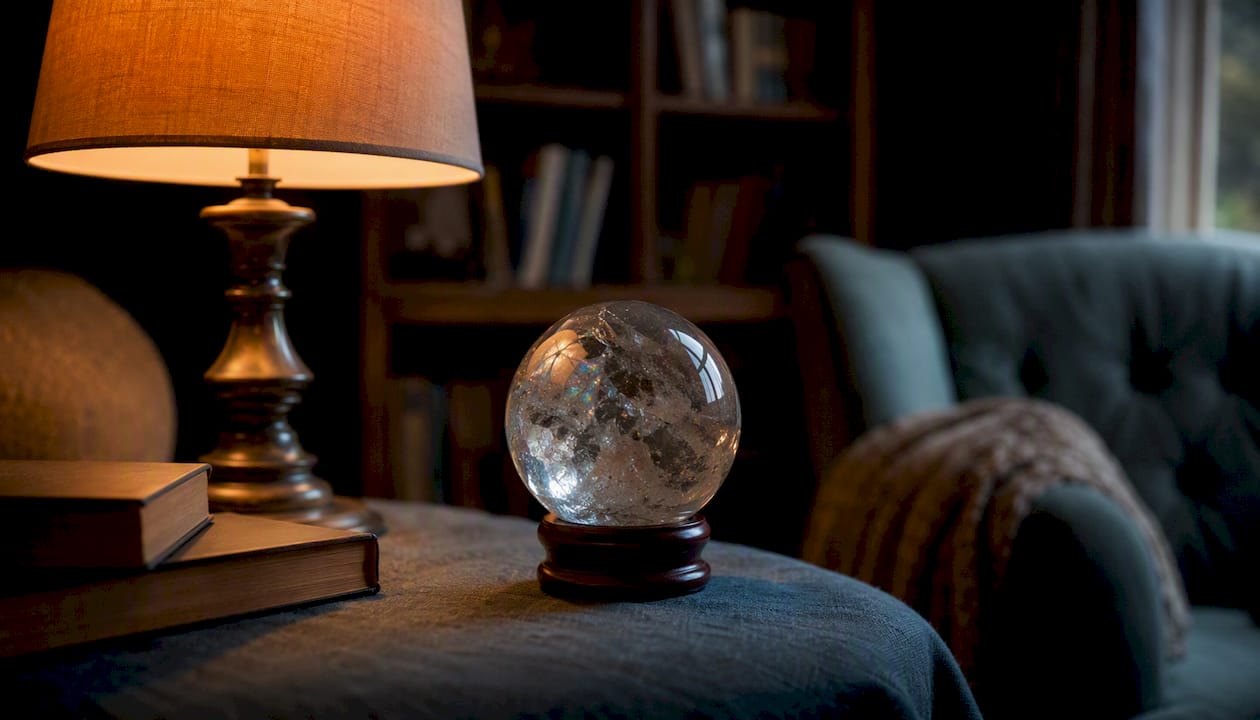
Reading nook. A crystal sphere on a small stand, a lamp, and a natural textile (linen, wool) create a calm, cohesive corner. Spheres are tactile and balanced, which suits a seated, close-up view.
Seasonal tablescapes. Crystals pair well with greenery, dried botanicals, and warm string lights for holiday or seasonal displays. Clear quartz and citrine read especially well against dark winter foliage.
Pro Tip: Layer three heights in every grouping: one tall piece, one mid-height, one low. Leave negative space between pieces so each crystal reads clearly. Triangulation in placement — treating the arrangement as a triangle rather than a line — keeps multi-piece displays balanced without looking staged.
Which crystal shapes work best for home decor?
The shape of a crystal determines how it reads in a room. Each form has a distinct visual role, and mixing two or three types in one space creates more interest than repeating the same shape.
Geodes and clusters are sculptural anchors. Their irregular surfaces catch light from multiple angles, making them effective statement pieces on mantels, consoles, and coffee tables. Best for: bohemian, eclectic, and luxe interiors.
Spheres and palm stones are smooth, balanced, and tactile. They suit tables, meditation nooks, and bookshelves where a calm, rounded form is needed. Best for: minimalist and modern spaces.
Towers, obelisks, and generators are vertical accents. A single tower on a shelf or console adds height without bulk. Best for: modern, minimalist, and Scandinavian-influenced rooms.
Slabs and agate slices lie flat and work as wall art, coasters, or windowsill pieces. When backlit, they function as crystal wall art with a stained-glass effect. Best for: contemporary and boho spaces.
Carved objects, bowls, and coasters introduce crystal texture through functional items. A rose quartz bowl on a vanity or an agate coaster on a side table adds material interest without requiring a dedicated display surface.
Bookends and knobs integrate crystals into everyday objects. Amethyst or quartz bookends on a shelf serve a practical purpose while adding colour and weight.
Raw vs. polished: Raw specimens offer more sculptural texture and visual complexity. Polished pieces are easier to clean and suit refined or minimal interiors. Both work; the choice depends on the room’s existing texture level.
Designers advise limiting the colour palette when mixing multiple crystal types. Two or three complementary hues read as curated; five or six read as a collection without a point of view.
How should you display crystals at home?
Display method matters as much as the crystal itself. A specimen placed directly on a glass shelf with no context reads differently than the same piece on a brass riser with a dark backdrop.
- Use a tray or bowl as a base. A neutral ceramic bowl, a wooden tray, or a slate tile grounds a grouping and signals that the arrangement is intentional. Avoid placing crystals directly on glass surfaces, as glass-on-glass creates visual noise.
- Add risers for height variation. Acrylic or brass risers lift smaller pieces so they are visible in a grouping. Treat large specimens as sculpture and give them space to breathe rather than crowding them with smaller pieces.
- Match lighting to the crystal type. Warm diffused light (a lamp with a linen shade) suits coloured stones like amethyst and rose quartz. Small spotlights work for clear or reflective pieces. Backlight thin slices and agate. Test the display at multiple times of day — morning and evening light change the colour and depth of a stone significantly.
- Pair with contrasting materials. Crystals read best against warm wood, velvet, matte black, or brass. These materials create visual tension that makes the stone the focal point. Avoid pairing pale crystals against white walls without a contrasting element between them.
- Apply the rule of three. Groups of three objects at varied heights are visually stable. A tall tower, a mid-height cluster, and a low tumbled stone create a complete vignette without requiring more pieces.
Pro Tip: Observe how light moves across a surface before placing a crystal there. Clear a surface completely, then watch it at morning, midday, and evening. The best placement for a reflective or colour-sensitive stone becomes obvious once you see where the light actually lands.
For more on arranging and protecting a collection, the display guide at Legacy Crystals and Minerals covers arrangement, safety, and basic care in practical detail.
How do you clean and safely place decorative crystals?
Care requirements vary by mineral. Getting this wrong can damage a specimen or create a safety issue in a household with children or pets.
Cleaning by material type:
- Clusters and raw specimens: dry-dust with a soft brush. Water can dislodge small crystal points or seep into crevices.
- Polished stones and towers: wipe with a slightly damp cloth, then dry immediately.
- Selenite and halite: never use water. Both are water-soluble and will dissolve or pit with moisture. Dry-dust only.
- Agate and quartz: water-safe, but avoid soaking.
Sunlight and fading. Amethyst, kunzite, and rose quartz can fade with prolonged direct UV exposure. Windowsill placement is fine for short periods, but rotate colour-sensitive stones away from direct sun over weeks and months.
Pet and child safety. Some minerals contain toxic elements. Malachite dust is a copper compound and should not be handled by children without supervision. Galena (lead sulphide) and cinnabar (mercury sulphide) are decorative minerals that require adult-only placement, well out of reach. Fragile specimens with sharp points should be placed above child and pet height.
Weight and stability. Large geodes can weigh several kilograms. Use museum gel or non-slip pads under heavy pieces on shelves. On high shelves, confirm the shelf rating before placing a specimen over 2 kg.
Quick safety checklist before placing a new piece:
- Confirm the mineral species and check for known toxicity
- Assess fragility (sharp points, delicate formations)
- Check water and light sensitivity
- Secure heavy pieces with museum gel
- Place out of reach of children and pets if any risk applies
How do you buy crystal decor in Canada?
Authenticity is the first concern. Provenance, scale photos, and mine or lab origin notes are the clearest signals that a seller is working with genuine specimens rather than dyed glass or resin replicas.
Authentication cues to look for:
- Photos of the specimen with a ruler or coin for scale
- Mine or region of origin stated (e.g., “zeolite from India,” “amethyst from Brazil”)
- Natural matrix visible on the base of clusters
- No uniform colour saturation (dyed specimens often show colour concentrated at tips or edges)
Price ranges by type (approximate CAD):
| Type | Approximate price range | What drives price |
|---|---|---|
| Small tumbled stones or palm stones | $5–$25 | Species, clarity, size |
| Medium clusters (5–10 cm) | $30–$100 | Specimen quality, origin |
| Large statement geodes | $150–$500 | Size, colour depth, rarity |
| Towers and obelisks | $20–$100 | Height, clarity, species |
Canadian shipping notes. When buying from a Canadian retailer, no customs duties apply. Purchasing from US or international sellers may trigger CBSA duties and brokerage fees on top of the listed price. Heavy specimens require reinforced packaging; confirm the seller uses foam-lined boxes or equivalent for pieces over 500 g.
Returns and condition checks. Request close-up photos of any chips, repairs, or base damage before purchasing. Ask for the measured weight and dimensions. Confirm the seller’s return policy covers transit damage and that shipments are insured.
Buying checklist:
- Ask whether the specimen has been dyed, heat-treated, or coated
- Confirm hardness and water sensitivity for your intended placement
- Verify the return policy and whether shipping insurance is included
- For large pieces, ask for the actual weight before ordering
Natural crystals also make considered gifts when provenance and care notes accompany the piece.
Curated crystal decor picks available to Canadian buyers
These three pieces from Legacy Crystals and Minerals cover a range of sizes, budgets, and styling uses.
Natural Amethyst Crystal Cluster Tower (approx. 7 cm x 5 cm)
The Natural Amethyst Crystal Cluster Tower is a compact, desk- or nightstand-sized piece with the deep purple colour and multi-point formation that makes amethyst one of the most recognizable decorative crystals. At approximately 7 cm x 5 cm, it fits on a small tray with a candle or alongside books on a shelf without dominating the surface.
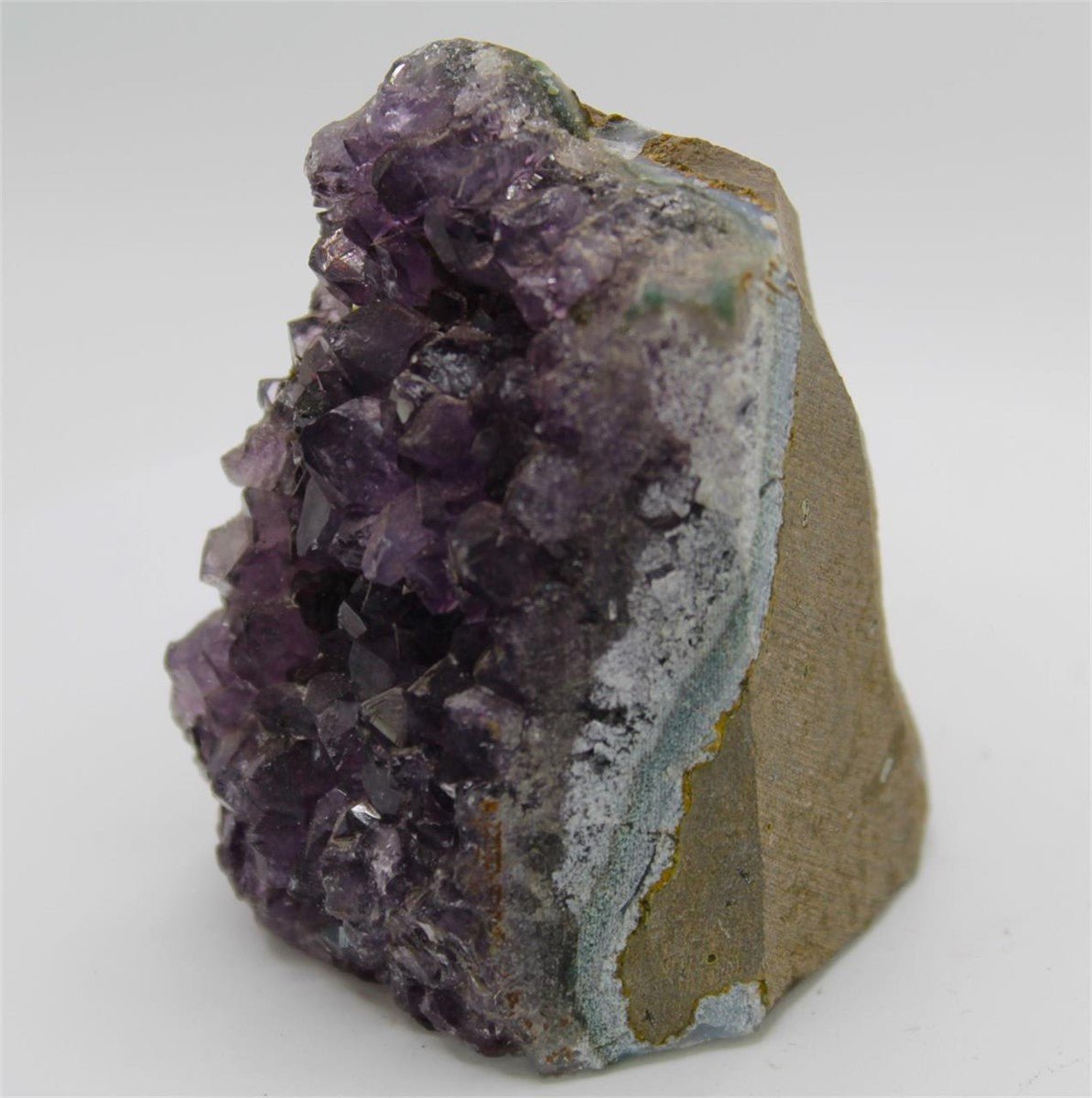
Best for: bedroom nightstand, home office desk, small shelf vignette. Pairs well with warm lamp light and a dark wood or velvet surface beneath it.
Mystery Crystal Tower (Generator Obelisk) | Blind Grab
The Mystery Crystal Tower is a blind-grab obelisk, meaning the specific stone species is a surprise. Generator obelisks are tall, pointed, and vertically oriented, making them natural shelf accents or console table pieces. The blind-grab format suits buyers who want variety or who are building a mixed-species display.
Best for: console tables, shelving units, and anyone building a multi-crystal display who wants an unexpected addition. The vertical form works in modern and minimalist rooms where a single tall accent is more effective than a cluster.
Zeolite Crystal Cluster Formation from India (approx. 10 cm x 10 cm)
The Zeolite Crystal Cluster Formation is a 10 cm x 10 cm sculptural specimen from India, featuring octagonal calcite crystal flakes within the zeolite matrix. At this size, it reads as a statement piece on a coffee table or mantel. The white-to-cream colouring suits neutral and Scandinavian-influenced interiors, and the complex surface texture catches light from multiple angles.
Best for: coffee table centrepiece, mantel anchor, or a shelf where a larger sculptural form is needed. Place on a dark tray or slate tile to contrast the pale colouring.
All three pieces ship to Canadian addresses. Legacy Crystals and Minerals provides provenance details and can answer questions about specimen origin and care before purchase.
Simple DIY displays and budget ways to add crystal accents
Small projects let you introduce crystal home accents without a large upfront cost. These use inexpensive materials and pieces that are widely available.
- Repurposed frame display. Remove the glass from a thrift-store frame, line the backing with velvet or linen, and arrange small flat specimens or agate slices against it. Hang as crystal wall art or lean against a shelf.
Budget tips: Buy small tumbled stones in bulk rather than individually. Mix purchased crystals with found natural objects (smooth river stones, driftwood) to fill a display without overspending. LED tealights eliminate fire risk in enclosed bowls.
Safety note: avoid using minerals with known toxicity (malachite, galena, cinnabar) in open bowls accessible to children or pets. Secure any piece over 500 g with museum gel, even on low surfaces.
For readers interested in more structured arrangements, crystal grids offer a geometric display format that works as both decor and a focused practice.
Key takeaways
Crystal room decor works best when one statement piece anchors a surface, lighting is matched to the stone type, and safety checks are completed before placing any specimen in a shared space.
| Point | Details |
|---|---|
| Start with one focal surface | Place a single statement crystal on a mantel, console, or nightstand before adding smaller accents. |
| Match lighting to the stone | Use warm diffused light for coloured stones; backlight thin agate slices; avoid harsh direct glare on any specimen. |
| Check care before placement | Confirm water sensitivity, light stability, and toxicity for each mineral before choosing its location. |
| Secure heavy pieces | Use museum gel or non-slip pads under specimens over 2 kg, and verify shelf weight ratings. |
| Legacy Crystals and Minerals | Offers authenticated Canadian-shipped specimens including the Amethyst Cluster Tower, Mystery Obelisk, and Zeolite Cluster Formation. |
Crystal decor available from Legacy Crystals and Minerals
Legacy Crystals and Minerals offers museum-grade specimens with provenance details, shipped to Canadian addresses with packaging suited to heavy and fragile pieces.
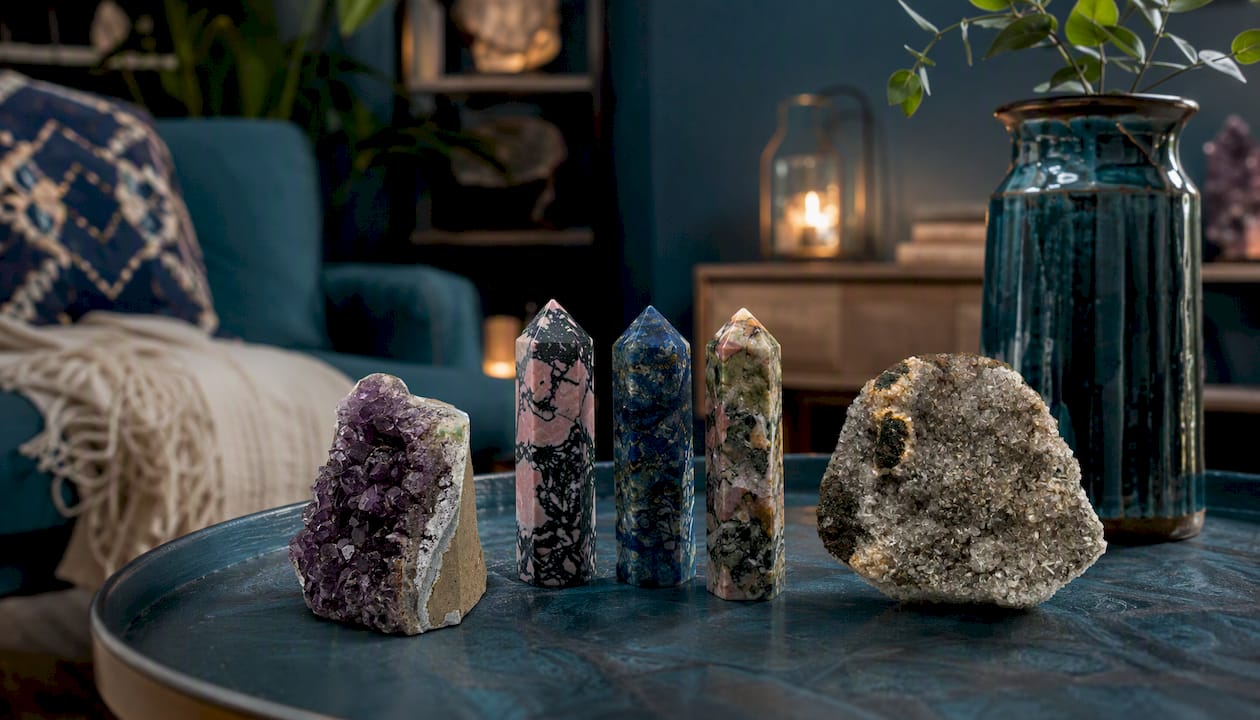
Three pieces covered in this article are available directly:
- Natural Amethyst Crystal Cluster Tower — compact bedside or shelf accent, approx. 7 cm x 5 cm
- Mystery Crystal Tower (Generator Obelisk) — blind-grab vertical accent for consoles and shelves
- Zeolite Crystal Cluster Formation from India — 10 cm x 10 cm sculptural statement piece
Shipments are packaged for specimen safety, and the team can answer provenance and care questions before an order is placed. Returns and shipping insurance details are available on the product pages. Browse the full collection at Legacy Crystals and Minerals.
Useful sources
- How to Decorate Your Home and Office With Crystals | Vogue
- 10 Ways to Decorate With Crystals | Apartment Therapy
- Display Crystals in: the 9 — Step Room Reset - Bark and Chase
- Crystals for Your Home: A Room-by-Room Guide | Crystal Almanac
- The Magic of Crystal Room Decor: Styling Geodes & Gemstones for a Dreamy, Ethereal Space — seekpretty
- 25 Crystal Decor Ideas You’ll Want to Scatter in Every Room Once You See Them
FAQ
What crystals should you put in a bedroom?
Amethyst, rose quartz, celestite, and moonstone are common bedroom choices. Place them on a nightstand or dresser where they are visible but not on the sleep surface itself.
How do you decorate a room with crystals?
Start with one statement piece on a single surface, then add smaller accents in a group of three at varied heights. Use a tray or bowl to ground the arrangement and match the lighting to the stone type.
What crystals should you avoid keeping in a bedroom?
Avoid minerals with known toxicity (malachite dust, galena, cinnabar) in any shared sleeping space, and keep fragile pointed specimens away from areas where they could be knocked over during the night.
Where should you put crystals in a room?
Mantels, console tables, nightstands, shelves, and coffee tables are all effective surfaces. Choose a location based on the crystal’s light sensitivity: keep colour-sensitive stones like amethyst away from direct sun, and place water-sensitive minerals like selenite away from humid areas.
Where can Canadian buyers find authentic crystal decor?
Legacy Crystals and Minerals ships authenticated specimens to Canadian addresses, with provenance details and packaging suited to heavy and fragile pieces. Product pages include size, origin, and care information.
Recommended
- Legacy Crystals and Minerals | Museum-Quality Crystals & Collectibles
- Display crystals at home guide: arrange and protect your collection – Legacy Crystals and Minerals
- Chinese fluorites: collector’s buying guide for Canada – Legacy Crystals and Minerals
- Best LittleLemuria.com alternatives for Canadian buyers – Legacy Crystals and Minerals


