
10 Crystals for Love: Pick One by Relationship Stage
For self-love, reach for rose quartz. For new romance, carry moonstone. For rekindling passion, wear garnet. For healing after heartbreak, hold rhodonite. Crystals for love work best as intention tools, prompts that keep you focused on the emotional habits you’re trying to build, not as a substitute for the work itself. There are ready options for each of these goals, including Healing Crystal Intention Sets, a Lavender Rose Quartz Heart, and high-quality Rose Quartz Tumbled Stones. The sections below explain the traditional meanings of each stone, suggestions for their use, and guidance for choosing one matching your relationship focus.
TL;DR:
- Rose quartz supports self-love and healing, making it ideal for processing past wounds before attracting new relationships.
- Moonstone is best suited for new beginnings and trusting your instincts when starting a relationship or dating again.
- Garnet, associated with passion, can help reignite desire in long-term partnerships or energize stagnant connections.
- Crystals serve as intention tools, not as influence agents, and their effectiveness depends on proper cleansing, programming, and consistent physical contact.
- Sourcing quality stones with high clarity and proper grading ensures the durability of your crystal’s energetic and aesthetic qualities.
Table of Contents
- Best crystals for love: meanings and how to use each one
- How to cleanse, charge, and program your love crystals
- Which crystal fits your relationship stage?
- Why sourcing and grading matter when you’re buying love crystals
- Common misconceptions about crystals for love
- Where love crystals come from: a short history
- What the science actually says about crystal healing
- Ready-made options for wherever you’re starting
- Sources
- FAQ
Best crystals for love: meanings and how to use each one
Choosing among love attraction crystals gets easier once you know what each stone is actually associated with. Some support new connections, others help you process what already happened, and a few are built for the long haul. Here’s the full rundown of the stones most consistently recommended across crystal healing traditions.
Rose quartz
Rose quartz is the closest thing this category has to a universal recommendation. It’s known as the stone of unconditional love, tied to opening the heart chakra and encouraging self-compassion before it does anything for a relationship with someone else, according to AJLuxe’s guide to crystals for love. Best for: self-love, healing old wounds, and inviting new relationships once you’ve done that inner work.
Wear it as a pendant that sits near your heart, or keep a tumbled piece in your pocket during a hard week. Legacy Crystals and Minerals’ Rose Quartz Tumbled Stone in AAA grade is sized for exactly that kind of daily carry, and its high clarity makes the soft pink colour easy to appreciate even in a small specimen.
Moonstone
Moonstone carries associations with new beginnings and emotional intuition, which is why it shows up so often in guides aimed at people entering a new relationship or hoping to attract one. Best for: new love and trusting your instincts about a person you’ve just met.
Carry a tumbled moonstone in your bag on a first date, or place one on your nightstand if you’re working through what you actually want from a new connection. Guides on pairing stones for relationship work often recommend combining it with rose quartz, softening new-relationship anxiety with a stone tied to unconditional acceptance, per Robin Woolard’s crystal pairing guide.
Garnet
Garnet has a long association with passion and vitality, and it reads differently than the gentler heart stones. Best for: reigniting desire in an established relationship or bringing energy to a connection that’s gone flat.
Wear garnet as a ring or bracelet on your dominant hand, since some traditions link that placement to action and drive rather than receptivity. A deep red, well-saturated stone with minimal visible inclusions is the mark of a good specimen.
Rhodonite
Rhodonite is the stone practitioners reach for after a breakup, not before one. It’s associated with forgiveness and emotional balance, which makes it a tool for processing what happened rather than attracting what’s next, according to Chakra Serenity’s guide to crystal healing for relationships. Best for: healing after a breakup or repairing trust within an existing relationship.
Hold a piece during journalling sessions about what went wrong, or carry it for the first few weeks after a difficult conversation. If you’re working through a specific emotional pattern rather than a single event, Legacy Crystals and Minerals’ guide to selecting crystals for emotional healing covers how to match a stone to the kind of healing you actually need.
Amethyst
Amethyst is best known for calming an overactive mind, which matters in relationships more than people expect. Anxious attachment, overthinking a partner’s text message, replaying an argument on a loop: these are the moments amethyst is meant for. Best for: emotional balance and reducing relationship anxiety.
Keep a cluster on a bedside table or a small tumbled piece in a pocket during a stressful week. Pairing amethyst with rhodonite is common in healing-focused combinations, since one settles the mind and the other addresses the emotional wound directly.
Morganite
Morganite is a pink variety of beryl associated with compassion and mature, steady love rather than the spark of new attraction. Best for: long-term partnerships and deepening commitment.
Wear it as jewellery you keep on daily, since its meaning is tied to consistency rather than a single ritual moment. It’s a pricier stone than most on this list, so buy from a source that can speak to its clarity grading and origin.
Citrine
Citrine is associated with confidence and personal power, which places it closer to the self-love category than the romance one. Best for: building the self-worth that makes healthy relationships possible in the first place.
Carry citrine when you’re working on setting boundaries or asking for what you need in a relationship. Practitioner consensus is that self-love stones like citrine and rose quartz are foundational, and relationship-readiness tends to follow from that inner work rather than the other way around.
Emerald
Emerald has a reputation, going back centuries, as a stone of loyalty and successful partnership. Best for: reinforcing commitment and domestic harmony within an established relationship.
A small raw emerald or a polished cabochon kept in a shared space, a bedroom or a home office, is the most common way people use it. Genuine emerald is heavily included by nature, so don’t mistake visible inclusions for low quality. That’s normal for the stone.
Green aventurine
Green aventurine is often called the stone of opportunity, and in a relationship context it’s associated with luck in new romantic ventures. Best for: putting yourself back out there after time apart from dating.
Carry it before a first date or a social event where you’re hoping to meet someone new.
Lapis lazuli
Lapis lazuli connects to communication and honesty, two things that make or break a relationship faster than almost anything else. Best for: improving communication with a partner or having a difficult conversation you’ve been avoiding.
Keep a piece nearby during a planned conversation, or wear it as a pendant that sits near the throat.
Pro Tip: When buying any love stone, check for consistent colour saturation and minimal surface damage rather than assuming bigger means better. A smaller AAA-grade tumbled stone with high clarity will hold its meaning and its appearance longer than a larger piece riddled with fractures.
How to cleanse, charge, and program your love crystals
A new crystal carries whatever energy its journey left behind, mining, handling, shipping, so most practitioners cleanse a stone before using it for a specific intention. The steps below cover the most commonly recommended methods, along with the exceptions that actually matter.
- Smudge with sage or palo santo. Pass the stone through the smoke for 10 to 15 seconds. This method is safe for every stone on this list, including soft or porous ones.
- Charge under moonlight. Leave the stone on a windowsill or outdoors overnight during a full moon, or any clear night if timing doesn’t line up. This is a gentle method with no risk to the stone’s surface.
- Rinse under running water, but only for hard, non-porous stones. Quartz varieties like rose quartz and amethyst can typically handle a quick rinse. Skip water entirely for softer or porous stones such as moonstone and rhodonite, since moisture can dull their finish or work into surface fractures, a caution echoed across practical guides on crystals for love.
- Set your intention out loud. Hold the stone in both hands and state a short, specific sentence: “I am open to giving and receiving love” or “I release resentment from my last relationship.” Specificity matters more than length.
- Wear or carry it near your heart for the next few hours. This is the step most practitioners point to as the difference between a stone that feels meaningful and one that’s just decoration; pairing an intention with physical, close contact.
Once a stone is cleansed and programmed, build a short daily habit around it: five to ten minutes each morning holding the stone, repeating your affirmation, and jotting a single line in a journal about how you felt. That repetition is what turns a piece of quartz into an actual behavioural cue rather than a shelf ornament.
For anyone working toward a specific relationship goal, a small crystal grid, several complementary stones arranged around a photo or written intention, can reinforce the same theme. A simple version pairs a central rose quartz with four small citrine points at the corners for a self-love grid, or rose quartz with garnet for a passion-focused one.
Pro Tip: Don’t combine more than two or three stones with genuinely different intentions in the same space. A grid mixing self-love, passion, and communication stones all at once tends to dilute focus rather than sharpen it. Legacy Crystals and Minerals’ guide to combining crystals for energy work walks through pairings that reinforce each other instead of competing.
Which crystal fits your relationship stage?
Matching a stone to your actual goal, rather than picking whatever’s trending, is what separates a useful practice from a random purchase. Here’s how that mapping breaks down:
- Want to attract new love? Choose moonstone for openness to new connections, paired with rose quartz to keep the search rooted in self-worth rather than urgency.
- Want to reignite passion in an existing relationship? Choose garnet, worn where you’ll notice it, as a daily reminder to bring energy back to the relationship rather than waiting for it to return on its own.
- Healing after a breakup? Choose rhodonite first, and give it weeks, not days, before adding an attraction-focused stone like moonstone into the mix.
- Working on long-term commitment? Choose morganite or emerald, both tied to steadiness rather than spark, worn consistently rather than pulled out for special occasions.
- Starting with self-love? Choose rose quartz or citrine before anything else. Practitioner consensus is fairly consistent here: self-worth work tends to come before, not after, attracting a healthy relationship.
Healing and self-love stones deserve priority any time you’re still processing a past relationship. Reaching for an attraction stone before that work is done tends to repeat old patterns with a new person instead of breaking them.
A few honest caveats belong here too. No stone replaces consent, communication, or a hard conversation you’re avoiding. If a relationship has a pattern of dishonesty, control, or repeated harm, a crystal grid isn’t the tool for that. That calls for a counsellor or a relationship therapist, and no combination of stones changes that fact.
Why sourcing and grading matter when you’re buying love crystals
Not every rose quartz on the market is the same rose quartz. Grading, clarity, and provenance affect both how a stone looks and how long it holds up, which is where trade-standard sourcing practices become relevant rather than a footnote, a point supported by jewellery trade provenance standards. Some sources offer museum-grade specimens and publish educational guides on chakra alignment and crystal pairing to help buyers make informed choices.
The three product lines that map directly to what’s covered above: Healing Crystal Intention Sets are built for anyone starting out and unsure which combination to buy first, a curated shortcut past the guesswork of assembling stones one at a time. The Lavender Rose Quartz Heart works as a symbolic gift for a partner or a visible reminder for yourself, and it pairs naturally with the ideas in the case for crystal hearts as meaningful gifts. The Rose Quartz Tumbled Stone, AAA Grade, is the everyday carry option for self-love practice, small enough for a pocket and clear enough that the stone’s quality is obvious at a glance.
An author experienced in crystal sourcing and use compiled the buying notes in this guide based on common customer questions before choosing between raw, tumbled, and jewellery formats.
Common misconceptions about crystals for love
The biggest misconception is that a crystal can cause someone to fall in love with you. No stone influences another person’s feelings or decisions. What crystals for love actually do is give the person carrying them a consistent cue to act differently, to speak up, to forgive, to open up to someone new, and that behaviour change is what shifts outcomes, not the mineral itself.
A second misconception treats crystals as a substitute for consent or communication. Setting an intention with a garnet doesn’t replace an honest conversation with a partner, and no stone should be used as a way to pressure someone into a relationship they haven’t chosen. A third misconception assumes bigger or more expensive always means more effective; a small, well-chosen tumbled stone you actually carry every day tends to matter more than a large display piece that sits untouched on a shelf.
There’s also a risk worth naming plainly: leaning on crystal work while ignoring a genuinely unhealthy relationship pattern, dishonesty, control, repeated conflict, delays real help. Crystals support intention and reflection. They don’t resolve conflict, and they’re not a stand-in for therapy or a hard conversation that needs to happen.
Where love crystals come from: a short history
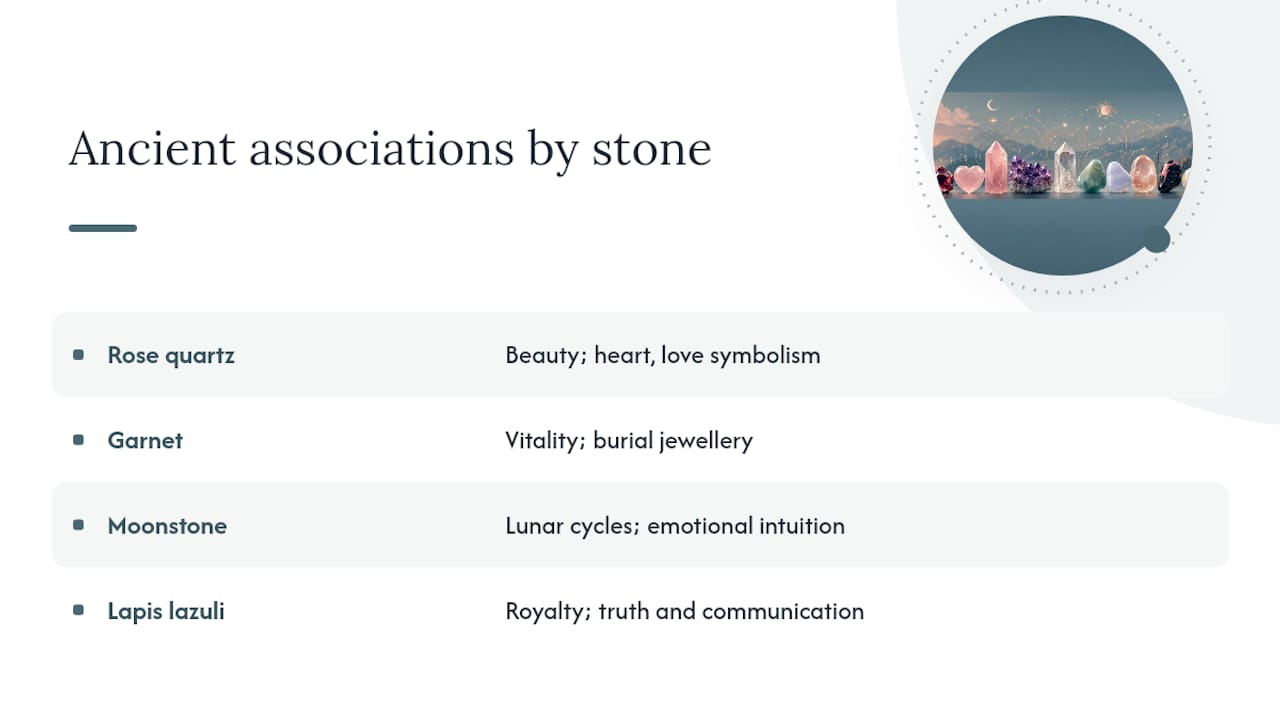
Rose quartz jewellery and carvings have been found in archaeological sites dating back thousands of years, with early use recorded in ancient Mesopotamia and Egypt, where the stone was associated with beauty and the heart. Garnet appears in burial jewellery across multiple ancient cultures, often placed with the dead as a symbol of vitality carried into the next life. Ancient Rome and Greece both wrote about gemstones in connection to Venus and Aphrodite, tying certain pink and red stones directly to romantic love centuries before the modern wellness market existed.
Moonstone carries a particularly consistent thread across cultures: in South Asian traditions it’s long been associated with lunar cycles and emotional intuition, ideas that carried directly into how it’s used today for new beginnings. Lapis lazuli held enormous value in ancient Egypt, reserved for royalty and burial rites, and its ties to truth and communication predate any wellness framing by millennia.
What’s changed isn’t the stones themselves but how directly people now shop for them by specific intention. Earlier eras often treated gemstones as status symbols first and symbolic tools second. Today’s crystal buyer more often starts with the goal, self-love, healing, new romance, and works backward to the stone.
What the science actually says about crystal healing
There’s no controlled clinical research showing that crystals emit a measurable energy that affects human emotion or relationships. That’s worth stating plainly, because it’s the honest answer to a question a lot of guides dance around. What research and practitioner observation do support is something more modest and arguably more useful: the ritual of setting an intention, paired with a physical object you touch and see daily, functions as a behavioural anchor.
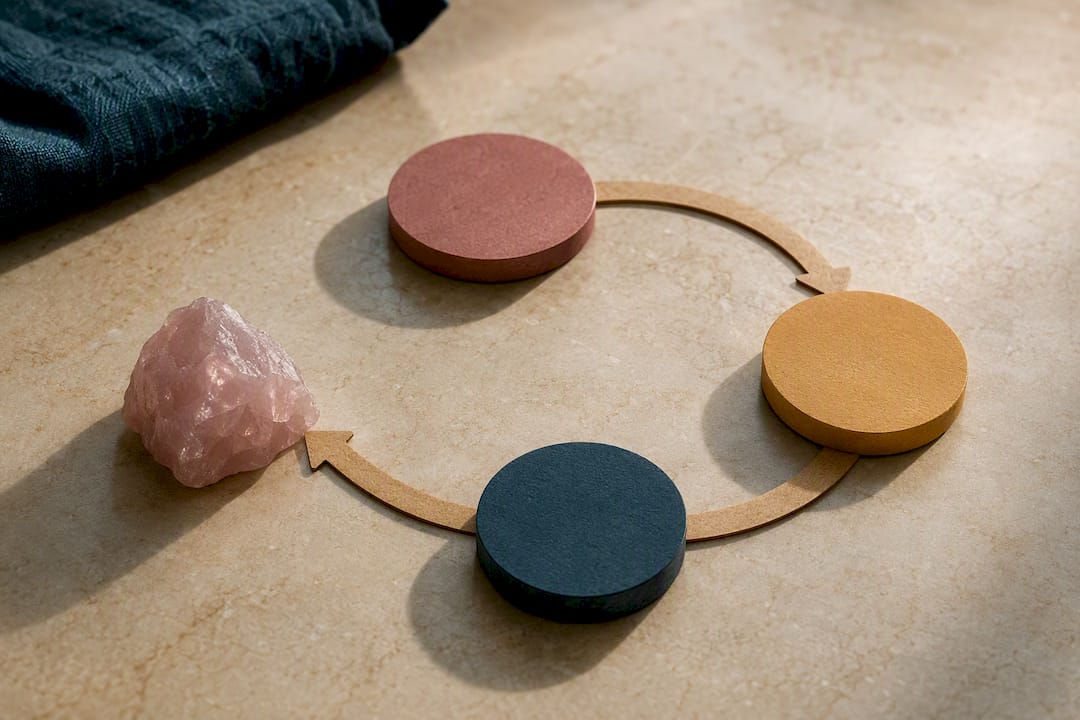
This is closer to how a wedding ring or a worry stone works than how a medication works. Handling an object regularly creates a repeated cue that reinforces whatever intention you attached to it, which is a documented pattern in habit formation generally, not something unique to crystals. Practitioner guidance consistently frames the outcome this way: crystals function as reminders and anchors for intention and action, not as a direct cause of a relationship outcome.
That framing matters for how you should actually use these stones. Treat rose quartz as a nudge to practise self-compassion, not a spell that produces it. Treat garnet as a reminder to bring energy to a relationship, not a substitute for actually doing so. The stone doesn’t do the work. It just makes it harder to forget you meant to.
Ready-made options for wherever you’re starting
If you’re not sure which stone or combination to start with, there are options that cover the most common starting points.
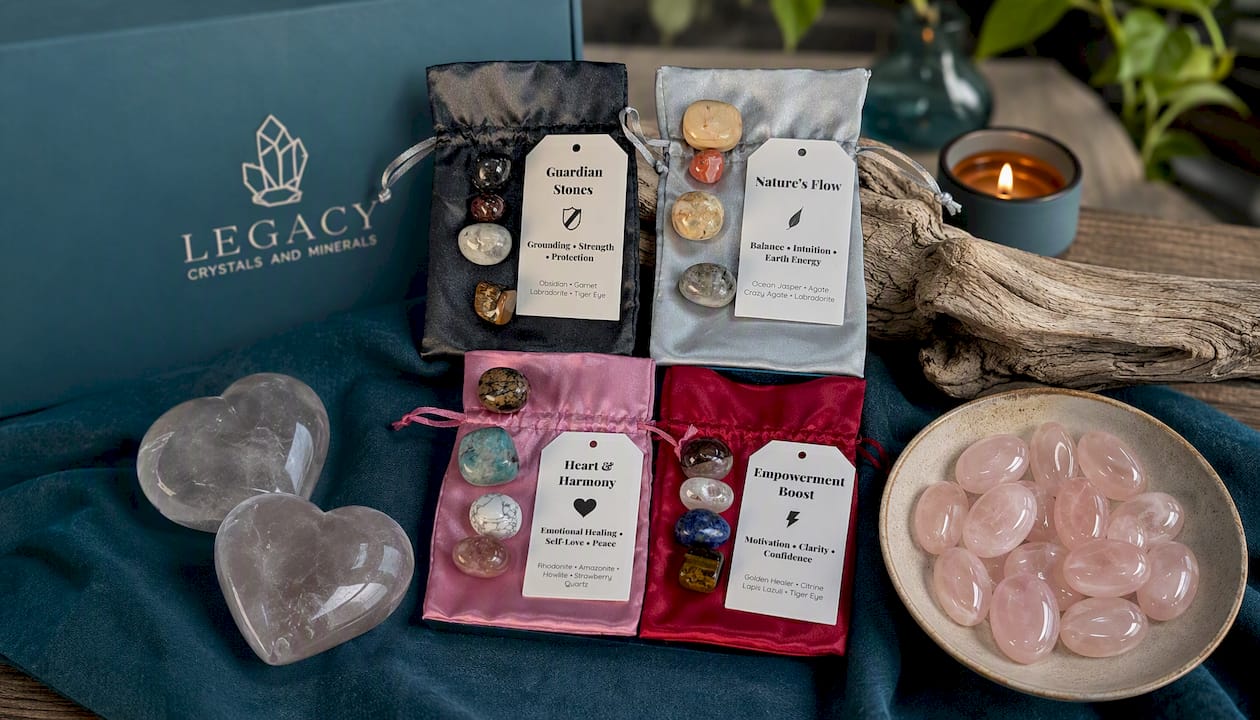
- Starting with self-love? The Rose Quartz Tumbled Stone, AAA grade is a pocket-sized, high-clarity piece built for daily carry rather than display.
- Buying a gift for someone you love? The Lavender Rose Quartz Heart is a symbolic, heart-shaped piece that reads as a gift rather than a raw specimen, and it pairs naturally with a romantic flower arrangement from Malik Flowers if you want to round out the gesture.
- Not sure where to start at all? The Healing Crystal Intention Sets bundle complementary stones for love and healing so you’re not guessing at combinations on your first purchase.
Each listing includes sourcing and grading details so you know exactly what you’re buying before it arrives.
Sources
- Best Crystals for Love: Top 8 Stones for Attraction & Relationships (2026) – AJLuxe
- Best Crystals for Love & Romance: Top Stones for Attraction
- Powerful Crystal Healing for Love & Relationships - Chakra Serenity
FAQ
What crystals are best for love?
Rose quartz for self-love and unconditional love, moonstone for new relationships, garnet for passion, and rhodonite for healing after heartbreak are the most consistently recommended stones across crystal healing guides.
What crystals attract soulmates?
Moonstone and rose quartz are the two most commonly paired stones for attracting a compatible partner, with moonstone tied to new beginnings and rose quartz keeping the search grounded in self-worth rather than urgency.
Which crystal attracts love from someone specific?
No crystal influences another person’s feelings or choices. Stones like garnet or rose quartz work by reinforcing your own intention and behaviour, not by acting on someone else’s mind.
How do you manifest love with crystals?
Cleanse the stone, hold it while stating a specific spoken intention, then wear or carry it near your heart daily so it functions as a consistent reminder to act on that intention, whether that’s opening up, forgiving, or putting yourself out there.


