
How to select crystals for emotional healing
Selecting crystals for emotional healing means choosing stones whose energetic qualities align with your current emotional state to support balance and well-being. Crystal healing therapy, as it is formally known, treats stones like Amethyst, Rose Quartz, and Citrine as complementary tools that work alongside the body’s own recovery process. Each of these stones connects to a specific chakra: Amethyst to the Crown, Rose Quartz to the Heart, and Citrine to the Solar Plexus. Understanding these connections helps you choose healing crystals with purpose rather than guesswork. Crystals are not a replacement for professional care, but they serve as grounding, sensory anchors during difficult emotional periods.
What are the key crystals used for emotional healing?
Twelve essential crystals have been identified for mental health and wellness support as of 2026. That breadth reflects how varied emotional needs are, and why no single stone works for everyone.
Amethyst
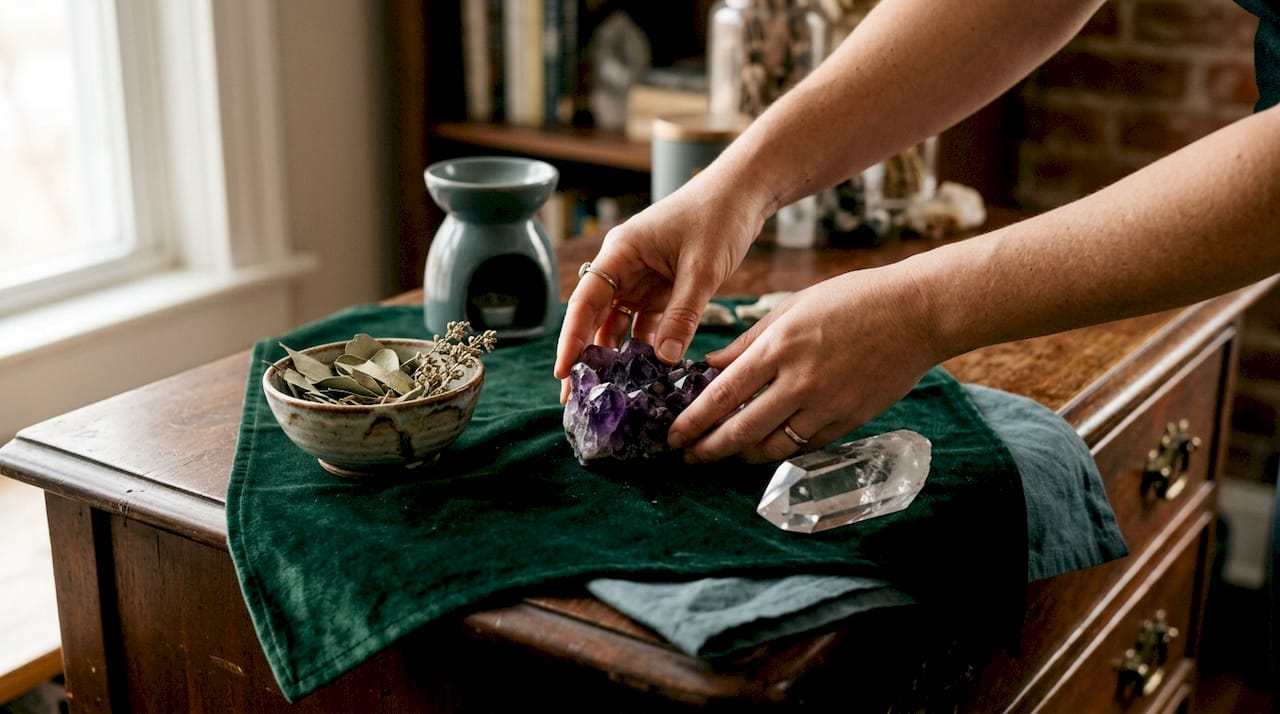
Amethyst calms the mind and reduces nervous energy. Carrying or handling Amethyst can alleviate generalised anxiety and support better sleep. It connects to the Crown chakra, which governs mental clarity and spiritual calm. Practitioners widely use it for stress relief and as a sleep aid.
Rose Quartz
Rose Quartz is the primary stone for self-love and compassion. Anxiety often stems from internal self-criticism and fear of judgement. Rose Quartz gently releases these patterns, making it useful well beyond romantic relationships. It connects to the Heart chakra and supports crystals for relationship harmony by encouraging openness and empathy.
Citrine
Citrine lifts mood and builds optimism. Unlike most stones, Citrine disperses negative energy rather than absorbing it, which means it requires less frequent energetic cleansing. It connects to the Solar Plexus chakra, the centre of personal confidence and motivation. Citrine is a practical choice for those who want select crystals for positive energy without heavy maintenance.
Other key stones
- Lepidolite contains natural lithium, which gives it symbolic weight in emotional instability. Its role is sensory and complementary, not pharmacological, but many people find it soothing during periods of emotional turbulence.
- Smoky Quartz absorbs and transmutes dense, heavy emotions. It is a grounding stone suited to those processing anger or deep sadness.
- Moonstone supports emotional cycles and is particularly useful during periods of transition or hormonal shifts.
Pro Tip: When choosing between stones, hold each one briefly and notice which feels heavier, warmer, or more calming in your hand. Physical sensation is a reliable first signal.
| Crystal | Chakra | Primary emotional benefit | Cleansing frequency |
|---|---|---|---|
| Amethyst | Crown | Calms anxiety, aids sleep | Weekly |
| Rose Quartz | Heart | Self-love, compassion | Weekly |
| Citrine | Solar Plexus | Optimism, positive energy | Monthly |
| Lepidolite | Heart/Third Eye | Emotional stability | Weekly |
| Smoky Quartz | Root | Grounding, transmutes grief | Weekly |
| Moonstone | Sacral | Emotional cycles, transitions | Bi-weekly |
How do you select the right crystal for your emotional needs?
The best crystal is the one that resonates with your current emotional state, not the one with the most impressive list of properties. Intuitive selection consistently outperforms rigid rule-following when it comes to personal healing work. That said, a few practical steps make the process clearer.
Step-by-step selection method
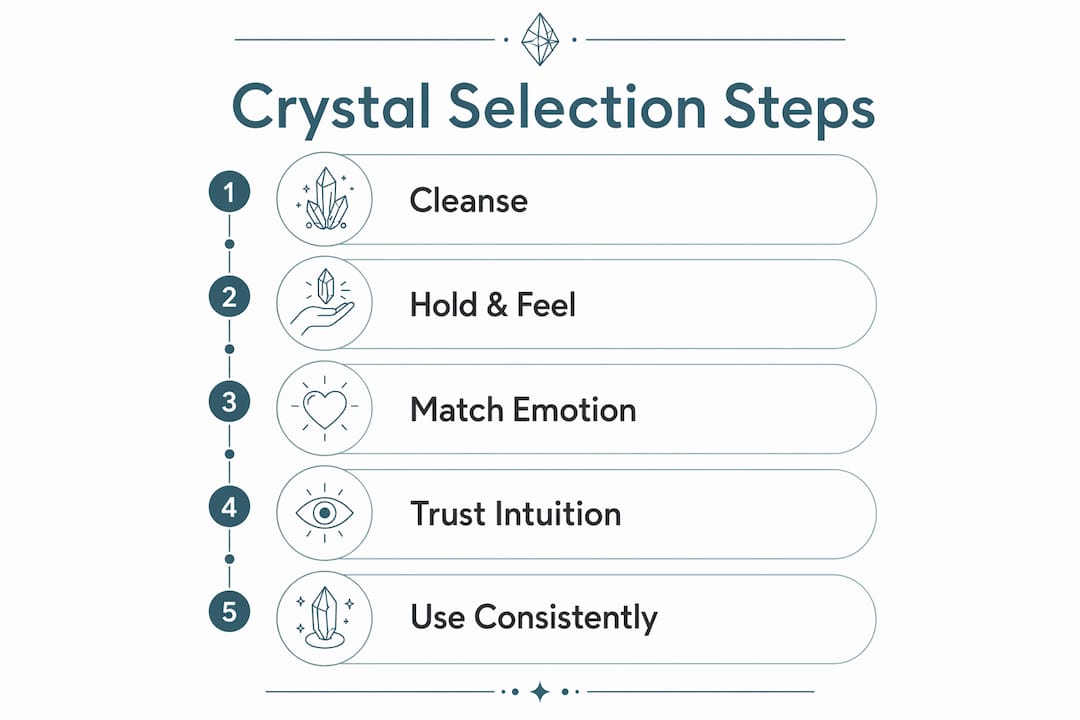
- Identify your primary emotional challenge. Are you processing grief, managing anxiety, rebuilding confidence, or seeking mental clarity? Name it specifically. Vague intentions produce vague results.
- Match the stone to the emotional phase. Different crystals suit different grief phases: Apache Tears for acute grief, Rhodonite for rebuilding strength, and Moonstone for navigating emotional cycles. This phase-matching approach applies beyond grief to most emotional states.
- Consider colour and chakra alignment. Green and pink stones generally support the Heart chakra. Purple stones connect to the Crown and Third Eye. Yellow and orange stones activate the Solar Plexus. Colour is a fast, intuitive filter. You can read more about chakra and crystal alignment to deepen this understanding.
- Hold the stone before you commit. Weight, texture, and temperature all matter. A stone that feels right in the hand is more likely to become part of your daily practice.
- Start with one crystal. Buying several stones at once dilutes focus and makes it harder to notice what is actually working. One stone, used consistently, teaches you more than five stones used occasionally.
Pro Tip: Cleanse a new crystal before its first use by placing it in moonlight overnight or rinsing it briefly under cool running water (check that your stone is water-safe first). This removes any residual energy from handling and sets a clean starting point.
What are effective ways to use crystals for emotional healing daily?
Crystals function as sensory grounding tools rather than passive decorations. The physical act of touching, holding, or wearing a stone is where most of the benefit occurs.
- Meditation. Hold your chosen stone in both hands during a 5–10 minute seated practice. Focus on its weight and texture. This tactile anchor keeps attention in the present rather than cycling through anxious thoughts.
- Wearable stones. Wearing crystal jewellery keeps the stone in contact with your skin throughout the day. A Rose Quartz bracelet worn on the left wrist, for example, sits close to pulse points and serves as a constant physical reminder of your intention.
- Pocket stones. A small, polished stone carried in a pocket gives you something to reach for during stressful moments. The act of reaching for it is itself a grounding behaviour.
- Sacred space arrangements. Placing crystals on a dedicated surface, such as a bedside table or a corner of your desk, creates a visual anchor. Smoky Quartz in a workspace can help absorb ambient stress throughout the day.
- Tactile grounding during distress. Holding a crystal activates pressure-sensitive receptors and supports parasympathetic nervous system activation. The weight and texture trigger calming physiological responses similar to those produced by weighted blankets. This makes crystals particularly useful during acute emotional distress, not just as a long-term practice.
Pro Tip: Pair your crystal use with a single, consistent breath pattern: four counts in, hold for four, four counts out. The crystal becomes a physical cue for the breath, and the breath does the physiological work.
Crystals work best as part of a broader approach to emotional well-being. Professional therapy, social support, and physical self-care all remain important. Experts recommend seeking professional care if emotional symptoms persist beyond a few weeks.
What mistakes should you avoid when using crystals for emotional healing?
The most common mistake is expecting crystals to replace professional therapy or medical care. Lepidolite’s natural lithium content, for instance, is symbolic and sensory rather than pharmacologically active. It supports emotional work; it does not perform it.
- Buying too many stones at once. A collection of ten crystals used inconsistently produces less benefit than one stone used daily. Start small and add only when you have a clear reason.
- Skipping energetic cleansing. Crystals that absorb negative energy need regular cleansing to maintain their potency. Most stones benefit from weekly cleansing. Citrine is the exception: because it disperses rather than absorbs negative energy, it needs cleansing far less often.
- Expecting linear progress. Emotional healing is non-linear. A crystal that feels powerful one week may feel neutral the next. That shift is normal, not a sign that the stone has stopped working.
- Ignoring personal resonance in favour of popular choices. Rose Quartz is widely recommended, but if it does not feel right to you, it will not serve you well. Personal resonance matters more than traditional attributions.
Crystals are not a cure. They are a consistent, tangible practice that keeps you anchored in the present during emotional difficulty. The value is in the ritual and the attention, not in the stone itself.
Pro Tip: Keep a short journal alongside your crystal practice. Note which stone you used, what you felt before and after, and any shifts in mood or sleep. Patterns emerge within two to three weeks and help you refine your selection.
Key takeaways
Selecting the right crystal for emotional healing depends on matching the stone’s properties to your specific emotional state, then using it consistently as a sensory grounding tool.
| Point | Details |
|---|---|
| Match stone to emotional phase | Apache Tears suit acute grief; Rhodonite supports rebuilding; Moonstone aids transitions. |
| Start with one crystal | One stone used daily teaches more than several stones used occasionally. |
| Citrine needs less cleansing | Citrine disperses negative energy rather than absorbing it, reducing maintenance. |
| Tactile use is the mechanism | Holding a crystal activates calming physiological responses, not passive display. |
| Crystals complement, not replace | Professional care remains necessary when emotional symptoms persist beyond a few weeks. |
Crystal jewellery for emotional support from Legacy Crystals and Minerals
Wearable crystals keep your chosen stone close throughout the day, making consistent practice easier.
Legacy Crystals and Minerals offers a curated range of crystal bracelets suited to emotional healing work. The 8mm Rose Quartz bracelet is a practical starting point for self-compassion and Heart chakra support. For grounding and emotional stability, the Malachite Chip Bracelet and the Red Jasper Chip Bracelet are well-regarded options. Each piece is crafted from authentic natural stone, ethically sourced, and selected for both aesthetic quality and metaphysical purpose. Wearing a bracelet is one of the most consistent ways to maintain daily contact with your chosen stone.
FAQ
What crystals are best for grief and loss?
Apache Tears are favoured for acute grief, Rhodonite supports rebuilding emotional strength, and Moonstone helps navigate ongoing emotional cycles. Matching the stone to the specific grief phase produces stronger personal resonance.
How do crystals absorb negative energy?
Most crystals, including Amethyst and Smoky Quartz, are believed to absorb and transmute dense emotional energy from their environment. Citrine is the exception: it disperses negative energy rather than absorbing it, which is why it requires less frequent cleansing.
How do I choose crystals for mental clarity?
Amethyst and Clear Quartz are the most commonly used stones for mental clarity, both connecting to the Crown chakra. Hold each stone briefly and choose the one that feels calming rather than stimulating.
Can crystals replace therapy or medication?
Crystals are complementary tools, not medical treatments. Lepidolite’s lithium content, for example, is sensory rather than pharmacologically active. Seek professional care if emotional symptoms persist beyond a few weeks.
How often should I cleanse my healing crystals?
Most crystals benefit from weekly cleansing using moonlight, sound, or a brief rinse in cool water (for water-safe stones). Citrine is an exception and needs cleansing far less frequently because it disperses rather than stores energy.
Recommended
- Crystals for chakra alignment: your 2026 guide – Legacy Crystals and Minerals
- How to incorporate crystals into Reiki practice – Legacy Crystals and Minerals
- Benefits of wearing crystal jewelry: a wellness guide – Legacy Crystals and Minerals
- What is crystal energy healing: a clear guide – Legacy Crystals and Minerals


