

10 Crystals for Luck Matched to Your Goal, Where to Wear or Place Them
Green aventurine is commonly recommended for opportunity and new beginnings, citrine for abundance, tiger’s eye for confidence, black tourmaline for protection, and jade for steady, long-term prosperity. The right choice depends less on which stone is “luckiest” and more on the specific outcome you’re after and how you’ll actually carry or place it day to day. The profiles below match each crystal to a goal and a practical format, so you can pick with intent instead of guesswork.
TL;DR:
- Green aventurine is ideal for opportunities and new beginnings but is best paired with clear quartz to amplify its effects.
- Citrine suits financial luck and abundance but is often heat-treated amethyst, affecting its rarity and price.
- Tiger’s eye boosts confidence and decisiveness, making it suitable for use before interviews or negotiations.
- Jade is a long-term prosperity stone traditionally carved into keepsakes or worn as jewelry, not for quick results.
- Pairing luck stones with protective crystals like black tourmaline enhances overall effectiveness and guards against negative energy.
Table of Contents
- Best crystals for luck: 10 stones worth knowing
- How do you choose the right luck crystal for your goal?
- How to wear, carry, and place your luck crystals
- Cleansing, charging, and how to avoid buying the wrong stone
- Why sourcing and provenance matter when buying luck crystals
- Get your luck crystals from Legacy Crystals and Minerals
- Sources
- FAQ
Best crystals for luck: 10 stones worth knowing
Every crystal on this list shows up repeatedly across serious crystal guides, and for good reason: each one solves a different kind of “luck” problem. Here’s how they break down.
Green aventurine is the stone most guides point to first when someone asks for a general, no-fuss luck crystal, and it’s consistently recommended as a top “stone of opportunity”. It’s best for new job applications, first dates, or any moment where you need doors to open rather than money to arrive. It sits at Mohs 6.5 to 7, so it handles daily wear well as a bracelet or tumbled pocket stone. It’s widely available and inexpensive, which makes it a sensible first purchase if you’re not ready to commit to a rarer specimen.
Citrine owns the abundance and money-luck category. Most guides frame it as the crystal for financial growth and business success, though it’s worth knowing that most commercial citrine on the market is actually heat-treated amethyst, not naturally yellow quartz. That doesn’t make it less useful for luck work, but it does affect price and rarity if you’re a collector chasing natural specimens. Citrine sits at Mohs 7, tough enough for rings and bracelets worn every day. A pendant near your heart or a small piece on your desk both work; our guide to crystals for abundance covers placement in more depth.
Tiger’s eye is the confidence and decisive-action stone. Reach for it before interviews, negotiations, or any situation where hesitation costs you the outcome, since it’s repeatedly recommended for nerve, focus, and decisive action. Its chatoyant shimmer (that golden band that seems to move) makes it a favourite for bracelets and cufflinks. Mohs hardness of 7 means it shrugs off keys and coins in a pocket without scratching.
Jade (nephrite or jadeite, and the two are chemically different minerals despite the shared name) is the steady, generational-prosperity stone rather than a quick-win crystal. It’s traditionally carved into pendants, bangles, or small figures meant to be handed down, not swapped out every season. Nephrite jade rates Mohs 6 to 6.5; jadeite runs slightly harder. A jade bangle or a small carved piece on a shelf both suit its slow-and-steady reputation.
Pyrite looks like gold and is nicknamed accordingly, which is exactly why it’s tied to wealth and career momentum. It’s a striking desk piece but a poor wearable, since it’s brittle (Mohs 6 to 6.5) and can tarnish with skin contact and moisture. Keep it as a home or office placement piece rather than jewellery.
Clear quartz doesn’t chase one specific type of luck. Instead, it amplifies whatever intention you pair it with, and it’s frequently described as an amplifier worth carrying alongside a more targeted stone. At Mohs 7, it’s durable enough for constant handling, which is part of why it shows up in nearly every combination piece.
Amethyst leans toward clarity and calm decision-making, the kind of luck that shows up as “you made the right call” rather than “you won the lottery.” It’s the same mineral family as citrine (Mohs 7), and its purple colour comes from natural iron impurities and irradiation. A pendant or a small cluster on a nightstand both work well.
Black tourmaline doesn’t attract luck so much as protect the luck you already have, guarding against the negative energy that guides say cancels out good fortune before it lands. Multiple sources recommend pairing black tourmaline with a luck stone like green aventurine rather than using either alone. At Mohs 7 to 7.5, it’s tough enough for a pocket stone you carry through a rough week.
Garnet carries a reputation for restoring drive after a setback, the comeback stone rather than the starter stone. Deep red garnet has been worn in protective jewellery for centuries, and at Mohs 6.5 to 7.5 it holds up in rings and bracelets.
Malachite is the transformation stone, tied to breaking old patterns and clearing the way for change. It’s strikingly beautiful with its banded green pattern, but it’s genuinely soft at Mohs 3.5 to 4, so it belongs in home display or gentle-touch pieces rather than a daily bracelet. Raw and polished malachite specimens are widely available through specialty retailers across Canada, though sourcing matters more here than with harder stones since malachite scratches easily in transit.
How do you choose the right luck crystal for your goal?
Start with the outcome, not the stone. Most beginners buy backwards, picking whatever crystal looks prettiest online, then wondering why it doesn’t match their situation; framing your intent is key, and for readers interested in exploring symbolic systems connected to luck and intention, our tarot card meanings guide offers a complementary dive into divination that pairs well with crystal work. Framing the search by the specific type of luck you want, rather than by “which crystal is luckiest,” is what actually cuts down on scattered, disappointing purchases.
- Opportunity or new beginnings: green aventurine, worn as a bracelet or carried loose in a pocket.
- Financial abundance: citrine, as a pendant near the chest or a tumbled piece on a desk.
- Confidence and action: tiger’s eye, in a bracelet you can glance at before a big moment.
- Protection: black tourmaline, carried in a bag or placed near an entryway.
- Steady, long-term prosperity: jade, as a bangle or a small carved keepsake.
- Breaking old patterns: malachite, kept as a home piece rather than daily jewellery.
Once you know the goal, run through a short checklist before buying. Where will this actually live: on your body, in your bag, or on a shelf? Do you want something you touch constantly, or something you simply see every day? Check the Mohs hardness against how roughly you treat your belongings; a soft stone like malachite won’t survive gym bags and gravel. Finally, set a budget range, since rarity and treatment (natural versus heat-treated citrine, for example) shift prices considerably.
Pro Tip: If you’re torn between two goals, like landing a new job while protecting your finances, don’t force one stone to do both jobs. Pair a targeted stone (green aventurine) with a protective one (black tourmaline) instead of hunting for a single “does everything” crystal.
How to wear, carry, and place your luck crystals
Where a crystal lives matters as much as which one you pick. A stone in a drawer does nothing; the same stone on your wrist or by your front door gets used.
- Everyday wear (bracelets, pendants) suits tiger’s eye, citrine, and garnet, since you’ll see and touch them constantly, reinforcing intention through repetition.
- Pocket carry works well for green aventurine and black tourmaline before specific events like interviews or long travel days.
- Home placement fits pyrite, malachite, and jade best, since their softness or size makes daily wear impractical.
- Desk placement for career luck, entryway placement for household protection, and wallet placement for money luck are the three most common pairings recommended across practical crystal guides.
A simple micro-ritual takes under a minute: hold the stone, state your specific intention out loud or silently (“I’m carrying this for confidence in tomorrow’s interview”), then place or wear it. Pairing your target stone with clear quartz is a common way to amplify that intention, since quartz is widely treated as a booster rather than a standalone luck stone. Our manifestation ritual guide walks through longer versions if you want a more structured practice, and the confidence crystal routine is built specifically around tiger’s eye and travel-friendly formats. One safety note: pyrite and malachite shouldn’t be worn as everyday jewellery against bare skin for extended periods, given tarnishing and softness respectively.
Cleansing, charging, and how to avoid buying the wrong stone
Cleansing resets a crystal’s energy after heavy use; charging renews it. Neither is complicated, but the method depends on the stone.
- Running water works for quartz-family stones (citrine, amethyst, tiger’s eye) but should be avoided for soft or porous minerals like malachite, which can absorb moisture and degrade.
- Sunlight charges clear quartz and citrine well, but prolonged sun exposure fades amethyst’s purple colour over time.
- Salt is a common cleansing method, though care guidance consistently warns against salt for porous or soft stones, and it can pit or corrode pyrite.
- Sound or smoke cleansing (a singing bowl, or passing the stone through smoke) is the safest universal option when you’re unsure about a stone’s tolerance.
- Reprogram a crystal with a fresh intention whenever its purpose changes, using the same brief intention statement described earlier.
On identification: citrine’s heat-treatment issue is worth repeating here, since natural citrine is genuinely rare and most jewellery-grade material has been heat-treated from amethyst or smoky quartz. This isn’t a scam; it’s standard industry practice, but it affects what you’re paying for. As a rule of thumb, remember the Mohs hardness scale runs from 1 (talc, scratches with a fingernail) to 10 (diamond); most everyday-wear luck crystals fall in the 6.5 to 7.5 range, while decorative-only stones like malachite (3.5 to 4) sit well below that.
Why sourcing and provenance matter when buying luck crystals
Legacy Crystals and Minerals sources specimens with documented provenance, so what you’re buying matches what’s on the product page, right down to the mineral’s origin. That matters more than most buying guides mention, since “green aventurine” and “citrine” are common enough terms that quality and treatment vary wildly between sellers. Every listing includes photos of the actual specimen type, not stock imagery, so you can check colour, clarity, and cut before buying.
The catalogue maps directly onto the goals covered above:
- Healing Crystal Intention Sets suit readers juggling multiple goals at once, since they’re pre-curated around complementary stones rather than one-off purchases.
- Crystal Coffin Carvings work as compact altar or shelf pieces, ideal for pyrite, malachite, or jade in a home-placement role.
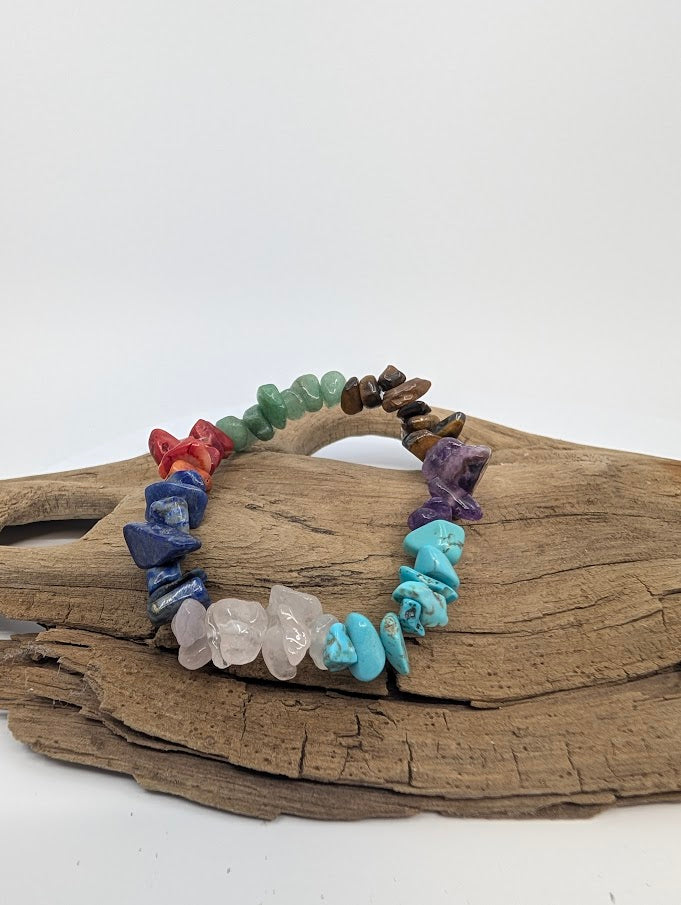
- Mixed Crystal Chip Bracelet — Chakra Spectrum covers the everyday-wear use case, keeping several stones’ energies on your wrist at once.
Our knowledge base, including the 2026 manifestation ritual guide, is written and maintained by our resident specialist, Simon, to keep the practical advice grounded in how these stones are actually sourced and sold.
Get your luck crystals from Legacy Crystals and Minerals
Legacy Crystals and Minerals gives you documented sourcing and real specimen photos on every listing, so you’re not gambling on colour, treatment, or authenticity the way you might with a generic marketplace search.
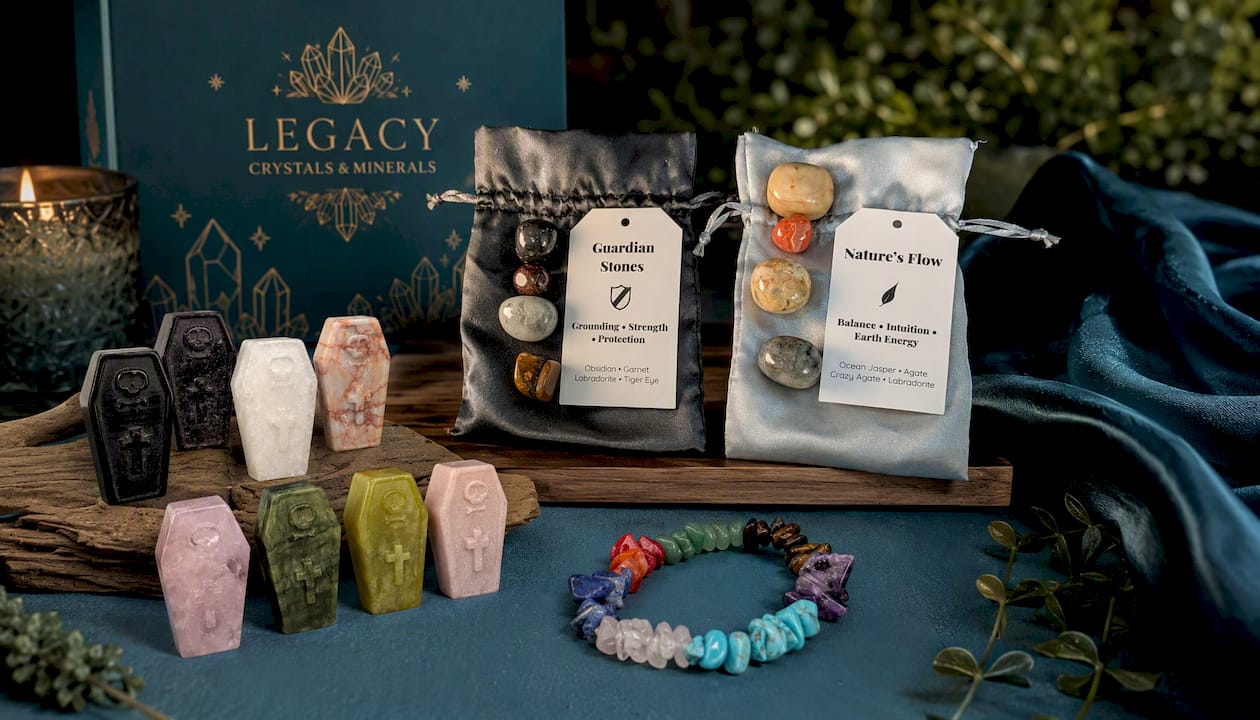
If you’re drawn to the multi-goal approach covered in the choosing section, the Healing Crystal Intention Sets pair complementary stones without you having to research each combination yourself. For home or altar placement, the Crystal Coffin Carvings come in a compact 2 by 1 inch size across a range of minerals, letting you match the specific stone to the specific goal outlined above. And if daily wear is more your style, the Mixed Crystal Chip Bracelet covers the full chakra spectrum in one piece rather than requiring separate bracelets for each intention.
Before buying, check the listing photos against the durability notes above (soft stones like malachite need gentler handling), and reach out with sizing questions if a bracelet or pendant needs to fit a specific wrist or chain length. Browse the current collection and pick the format that matches how you’ll actually use it.
Sources
- Best Crystals for Good Luck: Top 8 Lucky Stones & How to Use Them (2026) – AJLuxe
- 8 Best Crystals For Protection And Good Luck, Matched To Your Need – The Mystical Vault
- 7 Crystals for Good Luck You Should Carry Everywhere - Spiritual Chime
FAQ
What is the luckiest crystal in the world?
There’s no single “luckiest” crystal; green aventurine is the most commonly cited all-purpose luck stone, while citrine leads specifically for abundance and financial luck.
What crystals get rid of bad luck?
Black tourmaline is the stone most guides recommend for clearing negative energy and protecting against bad luck, often paired with a luck stone like green aventurine for a complete effect.
Which stone increases luck?
Green aventurine is widely recommended for general opportunity and new beginnings, tiger’s eye for confidence-driven luck, and citrine for financial and abundance luck, depending on which outcome you’re targeting.
What gem gives luck?
Jade has one of the longest histories as a luck and prosperity gemstone, particularly for steady, long-term fortune rather than sudden windfalls, alongside citrine and green aventurine for more immediate goals.
Can I use more than one luck crystal at once?
Yes. Pairing a targeted stone like citrine or tiger’s eye with clear quartz to amplify intention, or with black tourmaline for protection, is a common and practical combination rather than a conflict.


