

Collectors: 5 Tests to Spot Geode vs Nodule Without Cutting
A geode is hollow inside, usually lined with crystals; a nodule is solid mineral all the way through. Thundereggs blur the line since they form like nodules but sometimes hold a small cavity. The surest confirmation is a cut face, though weight, sound, and light checks get you close without a saw.
TL;DR:
- A geode has a hollow interior lined with crystals, while a nodule is a solid mineral mass with no open cavity.
- Geodes often show bumpy exteriors and are lighter than solid rocks of the same size, but only a cut face can confirm their hollow structure.
- Formation involves the partial filling of cavities with silica-rich fluid over thousands to millions of years, producing crystals or solid nodules depending on the fill level.
- Thundereggs are volcanic nodules, sometimes with small cavities, and can resemble geodes but typically form in rhyolitic lava.
- The value of specimens depends more on crystal size, color, condition, and provenance than on whether they are hollow or solid.
Table of Contents
- Geode vs nodule: what defines each one
- How do geodes and nodules actually form?
- How can you tell if a rock is a geode without breaking it?
- Thundereggs, agates, and where the labels blur
- Does hollow or solid affect what a specimen is worth?
- How do you safely open or cut a geode or nodule?
- Where this guide’s information comes from
- Related specimens from Legacy Crystals and Minerals
- Sources
- FAQ
Geode vs nodule: what defines each one
A geode is a rock with a hollow or partly hollow cavity, typically lined with crystals that grew inward from the walls. A nodule is a solid mineral mass with no hollow centre at all. That single structural fact is the whole answer to “geode vs nodule” once you strip away the marketing language you see on rockhounding forums and specimen tables at gem shows.
Classic geodes show a quartz or amethyst crystal lining around a hollow core, sometimes with a thin band of banded chalcedony between the outer shell and the crystals. Septarian nodules are the opposite case: a solid mass of dried mud built around calcite and aragonite veins, with no open pocket anywhere inside. Sizes range widely. A hand-sized geode might hold crystals barely a centimetre long, while some cavities found in volcanic fields have produced crystal points of impressive size.
Outward shape rarely settles the question. Both types can look like plain, unremarkable round stones from the outside, which is exactly why so many collectors get surprised the first time they cut a geode open.
- Geodes: hollow core, crystal lining, often quartz, amethyst, or calcite
- Nodules: solid throughout, may show banding or septarian veining
- Both: can share the same rounded, unremarkable exterior
How do geodes and nodules actually form?
Geodes and nodules start from the same basic setup: a gap or pocket inside rock, filled slowly by mineral-rich fluid. What separates them is whether that fluid finishes the job.
In sedimentary rock, cavities form where a nodule of limestone, anhydrite, or another soluble mineral dissolves away, leaving an open void. Silica-rich groundwater later moves through the rock and precipitates quartz along the cavity’s inner walls, growing crystals toward the centre. In volcanic rock, the same process starts with gas bubbles, called vesicles, trapped in cooling lava. Hydrothermal fluids fill those bubbles with silica over time, forming what geologists call amygdules.
The outcome hinges on how much filling happens:
- Partial fill: crystals line the walls, a hollow pocket remains, and you get a geode
- Complete fill: silica gel layers stack all the way to the centre, producing a solid agate or nodule
- Banding results from sequential silica layers, one reason cut nodules often show ring patterns
Crystal growth is slow by any human measure. According to research on geode formation, the largest crystal-lined cavities can take many thousands to millions of years to fully develop, and the University of Kentucky’s field guide on geode formation confirms that a fully filled void becomes a solid nodule rather than a hollow geode.
How can you tell if a rock is a geode without breaking it?
You can get a strong read on a specimen without ever touching a saw, but no non-destructive test is airtight. Work through these checks in order, from cheapest to most conclusive.
- Look at the shell. Geodes often show a slightly bumpy, knobby, or blistered exterior where crystal growth pushed against the outer rind. Nodules tend toward a smoother, more rounded surface.
- Shake it gently near your ear. A loose rattle can mean broken crystal fragments inside a hollow cavity, but a silent specimen is not proof of a solid interior. Many geodes with tightly packed crystal linings make no sound at all.
- Heft it in your hand. Compare it to a similarly sized rock you know is solid. A geode of the same outward size is usually lighter because it is carrying air, not mineral, in its core.
- Hold it to a bright light, especially with chalcedony or agate specimens. A thin-walled shell may show a faint glow or shadow line where the hollow interior begins; a solid nodule stays uniformly dense.
- Decide whether to cut. If the checks above are inconclusive and you want certainty, cutting or sawing is the only reliable path.
Every field guide worth trusting says the same thing: exterior clues and the shake and heft tests narrow the odds, but they don’t replace an actual cut face. Weight and sound are influenced by rock density, wall thickness, and mineral type, so a heavy specimen can still turn out hollow if the shell is unusually thick.
Pro Tip: Before you commit a saw blade to an expensive specimen, ask the seller for a cut-face photo of a similar piece from the same locality. Sellers with genuine mining relationships almost always have one on hand.
Thundereggs, agates, and where the labels blur
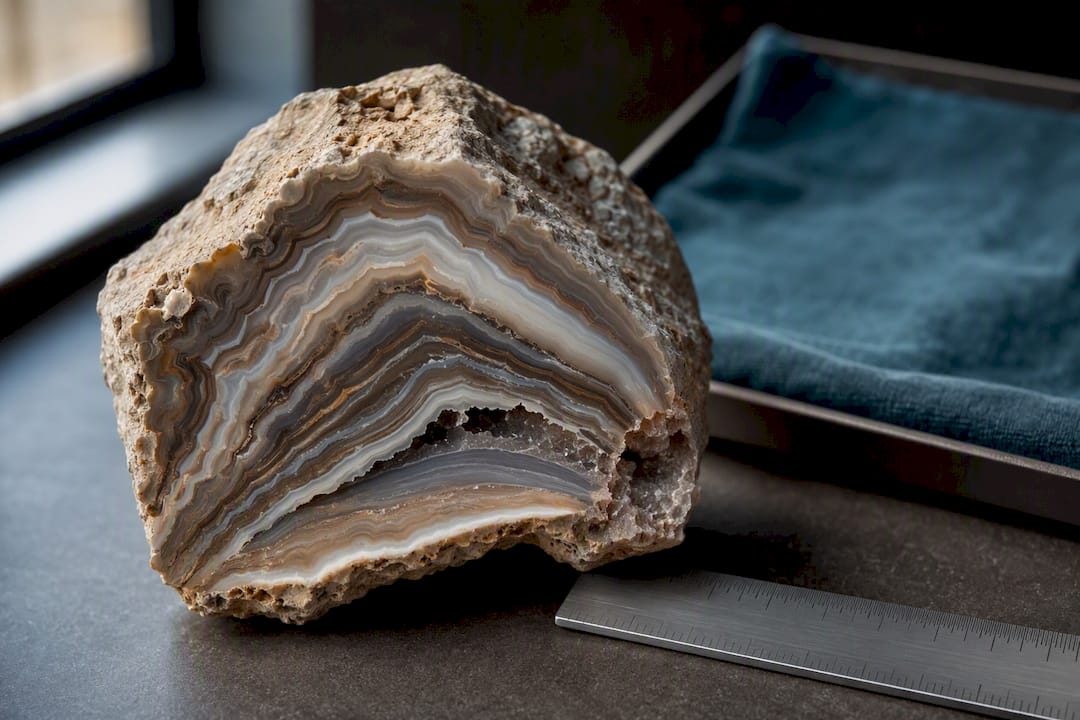
A thunderegg is a nodule that formed in rhyolitic volcanic ash rather than sedimentary rock, and it’s typically solid, filled with chalcedony, agate, or opal instead of open crystal. Some thundereggs do carry a small internal cavity, which is exactly why collectors argue over whether a given specimen counts as a geode, a nodule, or something in between.
The clearest identification cues come from the host rock and the internal fracture pattern. A rhyolitic exterior points toward thunderegg origin, and a star-shaped internal fracture is a strong confirming sign once cut. Retail listings use “thunderegg” and “geode” loosely enough that a specimen can meet both definitions depending on who’s labelling it.
- Thunderegg: volcanic ash origin, usually solid, occasional small cavity
- Geode: defined by cavity structure, forms in sedimentary or volcanic rock
- Overlap case: a partially hollow thunderegg with a rhyolitic shell
Label ambiguous pieces in your own collection by origin first, structure second. It saves confusion later.
Does hollow or solid affect what a specimen is worth?
Collectors prize different things depending on which category a piece falls into, and structure is only one factor among several that drive price and desirability.
Geodes gain value from crystal size, colour saturation, and how undamaged the lining is after cutting. Nodules earn their price from banding quality and, in septarian pieces, the sharpness of the calcite and aragonite vein pattern radiating through the cut face. Rarity and provenance matter across both categories. A specimen from a well-documented locality, sold by a seller who discloses its origin, commands more trust than an unlabelled piece of unknown source.
- Ask for a cut-face photo before buying, not just an exterior shot
- Check for dye enhancement, especially in agate-banded pieces, the same way you’d verify a dyed agate
- Ask directly whether any repair or fill work was done on a damaged crystal lining
How do you safely open or cut a geode or nodule?
Method depends heavily on density. A hollow geode with a thin shell often splits cleanly with a hammer and chisel, especially if you score a line around its middle first to guide the fracture. Dense nodules and thundereggs are a different story: their solid, tightly packed mineral structure usually shatters unpredictably under a hammer, so a diamond-tipped rock saw with a wet cutting setup is the standard approach among hobbyists and professionals alike.
- Score a shallow groove around the specimen’s equator if you’re using a hammer and chisel.
- Strike along the scored line with steady, moderate force rather than one hard blow.
- For nodules or thundereggs, switch to a diamond saw and keep the blade wet throughout the cut.
- Wear eye protection and a dust mask, and cut outdoors or in a ventilated space.
- Send unusually large or valuable pieces to a professional lapidary cutter rather than risking a bad first cut.
Pro Tip: Wet cutting isn’t optional for silica-rich rock. Dry-cutting a nodule throws fine silica dust into the air, which is a genuine respiratory hazard over repeated exposure.
Where this guide’s information comes from
The educational content in this guide is based on published geological references including the University of Kentucky’s geode formation field guide and rockhounding resources covering thunderegg identification. Provenance information is often available, and buyers are encouraged to request cut-face photos before purchase.
If you want a second opinion on a specimen you already own, a local university geology department or rockhounding club can usually confirm origin and structure at little or no cost. That’s a smart next step before you spend money on a saw or a professional cutter.
Related specimens from Legacy Crystals and Minerals
Seeing the structural difference in real specimens makes the geode vs nodule distinction click faster than any diagram. A selection of specimens showing both hollow and solid examples is available, and listings commonly include details relevant for buyers to consider before ordering.
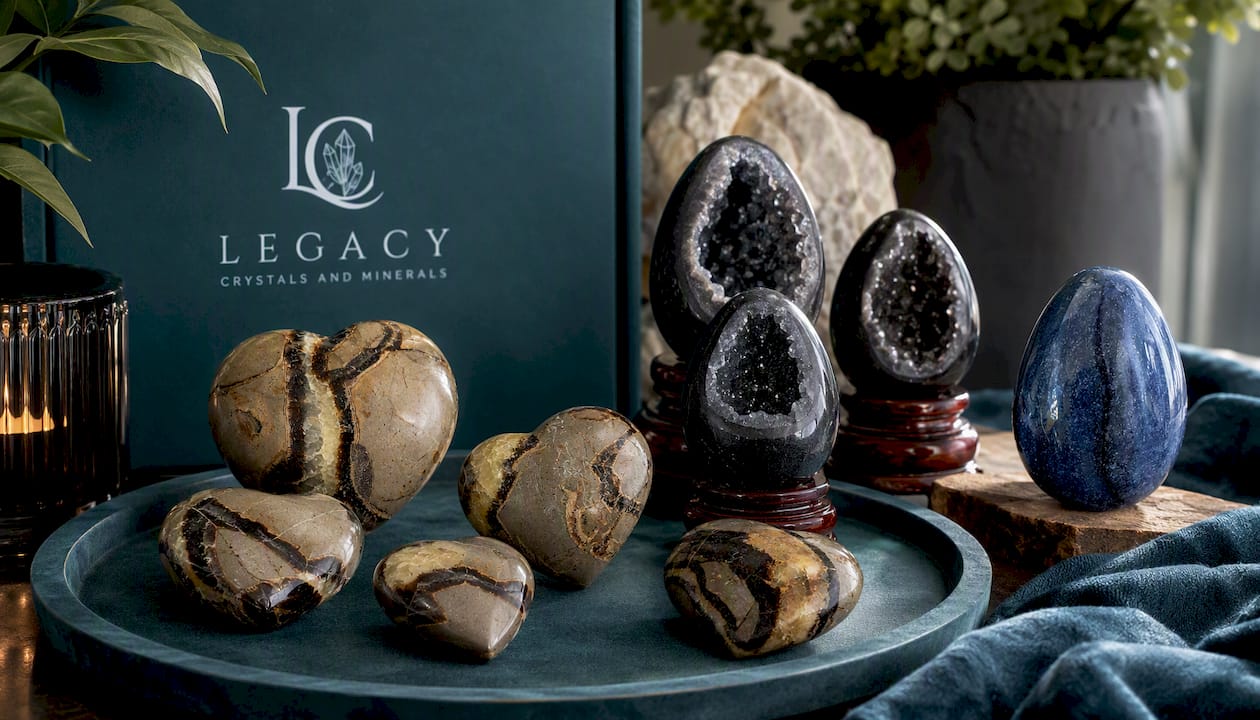
The Septarian Nodule / Dragon Egg Heart is a textbook solid specimen, its cut face showing the calcite veining that septarian nodules are known for, with no hollow centre anywhere in the stone. For the hollow side of the comparison, the Septarian Dragon Eggs featuring calcite and aragonite crystal linings show a genuine cavity lined with sparkling crystal growth, the same inward growth pattern described in the formation section above. If you’d rather start with a polished, display-ready piece, the Blue Aventurine Egg in Dumortierite Quartz gives you a solid, intuitively selected specimen suited to a shelf or a desk rather than a cut display.
Before ordering any specimen, ask for provenance and, where the piece is already cut, a clear photo of the interior face. A polished nodule benefits from occasional light dusting rather than harsh cleaners, and a display stand keeps a cut geode’s crystal face angled toward the light. Browse the full collection at Legacy Crystals and Minerals to compare hollow and solid specimens side by side.
Sources
- Where do geodes come from?
- Geode formation mechanisms (University field guide)
- Geode identification chart: how to tell if a rock is a geode
- Thunderegg or Geode? How to tell them apart
FAQ
How do you tell if a rock is a geode without breaking it?
Check the exterior texture, heft the rock against a similarly sized solid stone, and try a gentle shake near your ear for a rattle. None of these tests are conclusive on their own, so a cut or sawed face is still the only certain confirmation.
Do you need to crack open a geode to see the crystals?
Not always. Some geodes are sold already cut and polished, but if you’re working with a raw find, cutting or splitting is the only way to reveal the crystal lining inside.
What causes a geode to form?
A geode forms when a cavity, either from a dissolved mineral pocket in sedimentary rock or a gas bubble in volcanic rock, gets partially filled by silica-rich fluid that precipitates crystals along its walls over time, sometimes taking up to a million years for the largest crystals to finish growing.
Is a geode worth anything?
Value depends on crystal size, colour, condition, and provenance rather than the hollow structure alone, and a well-documented specimen from a known locality typically sells for more than an unlabelled one of similar size.


