

14–15 Million Years Old Moldavite: How Collectors Verify Tektite Origin
Moldavite is a tektite, not a separate category of stone. It belongs to a specific group formed roughly 14 to 15 million years ago when the Nördlinger Ries impact melted terrestrial rock and scattered it across Central Europe. Every other tektite you’ll encounter, from Libyan desert glass to the black splash-form pieces found in Southeast Asia, shares that same violent origin story. The difference lies in which strewn field a piece comes from, and that distinction matters enormously once fakes enter the picture.
TL;DR:
- Authentic moldavite features visible lechatelierite inclusions and irregular surface pitting, which are difficult for counterfeiters to replicate convincingly.
- Its distinct green coloration and high silica content set it apart from more opaque, darker tektites typically found in other strewn fields.
- Verify provenance details, such as origin from the Central European strewn field, and request lab documentation before purchasing to avoid fakes.
- Moldavite’s glassy, brittle structure makes it prone to chipping and unsuitable for frequent wear in jewelry without protective settings.
- Its metaphysical reputation is anecdotal; subjective effects should be approached cautiously and kept in perspective.
Table of Contents
- What is a tektite? Formation, strewn fields, and traits
- What is moldavite? Origin, distribution, and diagnostic features
- Physical differences: colour, chemistry, and durability
- How to verify authenticity before you buy
- Metaphysical significance: reading the claims responsibly
- Care and jewellery considerations for moldavite
- Which should you choose: moldavite or another tektite?
- Legacy Crystals and Minerals: authenticated specimens, honestly sourced
- Sources
- FAQ
What is a tektite? Formation, strewn fields, and traits
A tektite forms when a large asteroid or comet strikes Earth with enough force to melt surface rock instantly, hurling molten droplets high into the atmosphere. Those droplets cool and solidify mid-flight, then fall back as natural glass, often kilometres from the crater. This process explains why tektites are amorphous (non-crystalline) and typically lack the water content found in volcanic obsidian, according to the geology review by Trnka and Houzar.
Four major strewn fields account for nearly all known tektites:
- Central European field: home to moldavite, millions of years old
- North American field: older, tied to a separate ancient impact event
- Australasian field: the youngest and geographically largest known field
- Ivory Coast field: smaller, linked to the Bosumtwi crater in Ghana
Colour and shape vary by field, but most tektites share flow banding, a glassy lustre, and rounded or teardrop shapes from their airborne cooling.
What is moldavite? Origin, distribution, and diagnostic features
Moldavite’s story starts with the Ries impact in what is now southern Germany. The collision melted local sediment and threw it across the region now spanning the Czech Republic, Austria, and parts of Germany, where it’s strewn today. That single point of origin is why moldavite reads as a distinct, named variety rather than a generic tektite label.
Its defining traits set it apart visually from the moment you pick one up:
- Colour: bottle green to deep olive, sometimes with a faint blue or brown cast depending on light
- Translucency: light passes through thinner edges, a direct result of its high silica content
- Surface texture: pitted, sculpted, almost bark-like patterns from natural etching over millions of years
- Lechatelierite inclusions: thin glass filaments or wires visible under magnification, considered a strong indicator of authenticity in many genuine specimens
Geological literature also notes moldavite sits among the most silica rich of all tektite varieties, which is part of why it looks glassier and more transparent than its darker cousins.
Physical differences: colour, chemistry, and durability
Side by side, moldavite and a generic tektite tell two different stories through a magnifying loupe. Here’s what actually separates them on the workbench:
- Colour and clarity: moldavite runs green and translucent; most other tektites (including common black or brown Australasian pieces) are opaque and dark, which is part of why green tektites are rarer and more frequently imitated.
- Chemistry: moldavite carries notably higher silica content, and trace iron plus other elements produce its characteristic green tone rather than the grey-black of typical splash-form tektites.
- Texture and inclusions: both types show flow lines, but moldavite’s lechatelierite wires and deep surface sculpting are diagnostic markers. Deep texture alone, however, isn’t proof. Skilled glassmakers can etch fake surfaces to mimic natural weathering, as Geology.
- Durability and use: moldavite’s glassy structure makes it prone to chipping under stress, so collectors often display rough pieces rather than faceting them for everyday wear. Other tektites, being denser and less prized for clarity, see more casual handling.
How to verify authenticity before you buy
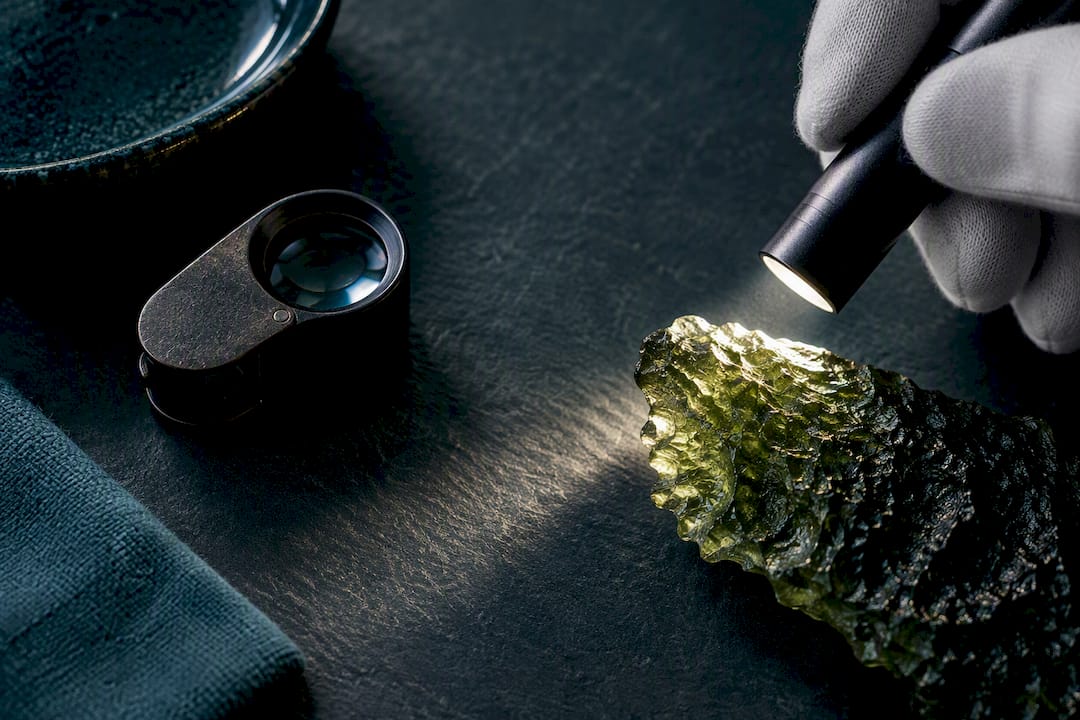
Trust your eyes first, then ask for paperwork. Hold a suspected moldavite up to a bright light and look for internal lechatelierite wires. Mindat notes these thin glass filaments are often present in authentic specimens and are difficult to fake convincingly, since they form from the original melt rather than surface treatment.
Genuine sellers should answer basic provenance questions without hesitation:
- Where in the Central European strewn field was this piece recovered?
- Does the listing mention lechatelierite inclusions or flow structure?
- Is there any lab documentation, dealer history, or chain of custody?
- Does the surface texture look randomly weathered, or suspiciously uniform across multiple “identical” pieces?
Watch for red flags too: glossy, machine-smoothed surfaces, batches of pieces that look cast from the same mould, or listings with no origin information at all. A practical guide to spotting fake crystals online and a companion piece on identifying natural versus synthetic material both walk through these checks in more depth.
Pro Tip: Ask the seller for a close-up photo under raking light (light angled sharply across the surface) rather than a flat studio shot. Raking light shows natural pitting and flow texture far better than a straight-on product photo ever will.
Metaphysical significance: reading the claims responsibly
Moldavite has a reputation in metaphysical circles as an intense, transformative stone, often described as bringing rapid personal change or heightened emotional awareness. These are subjective, anecdotal reports rather than measurable outcomes, and they vary widely from person to person. Its rarity and unmistakable green colour likely amplify that reputation, since a stone with a genuinely unusual origin story naturally invites bigger claims.
If you’re exploring moldavite for personal or spiritual use, a few practical habits help:
- Start with a small piece before committing to an expensive specimen
- Keep a simple journal of any subjective effects you notice over time
- Treat claims about intensity or “energy” as personal experience, not verified fact
- Prioritize your own comfort and judgment over pressure from sellers or online forums
Care and jewellery considerations for moldavite
Moldavite sits around 5 to 5.5 on the Mohs hardness scale, softer than quartz or diamond, which means chipping is a real risk if it’s worn daily. A few habits protect a specimen for the long term:
- Choose protective settings: bezel settings that fully enclose the edges resist chips better than open prong settings.
- Skip ultrasonic cleaners and acids: use lukewarm water, mild soap, and a soft-bristled brush instead.
- Store separately: wrap pieces in soft cloth and keep them away from harder stones that could scratch the surface in a shared box.
- Handle raw specimens carefully during transport: a padded case prevents edge damage on natural, unpolished pieces especially.
Which should you choose: moldavite or another tektite?
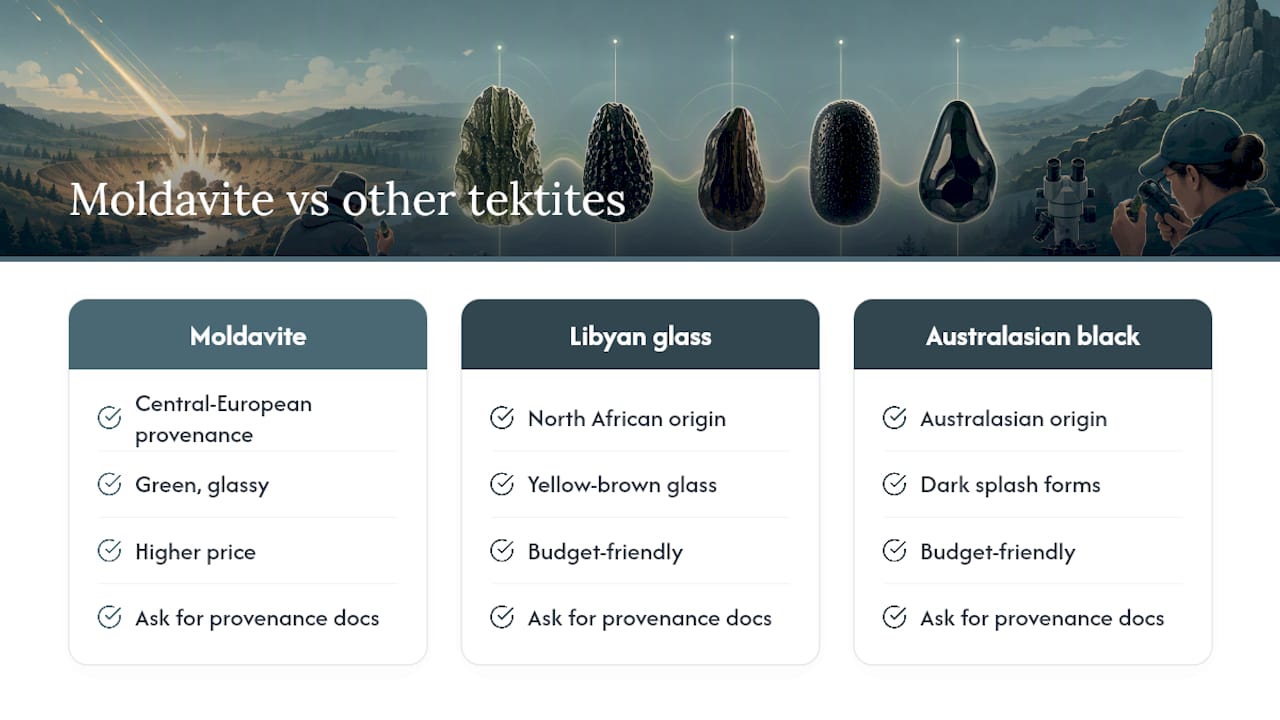
Choose moldavite if provenance and Central European origin genuinely matter to you, whether for scientific interest or metaphysical use. Choose a different tektite variety, like Libyan desert glass or a black Australasian splash form, if you want a more budget-friendly entry point or a different visual style entirely. Whichever direction you go, verify provenance and buy from sellers who document where a piece actually came from.
Legacy Crystals and Minerals: authenticated specimens, honestly sourced
Some sellers focus on museum-grade specimens with documented origin, a standard relevant to moldavite collectors. Every listing aims for clear provenance rather than vague “natural stone” descriptions, which matters most with tektites given how often green glass gets passed off as the real thing.
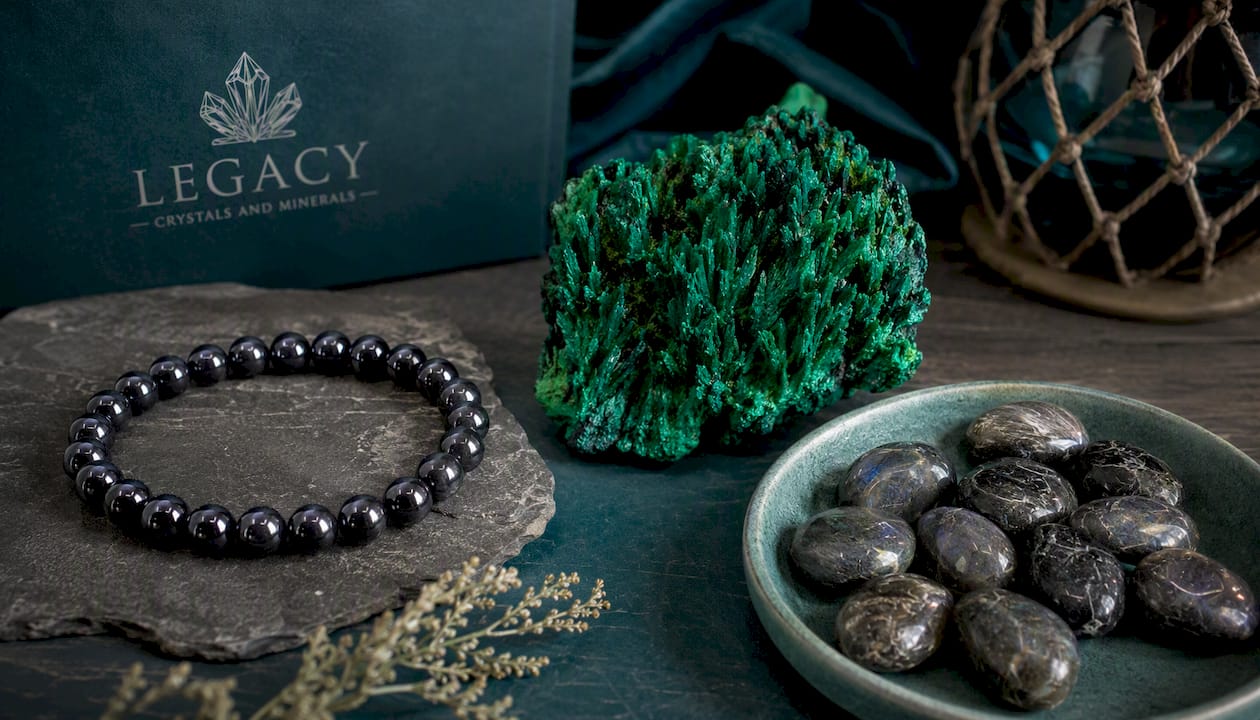
Browse the raw minerals and crystals collection for unpolished specimens with visible natural texture, or check the museum quality minerals and crystals selection for documented, collector-grade pieces. If tektites specifically interest you, the Saffordite (Sirius) bracelet offers an accessible entry point into volcanic glass jewellery, made from 8mm polished beads of Arizona volcanic glass. For a durable, everyday option that skips the fragility concerns of tektite jewellery entirely, the labradorite tumbled stone in AA grade holds up well to daily wear. Collectors chasing documented provenance at the specimen level should look at the malachite from the Katanga Copper Crescent, sourced from Haut-Katanga in the Democratic Republic of the Congo. Browse the carvings, jewelry, and bracelets collections, or explore the top shelf collector minerals and mystery items for something unexpected. Questions about a specific specimen’s provenance? Reach out before you buy.
Sources
- Mindat
- Moldavites: a review (Trnka & Houzar) — Bulletin of the Czech Geological Survey
- Geology
- Tektite: Meaning, Properties & Symbolism (GemsLore)
FAQ
Is moldavite the most powerful stone?
There’s no scientific measure of “power” in stones, so this comes down entirely to personal belief. Moldavite’s reputation for intensity comes from anecdotal metaphysical reports and its genuinely rare, documented origin, not from any measurable property beyond its geology.
Why is moldavite scary?
Some users describe moldavite as intense or unsettling because of its association with rapid personal change in metaphysical circles. This is a subjective, anecdotal reputation rather than a documented effect, so treat any strong reaction as personal experience rather than an established fact.
How can you tell if you have real moldavite?
Look for lechatelierite inclusions, thin glass wires visible under magnification, which are considered a strong authenticity marker. Genuine surface texture also shows irregular natural pitting rather than the uniform, glossy finish typical of manufactured green glass.
What stones should you avoid wearing with moldavite?
There’s no established scientific or gemmological rule barring specific stone pairings with moldavite. Given its Mohs hardness of roughly 5 to 5.5, avoid pairing it in tight settings with much harder stones that could scratch its surface during regular wear.


