

Facteurs du prix du cristal : guide de l’acheteur et du vendeur pour le Canada
Le prix commercial d’un cristal est déterminé par un petit ensemble de facteurs mesurables : l’espèce et la rareté, la couleur et la clarté, la taille et le poids, la forme et la finition, les traitements, la provenance, les dommages et la demande actuelle du marché. Règle générale : espèce rare + origine documentée + état impeccable = prix élevé ; quartz commun non traité en état moyen = prix bas à moyen. MineralFYI documente qu’il n’existe pas de norme de classement unique pour les spécimens minéraux, de sorte que les acheteurs et les vendeurs doivent évaluer chaque facteur individuellement.
Facteurs fondamentaux de prix des cristaux, classés par impact typique :
- Espèce et rareté scientifique
- Saturation des couleurs et clarté
- Niveau de taille et de poids (thumbnail, miniature, cabinet)
- Forme et finition (brut, poli, facetté, sculpté)
- Traitements et synthétiques (chaleur, irradiation, teinture)
- Provenance et origine documentée
- Dommages, réparations et présentation
- Forces du marché : offre, demande, tendances et marge de détail
Conseil de pro : Avant d’acheter ou de mettre en vente un spécimen, vérifiez l’espèce sur Mindat pour confirmer la localité et vérifier le nom — les spécimens mal identifiés sont l’une des sources les plus courantes d’erreurs de prix.
Points clés
La provenance, la rareté de l’espèce et l’état sont les trois facteurs qui séparent le plus fidèlement un cristal de grande valeur d’une pièce de qualité décorative sur le marché canadien.
| Point | Détails |
|---|---|
| L'espèce et la rareté déterminent le prix maximum | Les quartz communs de petite taille (thumbnails) commencent à des prix bas ; les tourmalines de grande qualité (cabinet) peuvent atteindre des prix très élevés. |
| La couleur et la perfection multiplient la valeur | Une forte saturation et une forme presque parfaite augmentent considérablement la valeur par rapport aux spécimens de moindre qualité. |
| La documentation préserve la valeur de revente | Les registres de provenance, les reçus et les rapports de laboratoire sont le facteur le plus contrôlable de la valeur à long terme. |
| Les traitements et les dommages réduisent le prix | Les spécimens traités à la chaleur et réparés valent considérablement moins que leurs équivalents naturels et non endommagés. |
| Legacy Crystals and Minerals | Propose des spécimens et des bijoux de qualité musée avec une provenance attestée, y compris la Fluorite de Shangbao et le bracelet en Jade de lait. |
Table des matières
- Quels sont les principaux facteurs de prix des cristaux et comment fonctionnent-ils ?
- Comment le marché fixe-t-il les prix des cristaux, de la mine au détail au Canada ?
- Comment estimer la valeur marchande d'un cristal avant d'acheter ou de vendre ?
- Combien les cristaux se vendent-ils réellement ? Fourchettes de prix illustratives dans le contexte canadien
- La valeur des cristaux augmente-t-elle avec le temps ?
- Drapeaux rouges et conseils pratiques pour les acheteurs et vendeurs au Canada
- À propos de ce guide et de cette méthodologie
- Comment les saisons et les événements affectent-ils les prix des cristaux ?
- Legacy Crystals and Minerals : spécimens vérifiés avec provenance documentée
- Sources
- FAQ
Quels sont les principaux facteurs de prix des cristaux et comment fonctionnent-ils ?
Espèce et rareté
L'espèce est le principal levier de prix. Des pointes de quartz communes se vendent quelques dollars ; une belle alexandrite ou un béryl rouge peuvent atteindre des prix très élevés. La rareté scientifique est importante, mais la demande des collectionneurs l'est tout autant. Un minéral peut être géologiquement rare et pourtant ne commander qu'une faible prime si peu de collectionneurs le désirent. Les spécimens de localité type (pièces provenant du site de découverte original) ont une prime distincte car ils sont historiquement significatifs et souvent irremplaçables. BriteCo note que les petits quartz (thumbnails) se vendent généralement à des prix bas à moyens, tandis que les tourmalines de qualité supérieure (cabinet pieces) peuvent atteindre des prix très élevés.
Couleur, saturation et clarté
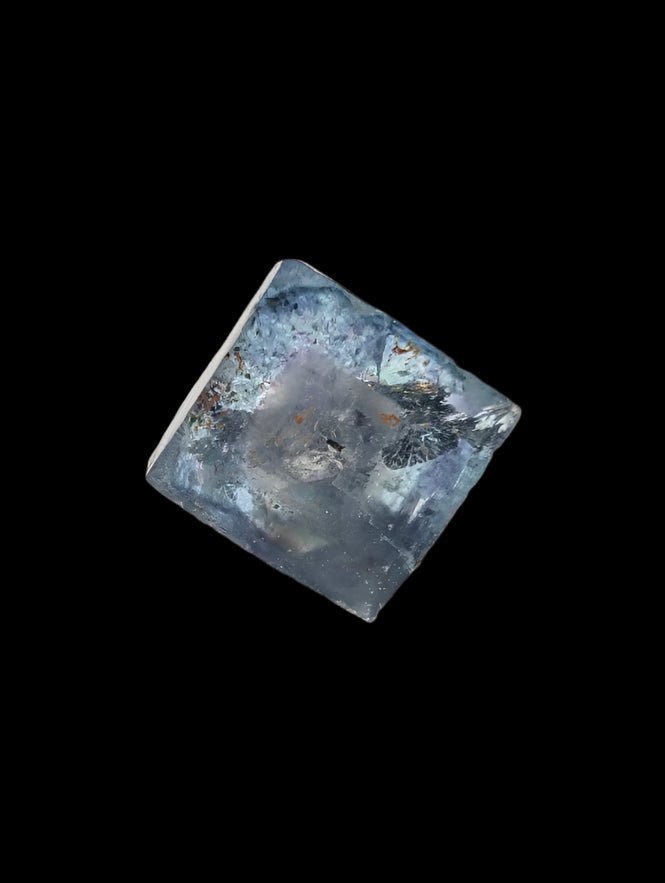
La couleur est le signal de qualité le plus visible. Selon MineralFYI, une forte saturation des couleurs peut multiplier la valeur d'un spécimen par 100 à 300 % par rapport à un équivalent pâle, et une forme cristalline quasi parfaite ajoute encore 200 à 500 %. Pour l'améthyste, le violet profond sans zonage de couleur est la cible ; pour la tourmaline, le vert ou le rose vifs sans « windowing » ; pour la fluorite, le violet ou le bleu purs et saturés sans nébulosité. Les inclusions se lisent différemment selon le minéral : les aiguilles de rutile dans le quartz sont une caractéristique, pas un défaut, tandis qu'une forte nébulosité dans une pierre facettée réduit considérablement la valeur.
Catégories de taille et de poids
Le marché des minéraux utilise des catégories de taille standard : thumbnail (moins de 2,5 cm), miniature (2,5 à 4,5 cm), petit cabinet (4,5 à 7 cm) et grand cabinet (7 à 10+ cm). Le prix n'augmente pas linéairement avec la taille. Un spécimen de taille cabinet de même qualité et espèce qu'une miniature peut valoir cinq à dix fois plus, car les pièces grandes, intactes et de haute qualité sont réellement rares. La tarification basée sur le poids est courante pour les pierres roulées et les matériaux de moindre qualité ; la tarification par pièce s'applique aux spécimens de qualité d'exposition où la qualité individuelle détermine le prix.
Forme et finition
Les spécimens bruts, les dalles polies, les pierres précieuses facettées et les sculptures servent chacun des marchés différents. Les spécimens bruts sont appréciés par les collectionneurs pour leur habit cristallin naturel et leur présentation sur matrice ; MineralFYI note que la présentation sur matrice ajoute 50 à 150 % à la valeur lorsqu'elle améliore esthétiquement le spécimen. Les pièces polies et les sculptures séduisent les marchés de la décoration et du bien-être. Les pierres précieuses facettées suivent les normes de classement gemmologiques et sont tarifées au carat. Les bijoux artisanaux ajoutent des coûts de main-d'œuvre, de conception et de provenance en plus du prix de la matière première, c'est pourquoi un bracelet en cristal poli se vend considérablement plus cher que la pierre brute dont il est issu.
Traitements et synthétiques
Les traitements thermiques, l'irradiation et la teinture sont largement répandus dans le commerce des cristaux. La citrine naturelle est rare ; la plupart des « citrines » jaune-orange vendues commercialement sont des améthystes traitées thermiquement. Le topaze irradié produit des bleus vifs qui n'existent pas naturellement avec cette intensité. L'agate et l'howlite teintes sont vendues sous des noms trompeurs. Les traitements déprécient ou reclassent la valeur : une pierre traitée thermiquement divulguée vaut moins qu'un équivalent naturel, et un traitement non divulgué est un motif de retour. Comment identifier les cristaux naturels et synthétiques couvre les principaux tests d'identification. Les cristaux synthétiques cultivés en laboratoire (quartz, émeraude, alexandrite) ne sont pas des contrefaçons au sens légal du terme, mais doivent être divulgués et sont vendus à un prix bien inférieur à leurs équivalents naturels.
Conseil de pro : La citrine naturelle présente un dégradé jaune pâle à orange de la base vers le haut ; l'améthyste traitée thermiquement affiche une teinte orange brûlé ou brun rougeâtre concentrée aux extrémités. Consultez le guide citrine naturelle vs améthyste traitée thermiquement pour une comparaison détaillée.
Provenance et origine documentée
La localité est importante à deux égards : scientifiquement (certaines localités produisent les plus beaux exemples connus d'une espèce) et éthiquement. National Geographic rapporte que les informations transparentes sur l'origine influencent de plus en plus le choix de l'acheteur et peuvent soutenir des primes de prix, tandis que des prix très bas signalent parfois des chaînes d'approvisionnement exploitantes. Un spécimen avec une traçabilité — mine d'origine, chaîne de possession, reçus de revendeurs — vaut plus qu'une pièce d'apparence identique sans documentation. Le mouvement de collecte éthique de cristaux a fait de la provenance un facteur commercial, et pas seulement éthique.
Dommages, réparations et présentation
Les dommages sont le moyen le plus rapide de réduire la valeur. Un contact mineur, comme de petits éclats, réduit modérément le prix, tandis que les réparations peuvent diminuer considérablement la valeur des pièces de collection. Des dommages majeurs à la terminaison principale d'un spécimen d'exposition peuvent le réduire à un prix purement décoratif. La présentation est également importante : un spécimen sur un socle personnalisé bien ajusté est mieux photographié et se vend plus rapidement.
| Facteur | Impact typique sur le prix | Notes |
|---|---|---|
| Saturation de la couleur (forte vs pâle) | un pourcentage d'augmentation significatif | Selon MineralFYI ; varie selon l'espèce |
| Perfection du cristal (quasi sans défaut vs moyenne) | un pourcentage d'augmentation substantiel | Spécimens de qualité d'exposition |
| Présentation de la matrice (améliorante vs simple) | +50–150% | Marché des collectionneurs |
| Dommages de contact mineurs | −10–20% | Cristaux secondaires uniquement |
| Cristal principal réparé | −50% ou plus | Même les réparations invisibles |
| Traitement thermique divulgué | Réduction significative | Par rapport à l'équivalent naturel |
Comment le marché fixe-t-il les prix des cristaux, de la mine au détail au Canada ?
Le prix qu'un acheteur canadien paie reflète plusieurs couches de marge ajoutées à chaque étape de la chaîne d'approvisionnement.
- Les mineurs et les exportateurs des pays sources vendent en gros, souvent au poids ou par lot. Les marges ici sont minces et les conditions de travail varient considérablement.
- Les intermédiaires et les grossistes internationaux trient, classent et reconditionnent le matériel. Ils ajoutent 50 à 200 % au prix de la mine selon l'espèce et la qualité.
- Les revendeurs et les détaillants spécialisés ajoutent la curation, la photographie, la documentation de la provenance et les frais généraux de vente au détail. La majoration à ce stade est généralement de 100 à 400 % par rapport au prix de gros pour les pièces de qualité d'exposition.
- Les marchés en ligne réduisent une partie de la marge de détail grâce à la transparence des prix, mais introduisent également plus de matériel mal identifié et traité à bas prix.
Au Canada, les droits d'importation et les frais d'expédition s'ajoutent au prix débarqué. La plupart des spécimens minéraux bruts entrent sous des codes tarifaires du SH qui comportent peu ou pas de droits, mais les bijoux finis et les produits polis peuvent attirer des taux plus élevés selon le pays d'origine et les accords commerciaux. La demande régionale modifie également la place d'une pièce dans sa fourchette de prix : les collectionneurs de Vancouver, Toronto et Montréal sont des marchés actifs avec des réseaux de revendeurs établis, tandis que les acheteurs des petits centres peuvent payer plus cher l'expédition ou avoir moins de points de comparaison locaux.
National Geographic note que l'absence de certification équivalente au commerce équitable dans l'industrie des cristaux signifie que les acheteurs ne peuvent pas se fier à une étiquette pour confirmer l'approvisionnement éthique. Interroger directement les revendeurs sur l'origine et demander une documentation est l'alternative pratique.
Un acheteur ou un revendeur qui estime des marges de revente réalistes doit s'attendre à ce qu'une pièce achetée au détail doive prendre une valeur significative avant que la revente ne couvre le prix d'origine plus les coûts de transaction. Les spécimens de qualité collectionneur avec une provenance documentée conservent mieux leur valeur que les matériaux de qualité décorative.
Comment estimer la valeur marchande d’un cristal avant d’acheter ou de vendre ?
Un processus d'évaluation reproductible réduit les incertitudes pour les acheteurs et les vendeurs.
- Identifier l'espèce. Confirmez le nom du minéral à l'aide de Mindat ou d'un guide de terrain. Les erreurs d'identification sont courantes dans la partie inférieure du marché.
- Vérifier l'authenticité. Recherchez les traitements, les synthétiques ou les constructions composites. Utilisez une lumière UV, la densité et des tests de dureté lorsque cela est pratique.
- Mesurer et classer le spécimen. Mesurez et pesez-le. Attribuez-lui une catégorie de taille (thumbnail, miniature, petit cabinet, cabinet). Notez la saturation des couleurs, la clarté, l'habitus cristallin et tout dommage.
- Trouver des ventes comparables. Recherchez les annonces terminées pour la même espèce, localité, taille et qualité. Crystal Almanac compile les fourchettes de prix moyennes pour des centaines de pierres et signale que les annonces les moins chères sont souvent mal identifiées ou traitées. CrystalStash propose une identification basée sur des photos, associée à des guides de prix pour des estimations rapides, bien que celles-ci doivent être vérifiées par rapport aux ventes comparables réelles.
- Ajuster pour les dommages et les traitements. Appliquez les fourchettes de réduction du tableau ci-dessus. Les traitements divulgués réduisent la valeur ; les traitements non divulgués sont un signal d'alarme.
- Fixer le prix demandé. Pour les vendeurs, ajoutez 10 à 20 % au-dessus du point médian comparable pour laisser de la place à la négociation. Pour les acheteurs, utilisez le point médian comparable comme plafond pour une offre équitable.
Tarification au poids vs. par pièce : La tarification au poids convient aux pierres roulées, aux éclats et aux matériaux bruts de moindre qualité. La tarification par pièce s'applique à tout spécimen dont la qualité individuelle, la localité ou l'esthétique détermine le prix. Le mélange des deux approches (par exemple, tarifer un amas de fluorite de qualité d'exposition au poids) sous-évalue généralement la pièce.
Liste de contrôle avant la mise en vente pour les vendeurs :
- Espèce confirmée et documentée
- Localité enregistrée (mine, région, pays)
- Mesures et poids notés
- État décrit avec précision (tout dommage ou réparation divulgué)
- Ventes comparables identifiées et notées
- Photos prises : spécimen complet, terminaisons, matrice, inclusions ou dommages
Conseil de pro : Un rapport de laboratoire provenant d'un laboratoire gemmologique reconnu (comme le GIA ou un équivalent canadien) ajoute une documentation vérifiable qui justifie un prix demandé plus élevé et une vente plus rapide pour les pièces de qualité gemme.
Combien les cristaux se vendent-ils réellement ? Fourchettes de prix illustratives dans le contexte canadien
Ces fourchettes sont indicatives. Les prix réels dépendent de la qualité, de la localité et des conditions actuelles du marché. Les fourchettes ci-dessous reflètent les prix de détail du marché intermédiaire pour des spécimens en bon à excellent état, basés sur les données de BriteCo et Crystal Almanac.
| Minéral | Miniature (moins de 2,5 cm) | Miniature (2,5–4,5 cm) | Cabinet (7–10+ cm) |
|---|---|---|---|
| Quartz (clair) | 5–20 $ | 20–100 $ | 100–500 $ |
| Améthyste | 10–30 $ | 40–150 $ | 200–800 $+ |
| Fluorite | 10–60 $ | 60–250 $ | 300–1 500 $+ |
| Tourmaline | 30–150 $ | 150–800 $ | 800–5 000 $+ |
| Malachite | 10–50 $ | 50–250 $ | 250–1 500 $+ |
| Jade (néphrite/jadéite) | 20–100 $ | 100–500 $ | 500–5 000 $+ |
Mises en garde canadiennes :
- L'expédition depuis des revendeurs internationaux entraîne un coût modéré pour les petits colis ; les spécimens plus grands peuvent coûter plus cher.
- Les droits d'importation sur les spécimens minéraux bruts sont généralement faibles selon le tarif canadien, mais les bijoux finis de certains pays peuvent entraîner des frais supplémentaires.
- Les spécimens canadiens locaux (par exemple, la labradorite du Labrador, l'ammolite de l'Alberta) peuvent bénéficier d'une prime de localité pour les collectionneurs canadiens, qui ne s'applique pas sur d'autres marchés.
Crystal Almanac avertit que les annonces les moins chères pour n'importe quelle espèce sont les plus susceptibles d'être mal identifiées, traitées ou autrement non représentatives de spécimens authentiques de haute qualité. Un « améthyste » miniature à 5 $ est probablement de mauvaise qualité ; une « alexandrite » miniature à 5 $ est presque certainement mal étiquetée.
La valeur des cristaux augmente-t-elle avec le temps ?
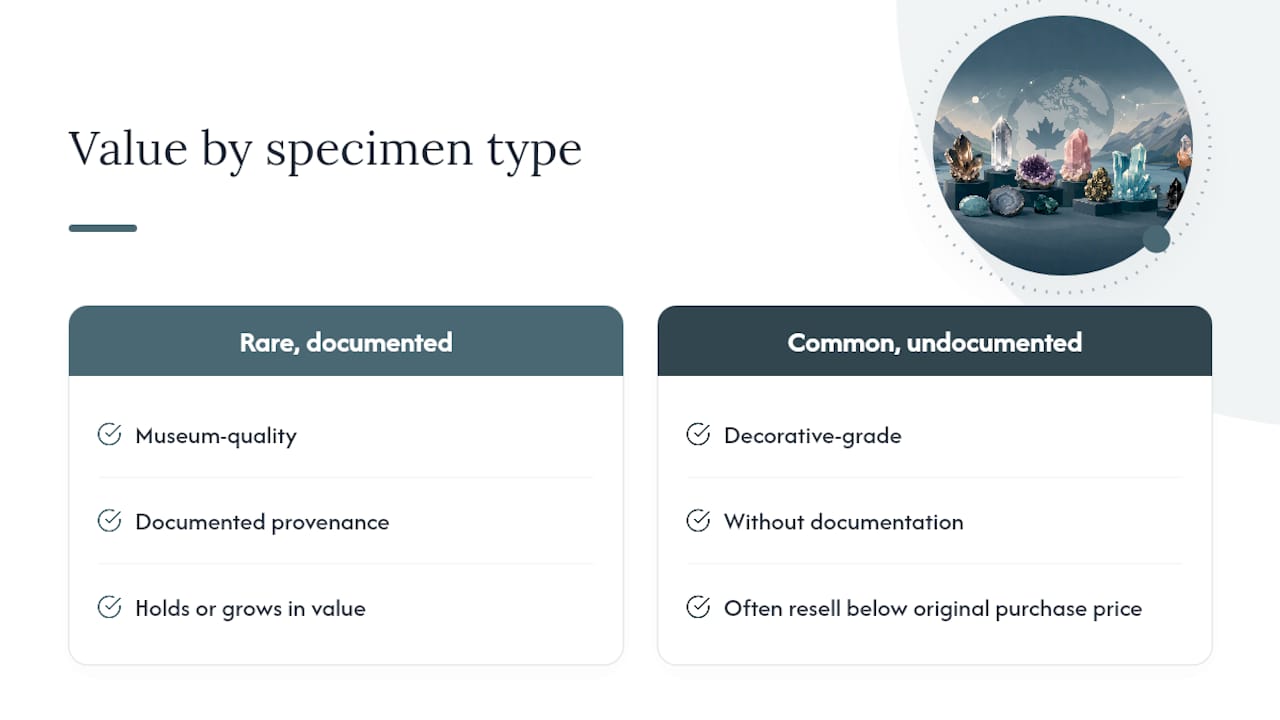
Certains spécimens prennent de la valeur ; la plupart ne le font pas de manière prévisible. La distinction dépend de la catégorie à laquelle la pièce appartient.
Caractéristiques des pièces de qualité investissement : rareté scientifique, provenance de la localité type, esthétique de qualité muséale, chaîne de traçabilité documentée et grande taille. Les pièces présentant ces cinq caractéristiques ont historiquement conservé ou augmenté leur valeur au fil des décennies, en particulier pour les espèces dont les gisements connus sont limités.
Objets de collection typiques : espèces communes (quartz, calcite, fluorine commune), matériaux décoratifs et pièces sans documentation de provenance. Ceux-ci sont achetés pour le plaisir, pas pour l'appréciation. La valeur de revente est imprévisible et souvent inférieure au prix d'achat une fois les coûts de transaction inclus.
Bijoux et pièces polies : la valeur suit la qualité du matériau et le savoir-faire. Une pièce bien faite dans un matériau durable et recherché (jade, tourmaline, améthyste de haute qualité) conserve mieux sa valeur que les bijoux en pierres roulées produits en série.
Résumé des avantages et inconvénients de l'achat de cristaux en tant qu'investissements :
- Avantage : Les spécimens rares et documentés ont une longue histoire de conservation de la valeur ; actif tangible sans risque de contrepartie.
- Avantage : La prime croissante pour l'approvisionnement éthique ajoute un nouveau facteur de valeur pour les pièces bien documentées.
- Inconvénient : Le marché des cristaux n'a pas de bourse centrale, pas de classement standardisé et une liquidité limitée. La vente d'un spécimen de grande valeur peut prendre des mois.
- Inconvénient : Les cycles du marché sont dictés par des tendances (bien-être, décoration, médias sociaux) qui peuvent s'inverser rapidement pour les matériaux décoratifs.
- Inconvénient : Sans documentation, la valeur de revente diminue fortement quelle que soit la qualité intrinsèque.
Conseil de pro : Si vous achetez dans l'optique d'une revente future, conservez tous les reçus, photographies et documents de provenance dès le jour de l'achat. La documentation est le facteur le plus contrôlable pour préserver la valeur de revente.
Drapeaux rouges et conseils pratiques pour les acheteurs et vendeurs au Canada
Drapeaux rouges courants
- Prix nettement inférieurs aux annonces comparables du marché pour la même espèce et la même qualité
- Revendications d'origine vagues ou absentes (« cristal naturel », aucune localité indiquée)
- Photos masquant les terminaisons, la matrice ou le spécimen entier
- Absence de politique de retour ou refus de fournir des photos supplémentaires sur demande
- Pression à acheter rapidement ou allégations de rareté artificielle
- Annonces utilisant des noms génériques (« cristal de guérison », « pierre d'énergie ») sans nom d'espèce minérale
Liste de contrôle du vendeur
- Documents de provenance : reçu de la mine ou du revendeur, relevé de localité
- Photos en gros plan des terminaisons, inclusions, matrice et de tout dommage
- Description précise de l'état avec divulgation de toute réparation
- Politique de retour claire
- Rapport de laboratoire pour les pièces de qualité gemme ou les spécimens de grande valeur
Liste de contrôle de l'acheteur
- Confirmez le nom de l'espèce et vérifiez-le sur Mindat.
- Demandez des photos sous lumière UV (les motifs de fluorescence aident à confirmer l'espèce et à repérer certains traitements).
- Demandez des données sur la gravité spécifique ou la dureté pour les achats de grande valeur.
- Vérifiez comment repérer les faux cristaux en ligne avant de vous engager auprès d'un vendeur inconnu.
- Pour les achats supérieurs à 200 CAD, renseignez-vous sur l'assurance d'expédition et les documents d'importation.
- En cas de doute, demandez un deuxième avis à un revendeur de confiance ou à un laboratoire gemmologique avant de finaliser.
Notes spécifiques au Canada : Demandez aux vendeurs le pays d'origine des bijoux finis, car cela affecte l'application de droits de douane supplémentaires à la frontière canadienne. Pour les expéditions de grande valeur, confirmez que le vendeur fournira une facture commerciale avec une valeur déclarée exacte – la sous-évaluation est un risque douanier qui incombe à l'importateur.
Comment acheter des cristaux en ligne sans se faire arnaquer couvre la liste complète des vérifications pour des achats en ligne sécurisés au Canada.
À propos de ce guide et de sa méthodologie
Ce guide a été produit par Simon, un contributeur de Legacy Crystals and Minerals, en s'appuyant sur des guides de marché publiés, des enquêtes sur les prix de l'industrie et des ressources communautaires utilisées par les collectionneurs et les revendeurs.
Les fourchettes de prix illustratives de ce guide sont dérivées des données de BriteCo et Crystal Almanac pour le milieu de marché, recoupées avec les fourchettes d'impact des facteurs de MineralFYI. Les données sur les espèces et les localités sont vérifiées par rapport à Mindat.org. Legacy Crystals and Minerals sélectionne sa collection avec une documentation de provenance, des rapports de laboratoire le cas échéant, et une divulgation claire de tout traitement — les mêmes normes que ce guide recommande à tous les acheteurs et vendeurs.
Comment les saisons et les événements affectent-ils le prix des cristaux ?
Les prix des cristaux ne sont pas statiques tout au long du calendrier. La demande augmente fortement autour d'événements et de saisons spécifiques, et les vendeurs qui chronomètrent leurs annonces en conséquence peuvent obtenir de meilleurs prix.
Saison des fêtes (novembre-décembre) : La demande au détail de bijoux en cristal et de pièces décoratives augmente fortement. Les pierres polies, les bracelets et les spécimens prêts à être offerts se vendent plus rapidement et à des prix plus élevés. Les acheteurs en gros s'approvisionnent en septembre et octobre, ce qui peut resserrer l'offre et faire légèrement augmenter les prix de milieu de gamme.
Salons de gemmes et de minéraux : Les grands salons (Tucson Gem and Mineral Show en février, Denver Gem and Mineral Show en septembre) donnent le ton des prix de gros à l'échelle mondiale. Les revendeurs canadiens y assistent ou achètent auprès des participants, et les prix des matériaux nouvellement disponibles reflètent souvent les primes de la saison des salons pendant les premiers mois suivant chaque événement.
Nouvel An et cycles de bien-être : Janvier connaît un pic de demande pour les cristaux axés sur le bien-être (améthyste, sélénite, quartz clair) en raison des résolutions et des tendances bien-être. Les médias sociaux amplifient ce cycle, et les prix des espèces populaires de « bien-être » peuvent augmenter de 10 à 20 % au premier trimestre avant de se stabiliser.
Ralentissement estival : La participation aux salons de collectionneurs et les ventes en ligne de spécimens de grande valeur ont tendance à ralentir en juillet et août. Les acheteurs à la recherche d'une marge de négociation sur les pièces d'exposition peuvent trouver les vendeurs plus flexibles pendant cette période.
Des facteurs régionaux canadiens s'appliquent également : les expositions de clubs de gemmes et de minéraux provinciaux (actifs en Colombie-Britannique, en Ontario et en Alberta) créent des pics de demande locale pour les spécimens de localité canadienne autour des dates d'exposition.
Legacy Crystals and Minerals : des spécimens vérifiés avec une provenance documentée
Les collectionneurs et les acheteurs qui souhaitent des spécimens documentés de qualité muséale sans l'incertitude des annonces non vérifiées trouveront Legacy Crystals and Minerals une option directe. Chaque pièce du catalogue est sélectionnée pour son authenticité, et les informations de provenance accompagnent chaque spécimen.
Deux exemples illustrent l'étendue. La Fluorine de Shangbao avec Quartz est un spécimen de collection réactif aux UV de Shangbao, Hunan — une localité avec un enregistrement documenté sur Mindat.org et un fort suivi de collectionneurs. Le nom de la localité seul est un marqueur de provenance vérifiable. Pour les bijoux, le Bracelet en Jade Lait (8MM) est une pièce polie où la qualité du matériau et la transparence de l'approvisionnement sont indiquées au point de vente — les facteurs que ce guide identifie comme les principaux moteurs de la valeur à long terme des bijoux en cristal polis.
La documentation accompagne les spécimens vérifiés : registres de localité, notes d'état et divulgation de traitement le cas échéant. Pour les acheteurs qui souhaitent comprendre l'ensemble de l'image des prix avant d'acheter, le guide du collectionneur de spécimens de cristal sur le site de Legacy Crystals and Minerals couvre les types et la valeur en détail. Parcourez le catalogue complet sur Legacycrystalsandminerals pour voir la disponibilité actuelle à travers les niveaux de prix.
Sources
- Comprendre les prix et la valeur des minéraux — MineralFYI
- Combien valent les cristaux ? | BriteCo Jewelry Insurance
- Comment acheter des cristaux qui ne nuisent ni aux personnes ni à la planète | National Geographic
- Guide des prix des cristaux : ce que coûte réellement chaque pierre | Crystal Almanac
- CrystalStash - Identification de cristaux par IA et suivi de collection
- Mindat
- Mindat
FAQ
Qu'est-ce qui rend un cristal cher ?
La rareté de l'espèce, une forte saturation des couleurs, une grande taille intacte et une provenance documentée sont les principaux facteurs. Un spécimen de type localité d'un minéral scientifiquement rare en état quasi parfait atteint les prix les plus élevés.
Quels sont les facteurs qui affectent la taille du cristal et la qualité du spécimen ?
Les conditions de croissance au niveau du gisement (température, pression, espace disponible et chimie des fluides riches en minéraux) déterminent la taille et l'habitus du cristal. Les collectionneurs apprécient les grands cristaux bien formés précisément parce que ces conditions sont rarement maintenues suffisamment longtemps pour les produire.
Comment savoir si un cristal a de la valeur ?
Confirmez l'espèce à l'aide d'une référence comme Mindat.org, vérifiez les traitements à l'aide de la lumière UV et des tests de dureté, comparez la pièce avec les ventes terminées pour la même localité et le même niveau de qualité, et vérifiez que la documentation de provenance existe. Crystal Almanac signale que les annonces les moins chères sont le plus souvent mal identifiées ou traitées.
La valeur des cristaux augmente-t-elle avec le temps ?
Les spécimens rares de qualité muséale avec une provenance documentée ont fait leurs preuves en matière de maintien ou de croissance de la valeur. Les matériaux décoratifs courants et les pièces sans documentation sont imprévisibles et se revendent souvent en dessous du prix d'achat initial une fois les coûts de transaction pris en compte.
Comment les traitements affectent-ils le prix d'un cristal ?
Les traitements divulgués (chaleur, irradiation, teinture) réduisent la valeur par rapport à un équivalent naturel. Les traitements non divulgués constituent un motif de retour et représentent un risque important lors de l'achat auprès de vendeurs qui ne peuvent pas fournir de documentation ou de rapports de laboratoire.
Recommandé
- Fluorites chinoises : guide d'achat pour collectionneurs au Canada – Legacy Crystals and Minerals
- Meilleures alternatives à LittleLemuria.com pour les acheteurs canadiens – Legacy Crystals and Minerals
- Comment acheter des cristaux en ligne sans se faire arnaquer – Legacy Crystals and Minerals
- Cristaux contre l'anxiété : un guide pratique pour les Canadiens – Legacy Crystals and Minerals


