
Legacy Crystals and Minerals
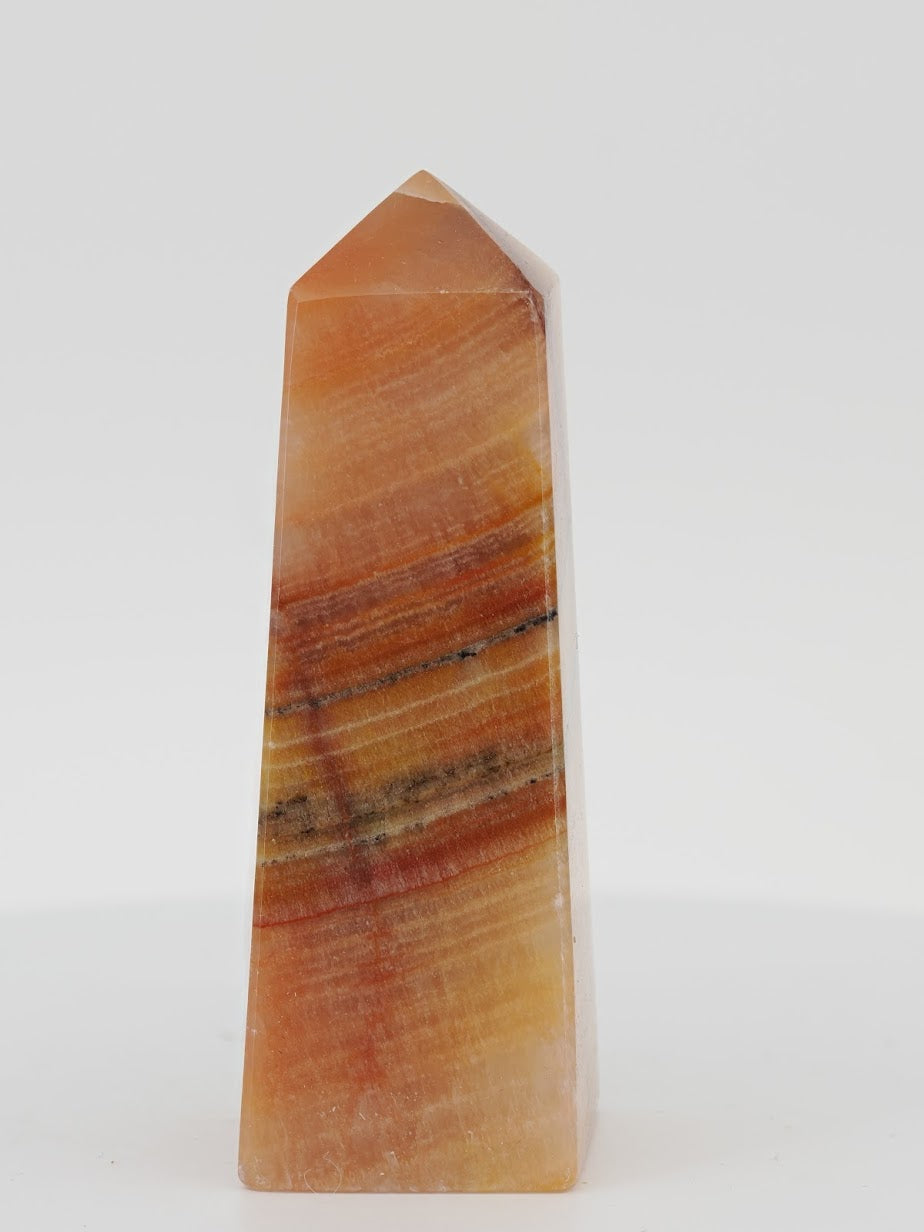
Rose Calcite Tower – Polished 3.75in. Pink Manganoan Stone
Rose Calcite Tower – Polished 3.75in. Pink Manganoan Stone
Couldn't load pickup availability
Share
Geological Overview
Sourced from the mineral-rich regions of Pakistan, this Rose Calcite is a stunning example of pink Manganoan Calcite. Its soft salmon-pink and peach hues are created by the presence of Manganese within the crystal lattice. Each tower features distinct horizontal banding, where the pink manganoan layers alternate with white aragonite and darker iron inclusions, recording the unique hydrothermal pulses of the Balochistan landscape.
Aesthetic Appeal
These towers feature a warm and nurturing color palette, ranging from delicate rose-pink to creamy peach. The masterfully polished surface emphasizes the stone's naturally waxy luster and the intricate horizontal banding. Its vertical obelisk form makes it a beautiful focal point for any collection, capturing a "sunset" aesthetic in natural stone.
Metaphysical Properties
Connected to the Heart Chakra, Rose Calcite is a stone of gentle emotional healing and self-love. It is traditionally used to soothe the emotional body, release anxiety, and encourage a sense of inner peace. Its nurturing vibration helps to clear energy blockages in the heart, making it an ideal companion for those seeking to cultivate compassion and emotional security.
Rarity & Collectibility
Graded AA (Premium Collector Grade), these towers are hand-selected for their exceptional pink saturation and well-defined bands. While calcite is found globally, the specific manganoan-rich "rose" variety from Pakistan is highly prized by collectors for its soft color and superior high-gloss finish.
Collector’s & Display Notes
- Measurements: Approximately 3.75" tall (9.5 cm).
- Weight: Approximately 185g.
- Selection: One tower will be intuitively selected for you.
- Origin: Balochistan, Pakistan.
- Care: Calcite is relatively soft (Mohs 3). Handle with care and avoid acidic cleaners or long-term water exposure to preserve the high-gloss polish.
Condition & Authenticity
Transparency Matters: This is a 100% natural specimen with no dyes or heat treatments. As with all natural carbonates, minor internal veils or tiny surface pits may be present, serving as a testament to the stone's authentic geological formation.