

6 Starter Crystals for Intuition: How to Test, Care & Buy
Amethyst, labradorite, lapis lazuli, moonstone, fluorite, and clear quartz are the six stones most crystal educators recommend for anyone starting out with crystals to develop intuition. Each works as a ritual anchor: something to hold or place that gives your attention a fixed point while you practice noticing your own impressions. None of them are a substitute for evidence-based decision-making, therapy, or professional advice. The sections below walk through what each stone actually does, how to test whether it helps you, and how to buy and care for one without getting a dyed or fragile piece.
TL;DR:
- Amethyst is suitable for general intuition development and calming the mind, but pairing it with grounding stones like smoky quartz enhances its effect.
- Labradorite is best for visual and symbolic work, requiring careful handling due to its chipping tendency, and is effective when used at an angle for focus.
- Clear quartz is the most durable and versatile for everyday use, serving as a universal amplifier and starting point for testing crystal-based intuition practices.
- Most stones should be inspected for dye, fractures, or treatments, especially softer or porous varieties like lapis lazuli, which need gentle cleaning and careful handling.
- Using crystals effectively involves setting specific intentions, consistent placement or handling, and maintaining a journal over several weeks to validate intuition signals.
Table of Contents
- Best crystals for intuition and what each one is actually good for
- How to actually use a crystal to develop and test your intuition
- Choosing, inspecting, and caring for intuition stones
- What science actually says about intuition and crystal practice
- Where crystals for intuition come from: a short history
- Wearing and carrying crystals beyond meditation
- Curated intuition stones from Legacy Crystals and Minerals
- Sources
- FAQ
Best crystals for intuition and what each one is actually good for
Not every stone on this list does the same job, which is why buying “a crystal for intuition” without a specific use case in mind usually leads to disappointment. Match the stone to what you’re trying to develop, whether that’s dream recall, decision clarity, or steadier focus during meditation.
Amethyst is the closest thing to an all-purpose starter stone in this category; explore the Amethyst Dream Duo | Malik Flowers for a locally available option to start your intuitive journey. Its best for: general intuitive development and calming an overactive mind before meditation. Hold it for a few minutes before you sit, rather than gripping it the whole session, so your hands stay relaxed. Amethyst is quartz, so it’s durable enough for daily handling, and GIA guidance on the amethyst family confirms warm soapy water is safe, though abrupt temperature swings can still crack a piece. Pair it with smoky quartz if you want a grounding counterweight.
Labradorite is best for imaginative and symbolic work, the kind of intuitive practice that leans on visual impressions rather than gut feelings. Its flash (labradorescence) makes it a natural focal point: hold it at an angle and let your eyes settle on the colour shift as a way of dropping into a receptive state. It’s moderately durable but can chip at thin edges, so display pieces need padded storage. Our guide to labradorite’s meaning goes deeper into its symbolism if you want the full background. Pair it with black tourmaline for protection during shadow-work sessions.
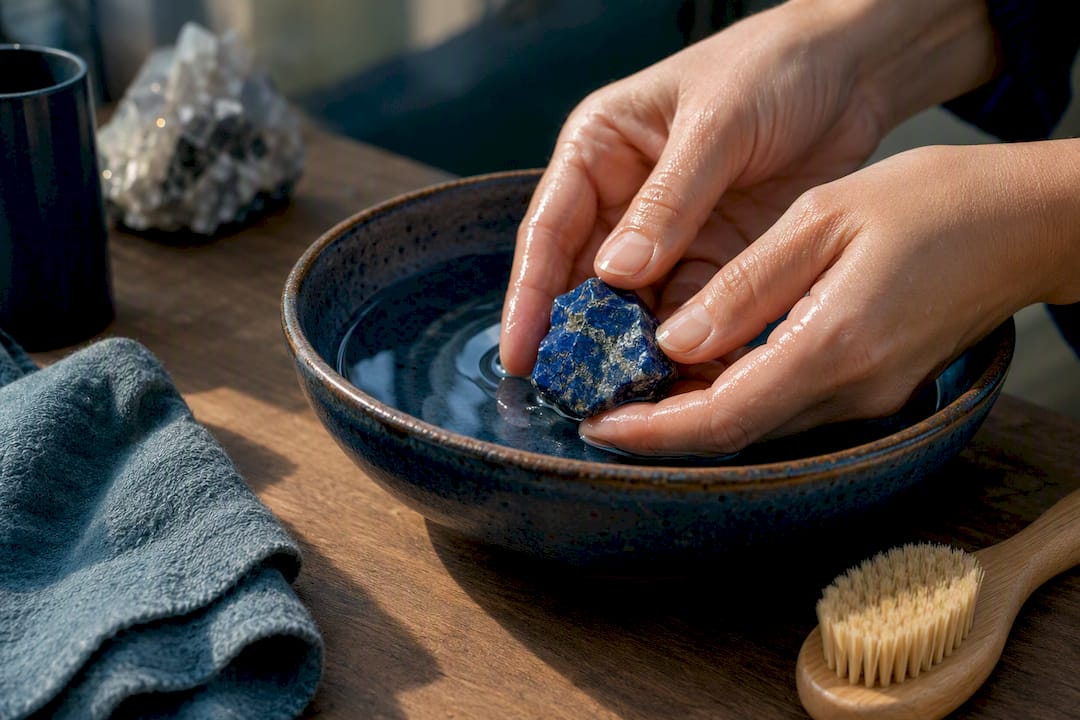
Lapis lazuli is traditionally tied to inner vision and third-eye reflection. Best for journaling and reflective writing rather than movement-based practice, since it’s a softer, more porous stone. This is the one that trips up most new buyers: lapis is frequently dyed or wax treated, and GIA’s own care notes say the safest cleaning method is warm soapy water only, with no heat, solvents, steam, or ultrasonic cleaners. Ask your seller directly whether a piece has been treated before you buy it. Pair lapis with clear quartz to amplify clarity without adding more colour saturation to your altar.
Moonstone is best for dreamwork and cycle-linked intuition practices. Placing it on a nightstand or under a pillow, alongside a programmed intention before sleep, is the most common practical use crystal educators recommend. It’s a feldspar, so treat it gently. Rainbow moonstone with visible sheen is more collectible than plain white moonstone, but both work the same way ritually. Pair it with labradorite for a dreamwork and visioning combination.
Purple fluorite is best for sorting through mental clutter and calming a racing mind before study or decision-making. Holding it in the nondominant hand during meditation, or resting it directly on the location associated with your intention, is a practical technique borrowed from broader crystal-handling guidance. Fluorite is soft (Mohs 4) and cleaves easily, so it’s a display and meditation stone, not something to carry loose in a pocket. Our fluorite deep dive covers colour variations if you’re choosing between purple, green, and rainbow specimens. Pair it with clear quartz for a calm focus combination.
Clear quartz is best for amplification and as a “blank slate” stone when you’re not sure what you need yet. It’s the most durable option on this list (Mohs 7) and takes daily handling without complaint, which makes it the safest first purchase for someone testing whether crystal work suits them at all.
Sodalite is best for calm, logical processing paired with intuitive insight, useful if your intuitive impressions tend to arrive as anxious noise rather than clear signals. It’s reasonably tough and cleans with mild soap and water.
Celestite is best for gentle dream recall and a soft entry point into visionary practice. It’s fragile and often sold as small clusters, so it belongs on a shelf, not in a pocket.
Kyanite is best for cutting through mental static during meditation, especially for people who find their intuitive sense gets drowned out by anxious thought loops. Blade kyanite is brittle at the tips, so handle raw pieces carefully.
Moldavite is best for people already comfortable with intense practice; it has a reputation among collectors for producing strong, sometimes overwhelming reactions, so start with short sessions and stop if it triggers distress rather than insight.
Apatite is best for clarifying goals before you try to read intuitive signals about them, since a vague intention rarely produces a useful impression either way.
Azurite is best for visionary and symbolic work but is notably soft and light-sensitive, making it a specimen for careful display rather than handling.
Blue lace agate is best for calm communication and journaling sessions where you want to write out intuitive impressions without second-guessing them.
Lepidolite is best for anxious minds that need to settle before any intuitive work can happen at all; it’s the lithium-rich mica that also gives pink lithium quartz its colour.
How to actually use a crystal to develop and test your intuition
Buying the stone is the easy part. The exercises below give you a repeatable way to find out whether a particular crystal genuinely sharpens your attention, or whether you’re just enjoying a nice rock.
- Set a specific intention before you start. Vague intentions (“help me be more intuitive”) produce vague results. Name a real, upcoming decision or question instead.
- Hold or place the stone and breathe for two to three minutes before you try to notice anything. Rushing straight to “reading” the stone skips the part where your mind actually settles.
- Record the first impression that comes, without editing it. Write it down immediately, even if it seems strange or unrelated.
- For dreamwork, place the stone by your pillow and program the same intention right before sleep. Keep a notebook or phone within reach and write down dream fragments the moment you wake, before the memory fades.
- Repeat with the same stone and the same intention for several weeks, logging sleep quality, mood, and any recurring images or feelings alongside your impressions. A recommended practical method is to compare these notes against real outcomes over time rather than judging any single session.
The checklist for telling a genuine signal from wishful thinking is short: does the same impression recur across multiple unrelated sessions, does it show up before you know the outcome rather than being fitted to it afterward, and does it hold up when you review your notes with a skeptical eye a week later? One-off hits that feel dramatic in the moment rarely survive that kind of review.
Pro Tip: Use your non-dominant hand to hold the stone during testing sessions, and set a neutral kitchen timer instead of checking a clock. Both small changes reduce the chance you’re unconsciously steering the “impression” toward an answer you already expected.
Our practical guide to crystals for meditation walks through longer session structures if you want to build this into a regular practice.
Choosing, inspecting, and caring for intuition stones
A stone that’s been dyed, glued, or fracture-filled won’t hurt your intuition practice, but it will cost you more than it should and may fall apart under normal handling. Check colour consistency across the whole piece; uneven, patchy saturation is a common sign of dye, particularly in lapis lazuli and hoplite sold as turquoise. Look for fracture lines under good light, and ask the seller directly whether a specimen has been treated, where it was sourced, and whether it carries any documentation. Reputable sellers answer these questions without hesitation.
Cleaning rules vary more than most buyers expect:
- Quartz-family stones (amethyst, clear quartz, citrine) generally tolerate warm soapy water and a soft brush.
- Lapis lazuli and any dyed or treated stone should stick to warm soapy water only. GIA specifically warns against heat, solvents, steam, and ultrasonic cleaners for lapis.
- Soft stones like fluorite, celestite, and azurite do better with a dry cloth or a quick rinse rather than any soaking.
- When in doubt, test on a small hidden area first, or skip water entirely and use a dry method like smudging.
Durability matters most for anything you plan to wear or carry daily. A beginner’s guide to picking durable stones is worth reading before you commit to a bracelet or pocket stone; save the softer, Mohs 3 to 5 specimens for altar or shelf display instead. Ask about provenance every time, and favour sellers who can actually answer where a piece came from.
What science actually says about intuition and crystal practice
Intuition, in cognitive research, describes rapid, nonconscious processing rather than a mystical sense. Work on incubation by Dijksterhuis and colleagues found that setting a complex decision aside, “sleeping on it,” can let unconscious processing integrate more information than deliberate, step-by-step analysis manages alone. Separate physiological research has found that intuitive judgments are sometimes associated with lower sympathetic nervous system activation than deliberate ones, which is a real argument for calming rituals as part of intuitive practice, whatever object you use to anchor them.
A crystal fits into this picture as an attention cue, not a mechanism. Holding a specific stone during a specific ritual gives your mind a consistent trigger for settling down and paying attention to your own impressions, the same way a specific chair or specific music might. That’s a genuine, testable benefit for focus and pattern recognition. It is not evidence that any mineral transmits information or predicts outcomes.
If a practice starts producing fear, insomnia, intrusive thoughts, or an escalating certainty that feels compulsive rather than calm, stop. That’s a signal to step back and talk to a mental health professional, not to switch stones.
Where crystals for intuition come from: a short history
Long before “crystals for intuition” was a search term, cultures across the world assigned specific stones to inner sight and divination. Ancient Mesopotamians and Egyptians prized lapis lazuli enough to grind it for pigment and bury it with the dead, treating it as a stone of vision and the divine. Greek and Roman writers associated amethyst with clarity of mind, a belief tied closely enough to its name that “amethystos” itself referred to a state of sober, clear thinking. Moonstone carries a documented history in South Asian traditions, where it was linked to lunar cycles, emotion, and dream states long before Western crystal shops picked it up.
Labradorite’s modern association with intuition and inner vision is comparatively recent, tied to its 18th-century discovery in Labrador and the striking optical flash that gave it an almost otherworldly reputation among collectors. Quartz, meanwhile, shows up across nearly every documented culture with mineral traditions, from divination tools to burial goods, likely because its clarity made it an easy symbol for clear perception.
None of this history proves a stone works any particular way. It does explain why certain stones, rather than others, became the default choices: they were rare, visually striking, or already tied to spiritual authority in the culture that adopted them. That inherited symbolism is part of why the ritual still resonates today, whatever your view on the mechanism behind it.
Wearing and carrying crystals beyond meditation
Meditation is where most people start, but a stone sitting in a drawer between sessions does nothing. Carrying or wearing a crystal keeps the ritual cue present throughout your day, which matters if your goal is noticing intuitive impressions as they happen rather than only during a scheduled sit.
A bracelet or pendant is the simplest daily option. Touching it during a stressful meeting or an uncertain decision gives you a physical prompt to pause and check in with your gut reaction before you speak. A mixed-stone piece works well here precisely because you’re not committing to one stone’s “job”; you’re carrying a general reminder to pay attention. Browse crystal jewellery or bracelets if you want something you can wear without thinking about it.
A pocket stone works the same way for anyone who doesn’t wear jewellery regularly. Small tumbled quartz or sodalite pieces are durable enough to survive a coat pocket or bag.
Placement around your home extends the same idea. A stone on your desk becomes a cue to pause before a decision; one by the door becomes a quick grounding touchpoint before you head into something stressful. The point isn’t the specific spot. It’s consistency: the same object, in the same place, doing the same job every time, so your mind learns to associate it with the pause you’re trying to build.
Curated intuition stones from Legacy Crystals and Minerals
This source focuses on museum-grade and collector-quality specimens rather than mass-produced tumbled stones, which matters most in a category where dyed lapis and glued clusters are common online. The picks below map directly to the use cases covered above, so you’re not guessing which specimen fits which practice.
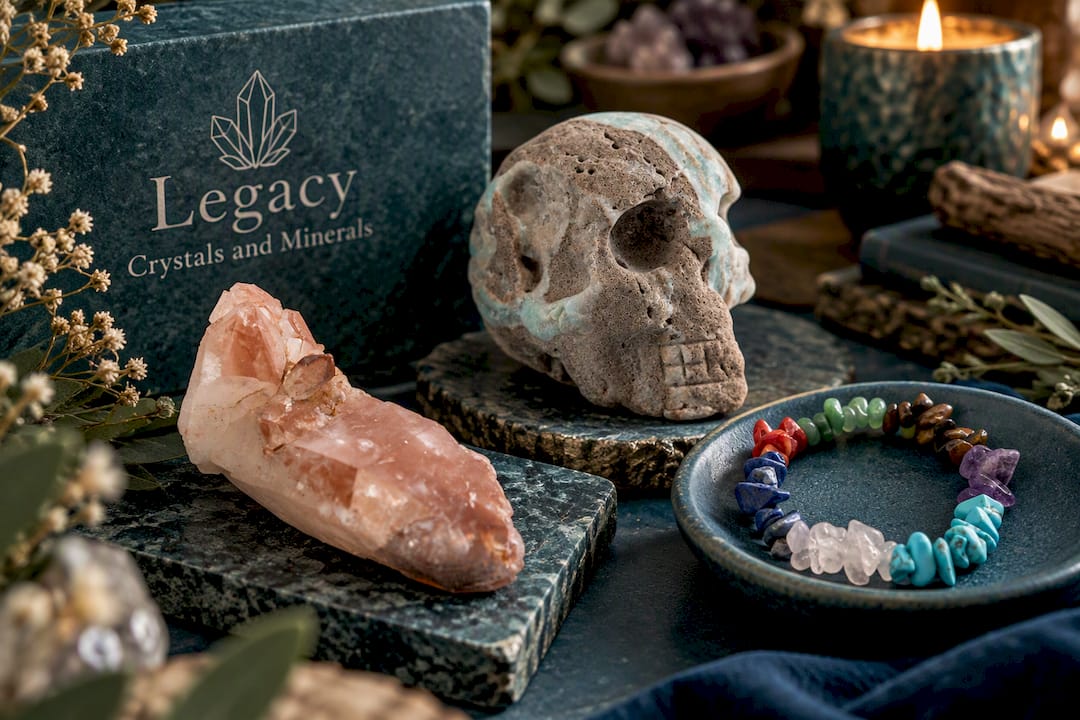
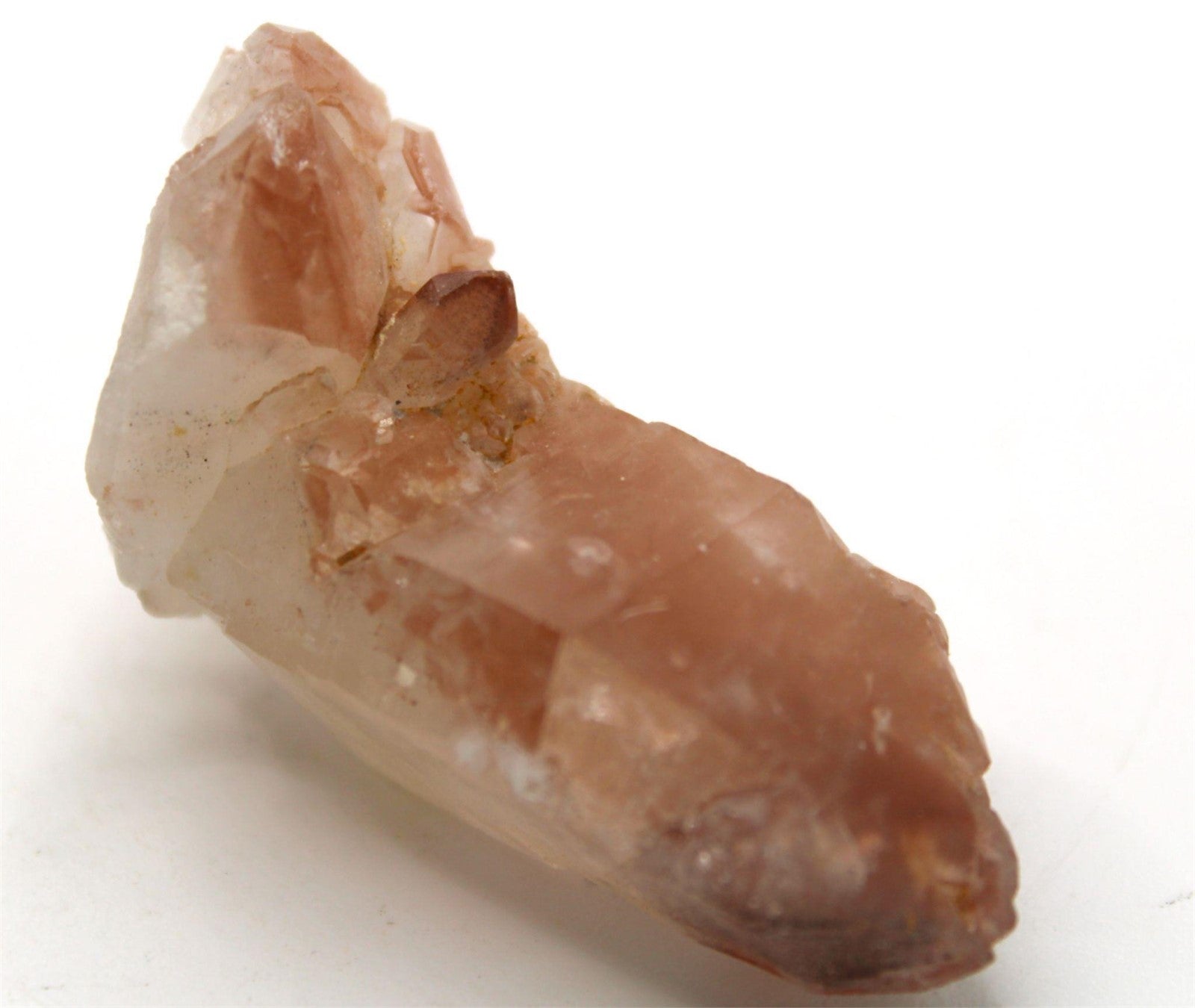
The Pink Lithium Crystal Cluster from Brazil gets its colour from lepidolite, the same lithium-rich mica behind the calming stone mentioned earlier, at roughly 3.5 cm by 3.5 cm. That size makes it a natural altar piece for dreamwork or emotional-balance intentions rather than a stone you’d carry around. For anyone who wants a single striking specimen to anchor visionary or symbolic work, the Crystal Skull Collection offers 500g hand-carved skulls across ten mineral variants, giving you a choice of stone that matches whichever intention you’re working with. If daily carrying matters more to you than a display piece, the Mixed Crystal Chip Bracelet in a chakra spectrum gives you a wearable anchor covering several stones at once, so you’re not locked into one specific intention.
Beyond these three, browse raw minerals and crystals for unpolished specimens, polished stones for smoother handling pieces, or museum quality minerals and crystals if you’re building a serious collection rather than a starter kit. These are curated picks for practice, not guarantees of any particular outcome, but they’re specimens Legacy Crystals and Minerals can vouch for on authenticity and sourcing, which is more than most online listings offer. If you’d rather browse everything at once, the full catalogue is the place to start.
Sources
- The impact of the mode of thought in complex decisions (Dijksterhuis et al.) | PMC
- Moonstone spiritual properties and benefits | mindbodygreen
FAQ
What is the best crystal for intuition?
Amethyst is the most commonly recommended all-purpose stone because it’s durable, affordable, and suits general meditation practice. Moonstone is the better pick specifically for dreamwork, and labradorite works best for imaginative or symbolic intuitive practice.
What two crystals cannot be together?
There’s no scientifically established rule against pairing any two crystals physically; this idea comes from metaphysical tradition rather than mineralogy. The more practical concern is storage: harder stones like quartz can scratch softer ones like fluorite or celestite if they’re kept touching in the same box.
How do I unblock my intuition?
Most crystal educators recommend a calming ritual, a specific question, and a consistent journaling practice over several weeks rather than expecting an instant shift. Setting a problem aside and revisiting it later is a documented way to let nonconscious processing catch up with a decision you’re stuck on.
What is the highest vibrational crystal?
“Vibration” in crystal terminology is a metaphysical concept without a standardized scientific measurement, so there’s no verified ranking. Selenite and moldavite are the two most commonly cited by crystal educators, though moldavite in particular can produce intense reactions and is better suited to experienced practitioners.
How do I use crystals for intuition if I’m a complete beginner?
Start with one stone, one clear intention, and a daily journal for a few weeks rather than switching stones frequently. Clear quartz or amethyst are the most forgiving starting points because they’re durable and don’t require special cleaning precautions.


