
Choose a Crystal for Beginners: 7 Durable Picks That Last
The best way to choose a crystal is to name your intention first, then let physical attraction and a few durability checks narrow the field. If a stone pulls your eye and holds up to daily handling, it’s the right pick. Check the mineral name, its Mohs hardness, and whether the seller discloses treatments before you commit.
TL;DR:
- Choose crystals based on clear intentions and ensure they are durable enough for daily handling, with Mohs 7 or higher for jewelry use.
- Trust your first instinct when selecting a stone, then verify its mineral, treatment, and stability, especially if buying online or from new sellers.
- Avoid soft, water-sensitive stones like selenite or untreated materials that are commonly dyed or simulated to prevent damage or deception.
- Use the selected crystal regularly by carrying, holding, or displaying it to reinforce your intention and support mindfulness.
- Always ask sellers for detailed information about mineral identity, treatment, origin, and return policies before making a purchase.
Table of Contents
- How do you choose a crystal for beginners?
- Should you trust intuition or research when picking a crystal?
- What durability and authenticity checks matter most?
- How do you use a crystal once you’ve chosen it?
- What should you check before buying a crystal online or in person?
- Who’s behind this guide?
- Which Legacy Crystals and Minerals pieces fit these picks?
- Sources
- FAQ
How do you choose a crystal for beginners?
The fastest path into crystal work is matching a common goal to a stone that’s affordable, durable, and easy to find. You don’t need ten specimens to start. One stone, used consistently, teaches you more than a shelf full of untouched pieces ever will.
Here’s a shortlist that covers most beginner intentions, based on the stones most consistently recommended for newcomers:
- Clear quartz — general clarity and focus; a hard, stable stone (Mohs 7) that tolerates daily handling and even water exposure.
- Amethyst — calm and reflection; Mohs 7, but its colour can fade with prolonged sun exposure, so keep it out of windowsills.
- Rose quartz — self-compassion and emotional softness; durable at Mohs 7, good for jewellery or a bedside stone.
- Black tourmaline — grounding and boundary-setting; Mohs 7 to 7.5, tough enough for a pocket or a desk.
- Selenite — clearing and calm; strikingly soft at Mohs 2, meaning it scratches easily and dissolves in water, so it needs dry, careful handling.
- Citrine — confidence and warmth; note that most citrine sold commercially is heat-treated amethyst rather than natural citrine, so ask before you buy if that distinction matters to you.
- Carnelian — motivation and energy; a durable quartz variety (Mohs 6.5 to 7) that works well tumbled or as a pendant.
Pick one that matches an intention you actually have right now, not one you think you should want. Live with it for a few weeks before adding a second stone. That pause tells you whether the practice sticks or whether you were just shopping.
Should you trust intuition or research when picking a crystal?
Both, in sequence. There’s no scientifically established test that matches a specific crystal to a person’s energy, so intuition and physical attraction are a legitimate starting filter, not a shortcut around good judgment. The trick is running that instinct through a couple of practical checks before you buy.
Here’s the method:
- Do the attraction test. Look at a tray of stones, in person or in photos, and notice which one you reach for first without overthinking it. That instinct is real data. Trust it as your starting point.
- Name the use. Decide whether the stone needs to survive daily wear (jewellery), sit on a shelf (display), or ride in a pocket (carry piece). This determines how much durability actually matters.
- Verify the mineral. Ask the seller what it is, botanically and geologically, not just what it’s marketed as.
- Check hardness and stability. A quick look at Mohs hardness tells you if a stone can handle a ring setting or a bag full of keys.
- Ask about treatment. Heating, dyeing, and irradiation are common and not inherently dishonest, but you deserve to know before you pay a premium.
Pro Tip: If two stones tie on attraction, let hardness break the tie. The one you’ll actually keep is usually the one that survives being dropped once.
Intuition picks the stone. Geology tells you whether it’ll last.
What durability and authenticity checks matter most?
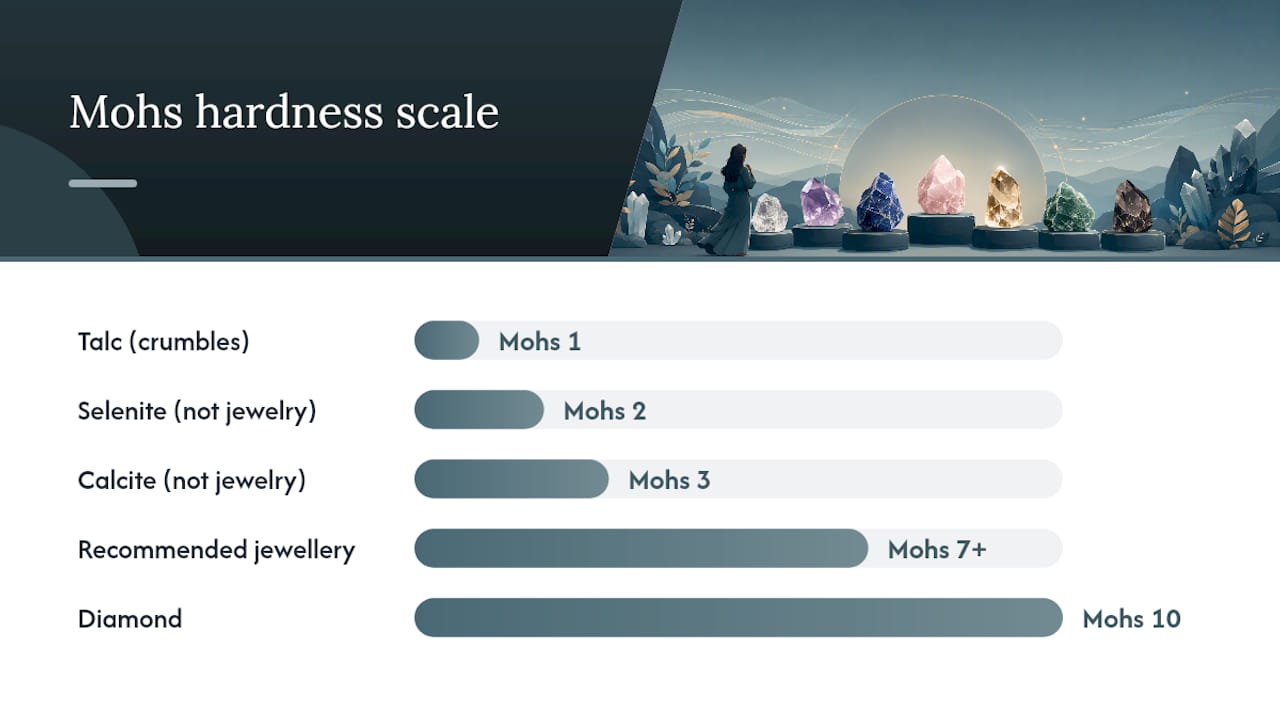
Mohs hardness runs from 1 (talc, crumbles under a fingernail) to 10 (diamond, scratches everything else). For jewellery you wear daily, aim for Mohs 7 or higher so rings and bracelets survive contact with keys, countertops, and each other. Softer stones like selenite (Mohs 2) or calcite (Mohs 3) belong on a shelf, not a finger.
Hardness isn’t the only durability factor. Cleavage, a mineral’s tendency to split along flat planes, makes some hard stones surprisingly fragile under a sharp knock. Water sensitivity matters too: selenite and some dyed agates can degrade or lose colour if soaked or left in a humid bathroom.
Treatments and imitations are widespread enough that asking questions should feel normal, not suspicious. A few things worth knowing:
- Most commercial citrine is heat-treated amethyst; natural citrine exists but is genuinely uncommon.
- Dyed stones (dyed agate, dyed howlite sold as turquoise) often show colour pooling in cracks under magnification.
- Glass and resin imitations feel lighter and warmer to the touch than genuine mineral specimens.
- Ask directly: “Is this treated, and is it natural or synthetic?” A seller who hesitates or dodges the question is a signal to walk away.
Natural citrine’s rarity is well documented by gemological researchers, which is exactly why treatment disclosure matters so much at checkout. Provenance and lab certification justify a higher price mainly on larger or rarer specimens, where the difference between natural and treated material can run into hundreds of dollars.
How do you use a crystal once you’ve chosen it?
The form you buy should match how you actually plan to use the stone, not just how it looks in a photo. A palm stone fits a seated meditation. A tumbled stone rides comfortably in a pocket or bag. A point suits directed, focused work at a desk. A cluster works as a room’s visual anchor rather than something you handle often.
A few simple routines make a stone earn its place:
- Carry a tumbled stone in a pocket as a grounding touchstone during a stressful day.
- Sit for two to five minutes holding your stone while you breathe slowly and name your intention.
- Place a cluster or specimen somewhere you’ll see it daily, like a desk or nightstand, as a visual prompt.
- Hold your chosen stone at the start of a meditation practice to mark the transition into quiet focus.
Worth being clear about: crystals work as focal objects that support mindfulness and intention-setting. Meditation and mindfulness practices carry documented benefits on their own, and a stone can anchor that habit. It’s not a substitute for medical care.
What should you check before buying a crystal online or in person?
A trustworthy listing answers questions before you have to ask them. Look for clear photos with a scale reference (a coin or ruler in frame), the mineral’s identity, any treatment disclosure, country or region of origin, and a stated return policy.
Before you buy, especially from a new seller, run through this:
- Ask what the stone is called geologically, not just its marketing name.
- Ask whether it’s been heated, dyed, or otherwise treated.
- Confirm dimensions and weight rather than relying on a photo’s scale.
- Ask about the return policy if the piece arrives different from described.
- Compare price to typical ranges. Small tumbled stones under a few dollars are normal; a suspiciously large specimen at that price is a red flag, not a deal.
A seller’s willingness to answer these plainly is one of the strongest signals you’re dealing with a legitimate business. In-person inspection lets you check weight, temperature, and cleavage directly, which is worth it for higher-value or one-of-a-kind pieces. For common tumbled stones or budget jewellery, online buying from a seller with clear disclosure is usually fine.
Who’s behind this guide?
A trusted crystal source offers museum-grade specimens, polished stones, and mineral jewellery, with a focus on disclosed provenance and honest treatment labelling. This guide draws on that same standard: name the mineral, disclose what’s been done to it, and let buyers make an informed choice.
A stone’s story matters as much as its shine. Where it came from, whether it’s been altered, and how it holds up over years of handling all shape whether it becomes a piece you actually keep.
An experienced mineralogist typically catalogs specimens for authenticity and hardness before listing. His notes on selecting crystals for emotional healing go deeper into intention-matching for readers who want more than a starter list.
Which Legacy Crystals and Minerals pieces fit these picks?
Once you know your intention and your durability needs, matching them to an actual product is straightforward. Legacy Crystals and Minerals carries a few options built around exactly the beginner logic covered above.
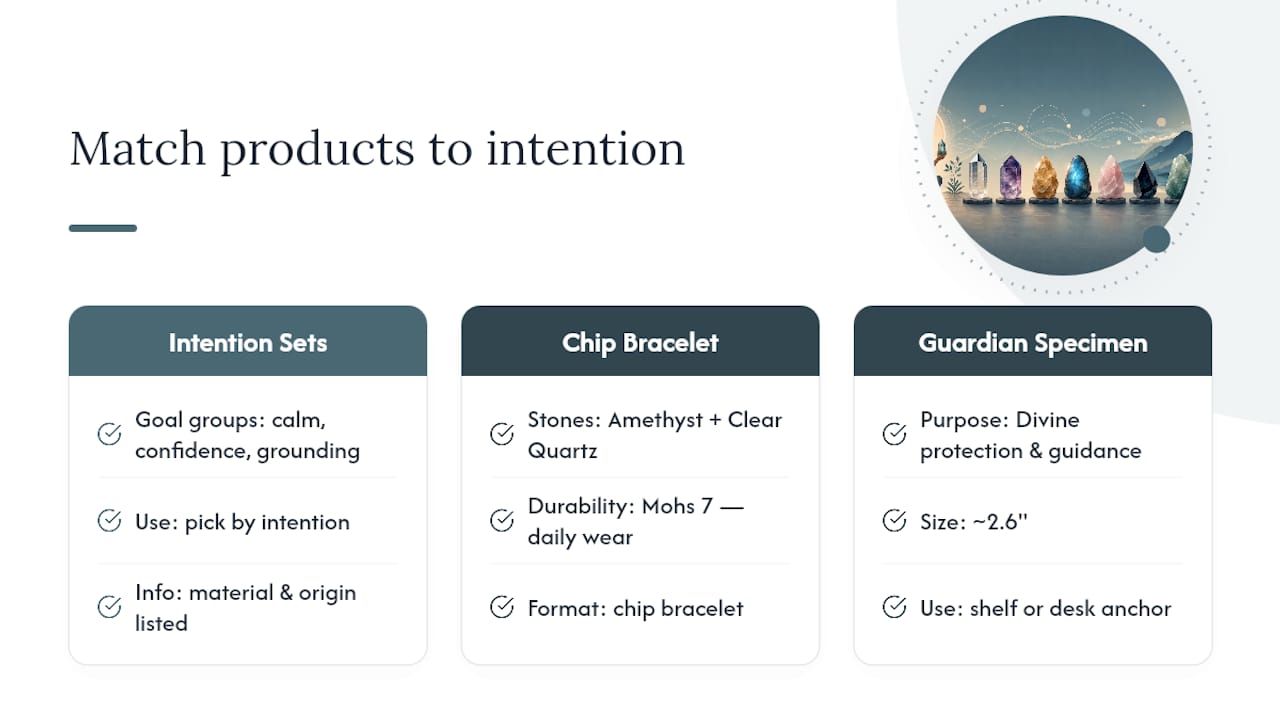
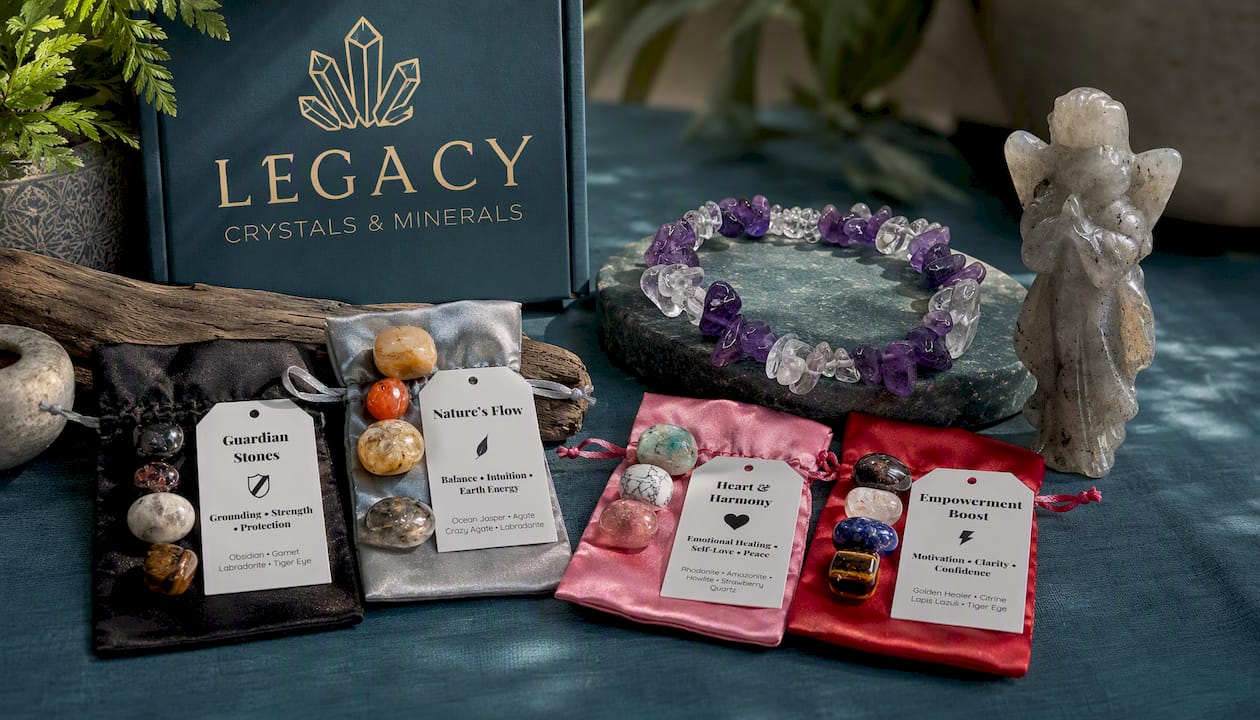
If you’re still narrowing your intention, the Healing Crystal Intention Sets group stones by common goals, calm, confidence, grounding, so you’re not guessing which mineral matches which purpose. For daily wear, the Amethyst & Clear Quartz Chip Bracelet pairs two Mohs 7 stones that hold up to regular contact, making it a practical jewellery pick rather than a display-only piece. And if you want a focal object rather than something worn, the Guardian Angel Spirit ~ 2.6" Divine Protection & Guidance specimen works well on a shelf or desk as the kind of daily visual anchor described above. Listings often state material identity and origin upfront, so buyers are informed about what they are purchasing. Browse the full collection to compare pieces against your own intention and care needs before you check out.
Sources
- The Gem Society — select gems ordered by Mohs hardness
- National Center for Complementary and Integrative Health — meditation and mindfulness
- Crystal Almanac — 12 best crystals for beginners
- Gemslore — how to choose a crystal
FAQ
How do I choose a crystal for myself?
Start by naming what you want it to support, calm, confidence, focus, then pick the stone that draws your eye among options matched to that intention. Confirm its hardness and any treatments before buying, especially for jewellery.
What crystals should I stay away from?
Avoid soft, water-sensitive stones like selenite for rings or showers, since they scratch and can dissolve. Be cautious with unusually cheap citrine or turquoise, which are often dyed or treated without disclosure.
What is the most powerful crystal for healing?
There’s no single “most powerful” stone backed by scientific evidence. Clear quartz is the most commonly recommended all-purpose starter because it’s durable, affordable, and pairs well with almost any intention.
What are the 7 main healing crystals?
Lists vary, but a common beginner set includes clear quartz, amethyst, rose quartz, black tourmaline, selenite, citrine, and carnelian, chosen for affordability, availability, and coverage of common intentions like calm, love, grounding, and confidence.


