

Durable travel crystals: what to carry, what to skip, and where to buy
Black tourmaline, amethyst, moonstone, and hematite cover the four things travellers ask crystals for most: protection, calm, restful sleep, and grounding. Carry a tumbled black tourmaline in your pocket, keep an amethyst on the hotel nightstand, and treat both as tactile anchors, not replacements for travel insurance, medical care, or common sense. From there, the right stone depends on your trip. Some e-commerce sites stock travel-ready sets for readers who’d rather buy a curated kit than assemble one piece by piece.
TL;DR:
- Black tourmaline remains the most recommended travel protection stone because of its durability and ability to reduce electronic interference, but it should be cleaned with a dry cloth.
- Amethyst and moonstone are suitable for calm, sleep, and transitions, with amethyst able to be worn as jewellery and moonstone needing careful storage due to its softness.
- Avoid loose handling of fragile stones like selenite and raw malachite, with the latter requiring sealed, polished pieces to prevent damage or toxicity.
- Crystals can go through airport security in both carry-on and checked luggage without issue, but wrapping each piece is recommended to prevent damage.
- Curated travel sets and small carvings offer convenient options for assembling a travel kit quickly without risking soft or oversized stones.
Table of Contents
- Best crystals for travel: what each stone does and where to keep it
- Packing crystals for a flight: what to expect at security
- Simple crystal rituals for travel days
- Which crystals fit your trip: a quick decision guide
- What Simon looks for in a travel-ready stone
- Crystals and local customs: what to know before you cross a border
- Travel-ready picks from An e-commerce retailer
- Sources
- FAQ
Best crystals for travel: what each stone does and where to keep it
Not every crystal belongs in a suitcase. Some are too soft, too big, or too fussy to survive a week of zippers and overhead bins. The stones below show up again and again in travel-crystal guides for good reason: they’re durable, small enough to carry daily, and each does a specific job.
Black tourmaline is the default protection stone for travel. It sits at 7 to 7.5 on the Mohs hardness scale, so it shrugs off pocket lint, keys, and the occasional drop on tile. Keep a tumbled piece in a jacket pocket or a jeans pocket you can pat down at security. Some travellers also point to black tourmaline for reducing sensitivity to electronic interference on flights packed with devices, though that’s a traditional association rather than a tested one. Wipe it with a dry cloth; no special care needed.
Amethyst is the calm stone. Its purple quartz structure is durable (7 on the Mohs scale) and looks good set into a pendant or ring, which means you can wear it through security instead of packing it. For sleep, a small palm stone on the hotel nightstand works better than jewellery. Amethyst can fade with prolonged, direct sunlight, so don’t leave it baking on a dashboard for a week.
Moonstone carries associations with transitions and new beginnings, which is why long-haul and jet-lagged travellers gravitate to it. It’s softer than quartz (6 to 6.5 on the Mohs scale), so it scratches more easily than tourmaline or amethyst. A bracelet or a wrapped pendant is safer than loose pocket carry. Store it separately from harder stones in your bag.
Hematite is the grounding stone, and it’s genuinely one of the toughest options on this list thanks to its metallic, iron-rich structure. It’s dense for its size, which some travellers actually like: the weight itself becomes the tactile cue. Pocket or dashboard both work fine. Hematite can rust slightly if it gets wet and stays wet, so dry it off before repacking.
Smoky quartz pairs naturally with black tourmaline for a grounding and protection combination. At 7 on the Mohs scale it travels as well as clear quartz, and its brown-grey tone hides scuffs better than lighter stones. Good in a pocket or clipped to a bag strap.
Malachite has a long tradition as a traveller’s stone across several cultures, but it needs real caution. It’s soft (3.5 to 4 on the Mohs scale), contains copper, and produces toxic dust if it’s cut, sanded, or badly chipped. Never carry raw or unsealed malachite loose in a pocket. If you bring it, choose a polished, sealed piece, wrap it separately, and avoid handling any specimen that shows cracks or flaking.
Labradorite works well for solo travellers who want a stone associated with intuition and adaptability. It’s moderately hard (6 to 6.5) but can chip at thin edges, so a tumbled or rounded piece travels better than a raw slab.
Aquamarine is traditionally tied to safe passage over water, which makes it a natural pick for cruises, ferry trips, or beach vacations. It’s durable at 7.5 to 8 on the Mohs scale and small pieces set well into earrings or a pendant.
Citrine is often chosen for road trips and business travel where the goal is energy and optimism rather than calm. It’s hard (7) and holds up well loose in a bag pocket or console.
Lepidolite shows up in anxiety-focused travel kits, and some practitioners connect this to its trace lithium content, though that’s a practitioner observation rather than established science. It’s soft and flaky (2.5 to 4 on the Mohs scale), so it needs its own wrapped pouch, never loose contact with harder stones.
Two stones are worth leaving at home. Selenite is beautiful but so soft (2 on the Mohs scale) that it can scratch, snap, or dissolve if it gets wet, making it a poor fit for luggage handling. Raw, uncut malachite carries the same caution as above: skip it unless it’s a small, sealed, professionally finished piece.
- Protection and grounding: black tourmaline, hematite, smoky quartz
- Calm and sleep: amethyst, moonstone, lepidolite
- Safe passage and optimism: aquamarine, citrine
- Best avoided loose in transit: selenite, raw malachite
Packing crystals for a flight: what to expect at security
Crystals are permitted in both carry-on and checked luggage. They’re mineral, not liquid or battery-powered, so screening staff typically wave small stones through without a second look. The exception is a large cluster or geode dense enough to draw attention on an X-ray screen, which may prompt a manual bag check rather than confiscation. That inspection is routine, not a problem to fear.
- Wrap each stone individually in a soft cloth or small pouch so nothing chips against a phone charger or a set of keys.
- Use a jewellery roll for bracelets, pendants, and rings; loose jewellery tangles and scratches fast in a packing cube.
- Keep valuable or rare specimens in your carry-on rather than checked luggage, where handling is rougher and bags occasionally go missing.
- For fragile or porous stones, add a rigid case or a hard-sided pouch, not just fabric.
- Hold onto the receipt for any unusual or high-value specimen, both for customs questions abroad and for insurance if you need to file a claim.
Pro Tip: Pack your travel stones in the same pouch every trip, and put that pouch in the same spot in your bag. When a security officer asks what it is, a quick, confident answer moves the line along faster than fumbling through three compartments.
Simple crystal rituals for travel days
A crystal ritual doesn’t need to be elaborate to work; for practical care and refresh tips to keep your stones fresh on the road, see how to refresh fragrance on the go. The value comes from repetition: doing the same small action before every trip gives you a coping routine you can lean on when a flight’s delayed or a hotel room feels unfamiliar. Holding a stone and stating a simple intention before departure is a practice widely recommended by crystal practitioners specifically because it’s fast and repeatable, not because of any measurable physical effect.
- Before you leave: cleanse your stone under running water or a few minutes of sunlight, hold it, name one intention for the trip, then tuck it into your travel pouch.
- In flight: press the stone into your palm during takeoff and landing, paired with slow breathing, four counts in and six counts out.
- At the hotel: place a palm stone on the nightstand and let it become part of your usual wind-down routine alongside dimming lights or reading.
- On road trips: set a stone on the dashboard and rotate it to a different spot, or swap it for a second stone, every hour or two on long drives to keep the habit active rather than background noise.
- Protection plus calm: pair a grounding stone like black tourmaline (worn or pocketed) with a calming stone like amethyst (nightstand or pendant) rather than trying to find one stone that does everything.
Pro Tip: If you tend to fidget with your phone during turbulence or delays, swap the phone for the stone. The physical weight and texture give your hands something to do that doesn’t feed anxiety the way scrolling does.
Which crystals fit your trip: a quick decision guide
Matching the stone to the trip matters more than owning a large collection. Guides that pair specific stones to specific trip types consistently recommend a small, repeatable kit: one pocket stone, one wearable piece, and one nightstand stone.
- Short flights: one durable pocket stone (black tourmaline or hematite) is enough; you don’t need a full kit for a two-hour hop.
- Long-haul or overnight flights: moonstone or labradorite for the transition, paired with amethyst for the arrival-night sleep reset.
- Road trips: citrine or smoky quartz on the dashboard, rotated regularly rather than left in one spot for the whole drive.
- Solo travel: black tourmaline for grounding plus labradorite for intuition, both small enough to carry daily without thinking about them.
- Beach or relaxation trips: aquamarine, given its long association with safe travel over water, alongside moonstone for general ease.
When you’re assembling the kit, prioritize durability and size first, function second. A stunning raw specimen that chips in your bag is worse than a plain tumbled stone that survives the trip intact. Skip anything soft, flaky, or unsealed, and skip anything too large to fit in a jacket pocket or a small pouch.
What Simon looks for in a travel-ready stone
Picking a durable piece starts with the photos and the description, not the price tag. A specimen selector named Simon checks a few things before calling any stone travel-ready:
- Exact measurements and weight. A listing that gives centimetres and grams, not just “small” or “palm-sized,” tells you whether a stone will actually fit a pocket or a jewellery roll.
- The finish. Tumbled and polished pieces resist chipping far better than raw or rough specimens, which matters more in a suitcase than on a shelf.
- Hardness relative to use. A pendant that gets knocked against a car door needs a harder stone than one that sits untouched in a display case.
- Provenance notes. Where a specimen was sourced and how it was cut tells you whether you’re getting a natural mineral or a dyed or reconstituted imitation, which matters for collectors and travellers alike.
Sourcing quality specimens can be the difference between a stone that survives ten trips and one that cracks on the first.
Crystals and local customs: what to know before you cross a border
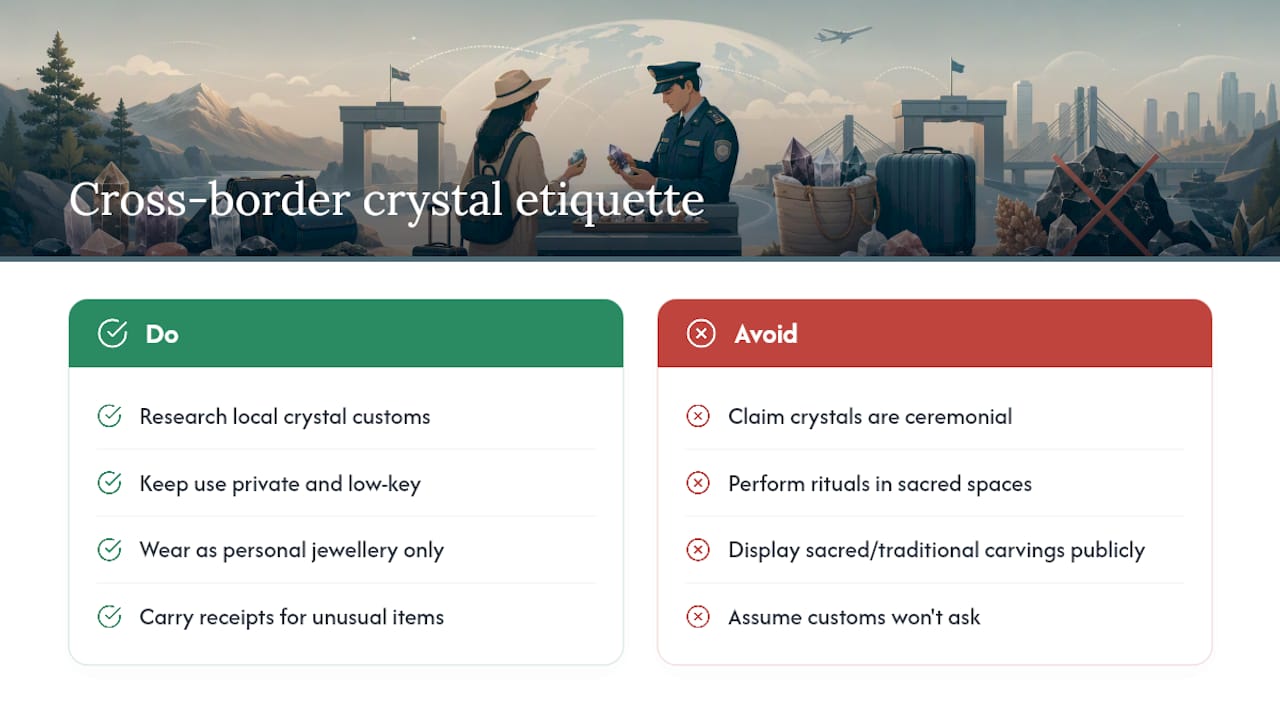
Attitudes toward crystals vary widely by country and by community, and a stone that reads as a harmless personal item at home can carry different meaning elsewhere. In some regions, mineral specimens connect to spiritual or religious practices that are not yours to borrow casually, particularly stones or carvings tied to specific Indigenous or cultural traditions. Wearing a piece respectfully as personal jewellery is different from performing a ritual in a public or sacred space you’re visiting as a guest.
Customs treatment also varies. Most personal-use jewellery and small tumbled stones move through customs without any issue, but larger mineral specimens can occasionally draw questions, especially in countries with rules protecting natural resources or archaeological material. Carrying a receipt for anything unusual or high-value helps if an officer asks.
A little research before you go goes a long way. If you’re travelling somewhere with strong ties between certain stones and local spiritual practice, keep your own crystal use private and low-key rather than displaying it publicly, and never present a personal item as though it carries ceremonial weight it doesn’t have. Respect for the place you’re visiting matters more than any stone you’re carrying.
Travel-ready picks from An e-commerce retailer
Building a travel kit stone by stone takes time most people don’t have before a trip. The Healing Crystal Intention Sets solve that in one purchase: a curated combination of stones sized for pouches and travel bags, so you’re not guessing which pieces pair well together.
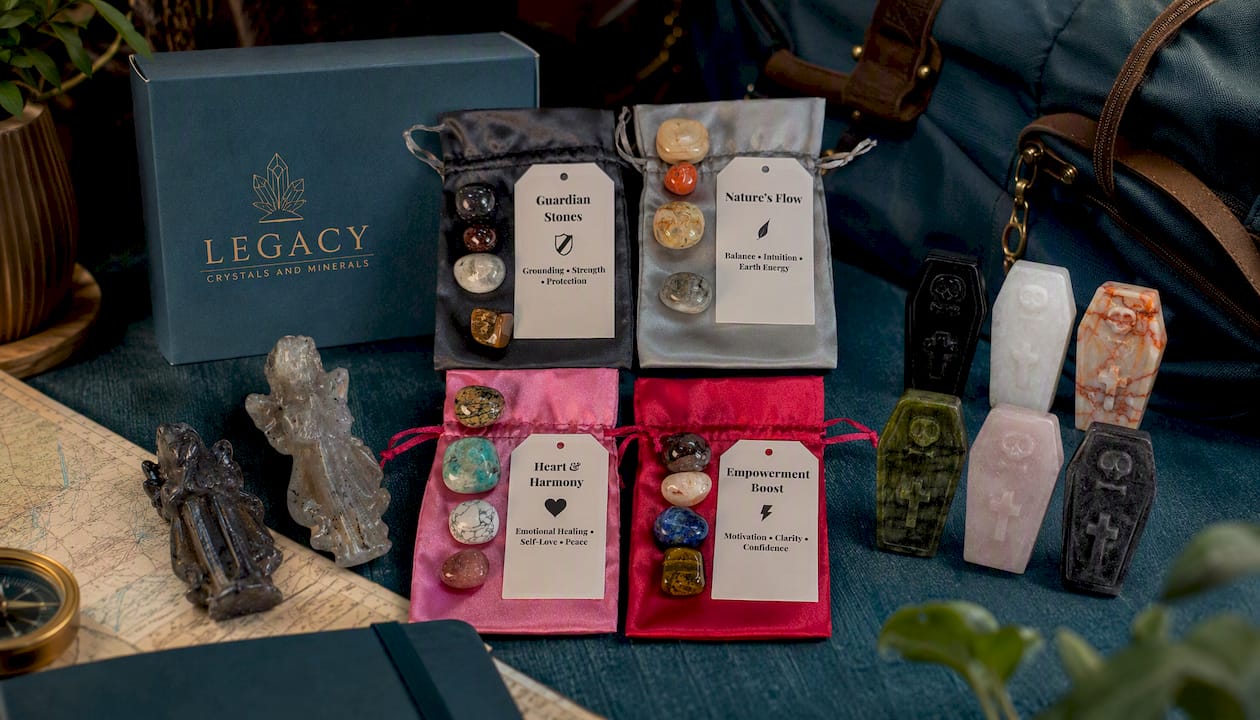
For a bedside or keepsake piece rather than a pocket stone, the Guardian Angel Spirit ~ 2.6" | Divine Protection & Guidance carving is compact enough for a hotel nightstand and solid enough to survive being packed in a suitcase corner. It works as a protection piece for the traveller who wants something to look at, not just carry.
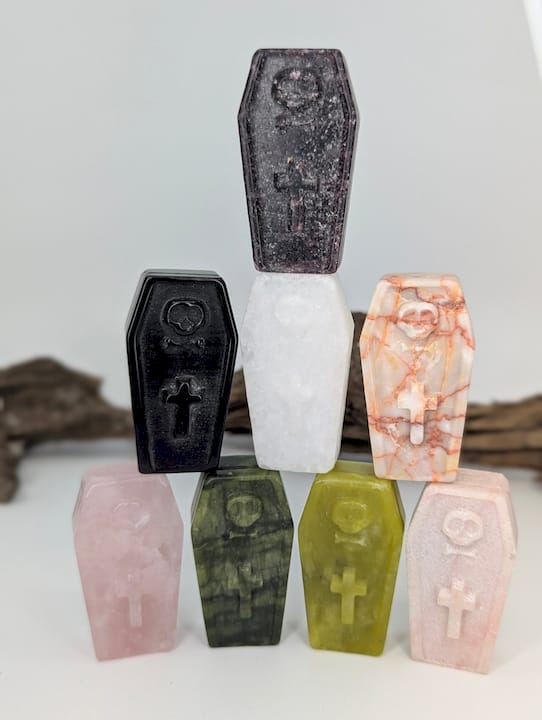
If you’re after a small gift or a personal keepsake that doubles as a display piece back home, the Crystal Coffin Carvings, 2 inches by 1 inch, come in a range of mineral choices, so you can match the stone to the trip or the person you’re buying for. At that size, they slide into a jewellery roll or a coat pocket without adding bulk.
Before you buy, check the listed size and weight against how you actually pack. A piece under three inches with a polished finish will handle carry-on travel better than a larger raw specimen. Browse the current selection and pick the piece that fits your next trip.
Sources
- Best crystals to carry while traveling for protection | Crystal Almanac
- Crystals for Safe Travel: Complete Guide | Phoenix & Aura
- Crystals for Travel, Traditional Stones and Honest Use · AU Crystals
FAQ
What crystal is good for traveling?
Black tourmaline is the most commonly recommended crystal for travel because it’s durable, pocket-sized, and associated with protection and grounding. Amethyst and moonstone are close runners-up for calm and easier sleep on the road.
What stone is good for travel protection?
Black tourmaline is the stone most guides point to for travel protection, often paired with smoky quartz for extra grounding. Both are hard enough to survive daily pocket carry without special handling.
Will airport security confiscate my crystals?
No. Crystals are permitted in carry-on and checked luggage, and manual inspection, not confiscation, is the typical outcome when a stone shows up clearly on an X-ray screen.
How do I care for fragile stones like selenite or malachite while traveling?
Wrap fragile or soft stones individually and keep them away from water and hard knocks; selenite is better left at home given how easily it scratches or dissolves, and any malachite you bring should be polished, sealed, and never handled if chipped or cracked.
Can I wear crystal jewellery through airport security?
Yes, crystal jewellery like pendants, rings, and bracelets passes through security the same as any other jewellery, and wearing it means one less thing to pack or lose track of in a carry-on bag.


