

Focus crystals: pick one stone and hold it 5–10 seconds before work
Fluorite and clear quartz are the two fastest crystals to put to work as a desk focus anchor, with hematite as the go-to option when you need grounding instead of clarity. Pick one, hold it for 5 to 10 seconds while naming the exact task ahead, then set it where you can see it. Crystals support a routine; they don’t replace sleep, medication, or professional care for attention difficulties.
TL;DR:
- Fluorite and clear quartz are the fastest crystals for focus, with fluorite supporting organization and quartz amplifying intentions; hematite offers grounding.
- Use a single stone to create a repeatable focus ritual, holding it for 5-10 seconds and setting it in sight before starting work sessions.
- Match the stone to specific focus needs: fluorite for organizing, hematite or tiger’s eye for sustaining attention, and sodalite or lapis lazuli for recalling information.
- Handle softer stones like fluorite gently, avoiding water soaks and impacts, and keep only one to three crystals on your desk or in wearables for effectiveness.
- Start with authentic, museum-grade stones, such as fluorite in palm or bracelet form, and stick to a consistent ritual for at least a week for best results.
Table of Contents
- Which focus crystals actually work for different needs?
- How do you actually use a focus crystal in a work session?
- How do you choose the right crystal for your specific focus problem?
- How do you care for desk stones and crystal jewellery?
- Why trust this guide, and which picks to start with
- Start your focus ritual with Legacy Crystals and Minerals
- Sources
- FAQ
Which focus crystals actually work for different needs?
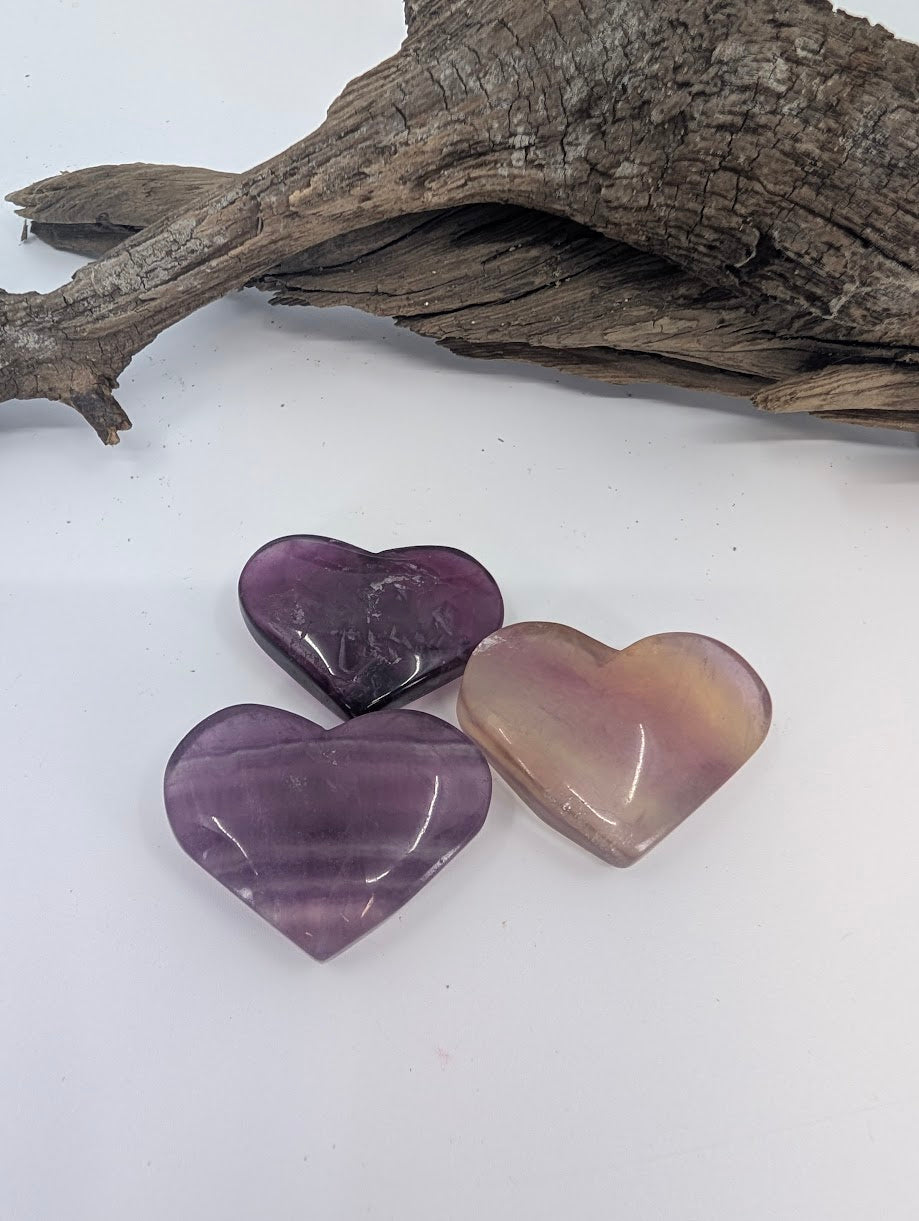
Different focus problems call for different stones, and matching the right one to the right task matters more than owning a big collection. Fluorite has earned its nickname as the “genius stone” across multiple crystal traditions, largely because practitioners lean on it specifically for organising scattered thoughts and analytical work. A small heart or palm stone version sits well on a desk without taking up much room.
Clear quartz works differently. It’s traditionally treated as an amplifier, a physical anchor you use to reinforce one specific intention rather than a general “clarity” stone. A tower, palm stone, or beaded bracelet all serve this purpose depending on whether you want a fixed desk piece or something you carry with you.
The rest of the shortlist fills in more specific gaps:
- Sodalite — supports logical analysis and articulating ideas clearly, useful before a presentation or a written brief.
- Tiger’s eye — associated with willpower and following through on a task once you’ve started it.
- Hematite — a heavy, cool stone that gives strong tactile feedback, good for anchoring attention when your mind keeps drifting.
- Carnelian — linked to motivation and getting moving, useful for the tasks you keep putting off.
- Black tourmaline — used as a visual shield against distraction, often kept near screens or shared workspaces.
- Citrine — tied to sustained motivation over longer stretches of work.
- Amethyst — favoured for calm, steady concentration rather than high-energy push.
- Lapis lazuli — associated with recalling information and clear expression, handy for exams or interviews.
One care note worth flagging early: fluorite sits at roughly Mohs 4, which is soft compared to quartz’s Mohs 7. Keep it away from hard knocks and skip the soap-and-water soak you’d use on a tougher stone.
How do you actually use a focus crystal in a work session?
A crystal only helps if it becomes part of a repeatable habit, not a decoration you forget within a week. The mechanism is straightforward: pairing a specific goal with a physical object strengthens follow-through compared to vague intentions like “I’ll focus more today.” That’s implementation intention research applied to a stone instead of a sticky note.
Here’s a simple sequence to build the habit:
- Pick up the stone and hold it for 5 to 10 seconds before you open your laptop or notebook.
- State one specific intention out loud or in your head. Not “focus,” but “finish the first draft of section two.”
- Place it where you can see it, angled toward you, not buried under papers.
- Pick it up again at the start of each work block if you’re using a Pomodoro-style timer, and set it down at the break.
- Repeat the same stone and the same phrase for at least a week before switching anything.
That pickup-and-setdown motion at the start and end of a Pomodoro interval creates a conditioned cue over time, the same way a specific desk lamp or a particular playlist can signal “work mode” to your brain.
There’s also a grounding exercise worth trying separately: hold a heavy stone like hematite and spend 30 seconds noticing its weight, temperature, and texture. This kind of tactile attention tends to pull focus away from anxious, looping thoughts and toward the senses, which can settle a racing mind before you start.
Pro Tip: Keep your stone count between one and three. A single consistent anchor conditions faster than a rotating collection, and too many stones on your desk just becomes visual clutter you have to focus around instead of through.
If discretion matters more than visibility, a bracelet or pendant does the same job as a desk stone. Save the palm stones for private workspaces and switch to jewellery for shared offices or client-facing days.
How do you choose the right crystal for your specific focus problem?
Most focus struggles fall into one of four moments, and each one responds to a different kind of stone.
- Enter (starting a task): Carnelian for motivation, or clear quartz to lock in the first intention of the session. A pocket stone works well here since you’re reaching for it before you even sit down.
- Sort (organising information): Fluorite is the strongest match, backed by its long-standing use for analytical and study work. A desk palm stone gives you a visual anchor while you outline or plan.
- Stay (sustaining attention): Hematite or tiger’s eye, both chosen for their weight or symbolic tie to willpower. A bracelet keeps the cue on your body through a long stretch of work.
- Retrieve (recalling or explaining): Sodalite or lapis lazuli, useful right before you need to speak or write clearly under pressure.
Form factor matters almost as much as the stone itself. A desk palm stone gives a fixed visual anchor you glance at between tasks. A bracelet travels with you and works as a wearable cue when you can’t keep a stone visible. A pocket stone gives pure tactile grounding, no visual element required, which suits anyone who fidgets or needs to keep hands busy.
How do you care for desk stones and crystal jewellery?
Cleaning and storage depend almost entirely on hardness. Fluorite’s Mohs rating of roughly 4 puts it well below quartz’s Mohs 7, so soaking it or scrubbing it isn’t worth the risk of scratches or clouding.
- Wipe softer stones like fluorite with a dry or barely damp soft cloth; skip water soaks entirely.
- Harder stones like clear quartz and tiger’s eye tolerate a soft cloth with mild soap and a rinse.
- Keep one visible anchor stone on your desk rather than a cluster. Clutter defeats the purpose of a visual cue.
- Many commercial citrines on the market are heat treated to deepen their colour, which is standard practice but worth knowing if you’re buying for collection value rather than just use.
- For jewellery, avoid perfume, lotion, and chlorinated water, all of which can dull polish or weaken bead cords over time.
Why trust this guide, and which picks to start with
Legacy Crystals and Minerals built this guide around a museum-grade curation standard, the same one applied across our full mineral catalogue, and paired it with educational content written by our own team, including author Simon’s posts on ritual, manifestation, and meditation practice. The goal isn’t to sell you every stone on the shortlist. It’s to help you pick one that matches your actual problem.
Three products from our current collection map directly onto the needs covered above:
- Healing Crystal Intention Sets — a curated grouping for readers who want a ready-made combination rather than assembling stones one at a time.
- Small Fluorite Heart – Pocket Clarity — a palm-sized piece built for the Sort mode, small enough for a desk drawer or a jacket pocket.
- Fluorite Cube & Quartz Beaded Bracelets, available in multiple colours — a wearable pairing that combines fluorite’s organising association with quartz’s amplifying role.
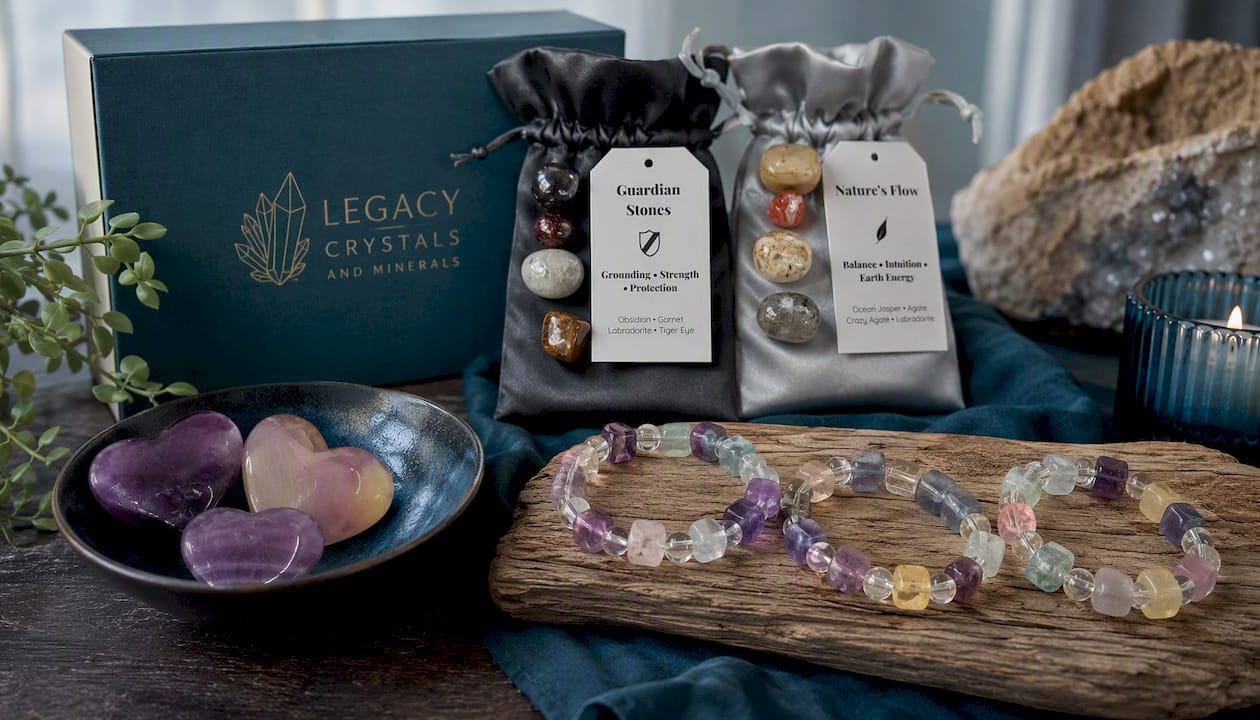
Before buying any polished stone, check the listing photos for weight and finish. A denser, well-polished piece holds up better to daily handling than a lightweight, matte one, and it’s the kind of detail that separates a stone you’ll actually use from one that ends up in a drawer.
Start your focus ritual with Legacy Crystals and Minerals
Legacy Crystals and Minerals is the direct route to authentic, museum-grade stones for readers who don’t want to gamble on unverified sellers or guess at sourcing. Every piece in our focus-stone collection, from the Small Fluorite Heart to the Healing Crystal Intention Sets, comes from a curated selection built for collectors and practitioners who care about authenticity as much as appearance.
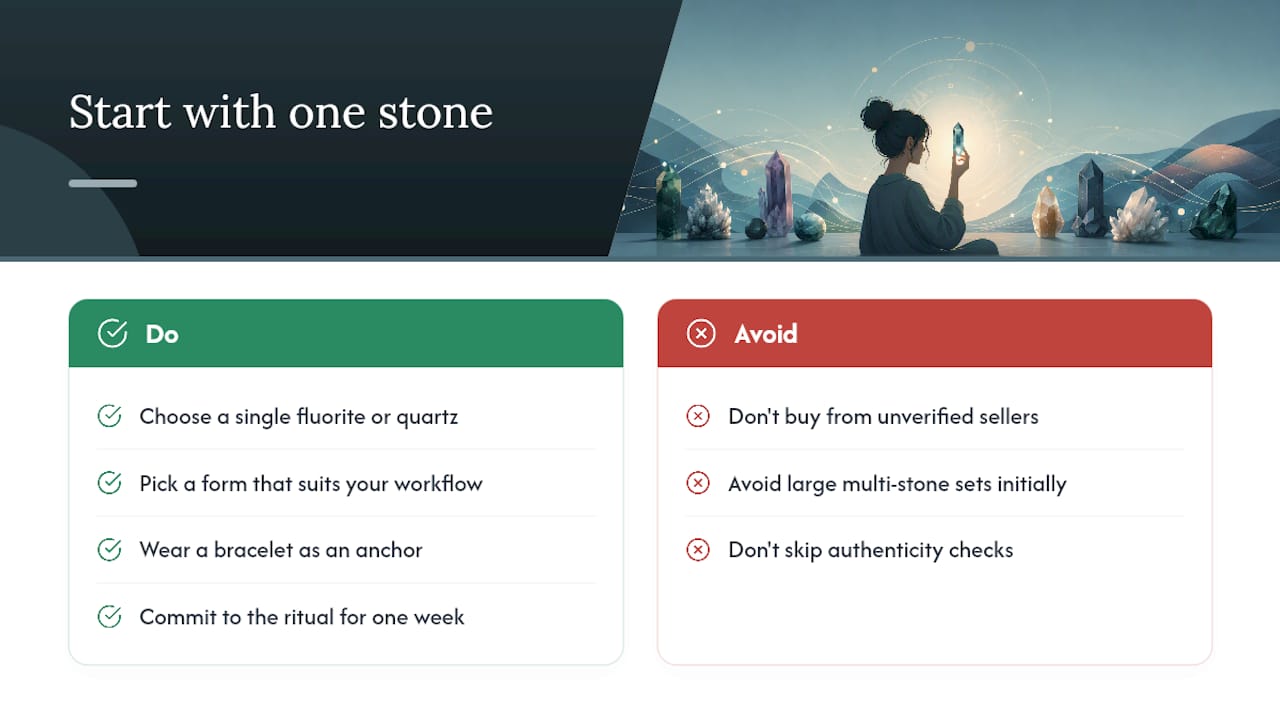
If you’re building a desk ritual around one stone, start with a single fluorite or quartz piece rather than a large set. If you’d rather wear your anchor than place it, the Fluorite Cube & Quartz Beaded Bracelet gives you both stones in one wearable piece, available in several colourways so it fits your existing jewellery. Browse the current focus collection and pick the form factor that matches how you actually work, then commit to the same short ritual for at least a week before adding anything else.
Sources
This guide draws on Crystal Almanac’s research on fluorite and quartz, Zen Harmony Center’s practical guide on ritual pairing, Forbes’s coverage of mainstream crystal use, and SageStone’s sceptical review of tactile and visual mechanisms. For ritual templates, see our guide to crystals for manifestation rituals and our piece on wearing crystal jewellery.
- Best Crystals for Focus: What Actually Works | Crystal Almanac
- Best Crystals for Focus and Concentration: A Practical Guide for Work and Study
FAQ
What is the best crystal for focus and concentration?
Fluorite is the most widely cited stone for organising thoughts and sustaining analytical focus, while clear quartz works best as an amplifier for a single stated intention.
Can crystals for focus really improve concentration?
Crystals have no proven neurological effect on attention, but their weight, colour, and texture work as tactile and visual cues that support ritual and routine, similar to a specific pen or a fixed desk setup.
How many focus crystals should I use at once?
Keep it to one to three stones so the tool stays a cue rather than becoming its own distraction.
Is fluorite safe to keep on a desk every day?
Yes, but handle it gently. Fluorite sits at roughly Mohs 4, softer than quartz’s Mohs 7, so avoid drops, scratches, and water soaks.
Should I wear a focus crystal or keep it on my desk?
Wear it as a bracelet or pendant if you need a discreet cue in shared spaces; keep a palm stone or heart on your desk if you want a visible anchor you glance at during work blocks.


