

Shipping mineral specimens: a collector's guide to doing it right
Ship mineral specimens with a box-in-box system, buy postage online, declare the correct HS code, and insure any collector-grade piece worth protecting. Those four habits stop most breakage claims and customs headaches before they start.
Two carrier notes matter right away. USPS Ground Advantage is usually the most economical domestic option for parcels up to 70 pounds, and a postage aggregator like Pirate Ship trims the retail counter price without changing the service you get.
Before anything leaves your workbench, run three checks:
- Shake the sealed box gently. Zero movement, zero sound, or it goes back open.
- Photograph the specimen from multiple angles before you pack it, dated and timestamped.
- Require a signature and buy declared-value coverage on anything you would hate to lose.
Key Takeaways
Shipping mineral specimens safely comes down to layered packing, correct customs classification, and declared-value coverage matched to what the piece is actually worth.
| Point | Details |
|---|---|
| Use two packing layers | Wrap the specimen in a soft contact layer, then add a separate void-fill layer before boxing. |
| Box-in-box for heavier pieces | Double-box anything over roughly 5 pounds or with protruding points. |
| Run the shake test every time | A sealed box with any internal movement fails and needs repacking before it ships. |
| Buy postage online | Aggregators like Pirate Ship cut costs below retail counter pricing for dense specimens. |
| Match coverage to value | Declare accurate value and add signature or third-party insurance on collector-grade pieces. |
| Shop with Legacy Crystals and Minerals | The site’s own shipping standards, insuring orders over $200 and box-in-box above 5 pounds, mirror the practices this guide recommends. |
Where to check carrier rules and community customs advice
For rules straight from the source rather than secondhand summaries, a few links are worth bookmarking:
- USPS Ground Advantage FAQ for current service coverage and weight limits
- Pirate Ship for comparing discounted postage rates before you print a label
- FedEx service alerts for temporary restrictions affecting specific routes or hazardous categories
- Mindat’s customs discussion thread for real trader experiences with classification and duty issues
Table of Contents
- What is the safest way to pack minerals for shipping?
- How do you choose the right carrier and save on shipping costs?
- What customs paperwork do international mineral shipments need?
- When should you insure a mineral specimen and declare its value?
- What’s a reliable step-by-step workflow for packing a shipment?
- Handling fragile mineral specimens during packing and transit to prevent damage
- Do minerals need temperature or environmental protection during shipping?
- What labelling and marking does a mineral shipment actually need?
- What extra steps apply to shipping hazardous mineral specimens internationally?
- How should you track and communicate updates on a mineral shipment?
- Legacy Crystals and Minerals ships museum-grade specimens the way this guide describes
- Sources
- FAQ
What is the safest way to pack minerals for shipping?
Every mineral specimen needs two separate protective layers, and confusing them is the most common way sellers ruin a shipment. The first layer sits directly against the stone to prevent abrasion and chipping. The second layer absorbs shock and stops the specimen from moving inside the box. Skip either one and you’re gambling.
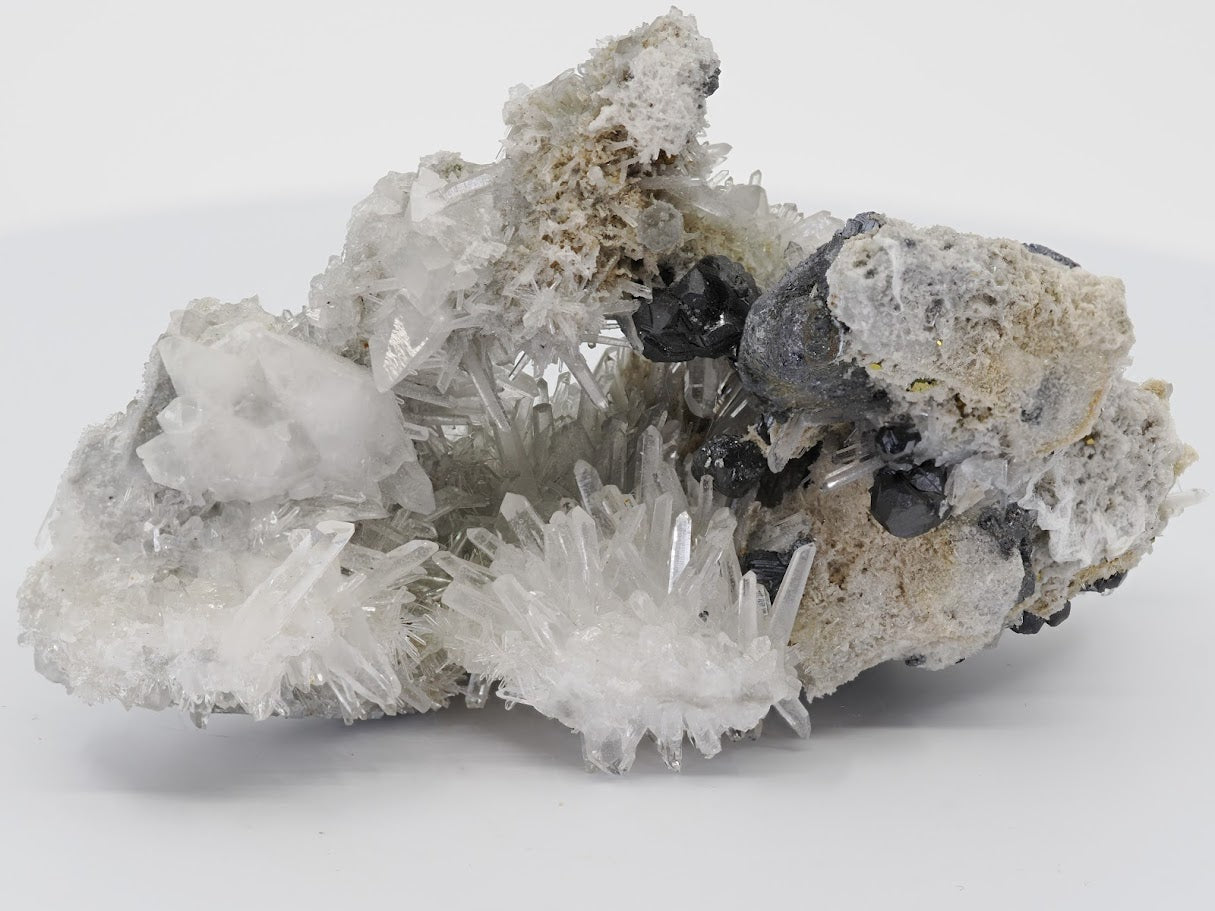
The contact layer is usually acid-free tissue, wrapped snugly enough to cushion points and edges without adding bulk. The void-fill layer goes around that wrapped specimen and fills every gap in the box. Packing specialists who work specifically with crystals treat these as two distinct engineering problems, not one generic “wrap it and box it” task.
Here’s a working materials checklist, with substitutes for whatever you have on hand:
- Contact layer: acid-free tissue paper, or soft cotton if tissue isn’t available.
- Void fill: small bubble wrap or honeycomb kraft paper (Geami-style) rather than loose packing peanuts, which shift and settle during transit.
- Structural support: foam corner protectors for slabs and plates, plus a rigid cardboard divider for clusters with delicate terminations.
- Seal: water-activated (WAT) tape on the outer box rather than standard packing tape, which lifts in humid conditions.
Pointed specimens (wands, generators, single terminated points) need the tip cradled in its own tissue nest so pressure never concentrates on one crystal face. Slabs and plates need rigid support underneath, not just padding around the edges, because flat stone flexes and snaps under its own weight if it’s unsupported in the middle. Clusters are the trickiest: matrix specimens with multiple fragile points need a custom-cut foam bed so no single point bears the weight of the whole piece.
For anything heavier than roughly 5 pounds, or with protruding terminations, double-boxing is not optional. Pack the wrapped specimen into a snug inner box, then centre that box inside an outer box with at least 2 inches of void fill on every side.
The shake test is your final acceptance standard, not a nice-to-have. Seal the box, pick it up, and shake it the way a courier’s conveyor belt will. Any rattle, shift, or thud means the void fill failed and you open the box again.
Pro Tip: Do the shake test before you tape the outer box shut, not after. Reopening a taped box wastes materials and tape residue weakens the second seal.
How do you choose the right carrier and save on shipping costs?
Weight and urgency decide the carrier, not habit. For most collector-to-collector sales under 70 pounds where speed isn’t critical, USPS Ground Advantage delivers in roughly 2 to 5 days on most domestic routes and beats retail counter pricing for anything dense and heavy, like a raw specimen or slab. Priority Mail or a private courier makes more sense when the buyer needs the piece by a specific date, or when the box is light but oversized, since some services price by dimension rather than weight alone.
Buying postage online instead of at the counter is the single easiest cost lever available to a small seller. Aggregators such as Pirate Ship resell negotiated commercial rates that individual shippers can’t access on their own, and the savings show up immediately on dense mineral shipments where retail postage runs high relative to declared value.
A few practical rules worth building into your routine:
- Check dimensional weight before boxing. A lightweight but bulky box (think a large geode or amethyst cathedral) can price higher than its actual scale weight suggests.
- Split oversized or multi-item orders into two smaller boxes when the combined weight pushes into a higher pricing tier. Two mid-size boxes routinely undercut one heavy box.
- Standardize on two or three box sizes for your regular shipping volume. It speeds packing and makes rate comparisons consistent.
- Avoid PO boxes for anything requiring a signature, since some couriers won’t deliver signature-required parcels there.
Seller forum activity suggests USPS tends to be the fastest option for small domestic parcels, though last-mile performance varies by region, so it’s worth tracking which service performs best on your specific shipping lanes.
Aggregators and negotiated account rates can produce meaningful savings on dense, heavy specimens where standard list pricing is weakest, and building a simple rate table from your last several orders is the fastest way to spot where you’re overpaying.
What customs paperwork do international mineral shipments need?
Correct HS (Harmonized System) classification is the single biggest factor separating a clean international shipment from one stuck in customs limbo for weeks. Mineral specimens generally fall under codes for crystals, ores, or geological specimens depending on whether the piece is raw, cut, or polished, and getting that code wrong triggers manual review far more often than it triggers extra duty.
Community trading forums report that mineral specimens entering the United States are often duty-exempt, but traders consistently warn that this isn’t a rule to assume blindly. Classification errors and incomplete paperwork, not the mineral itself, are what cause fees and delays. Verify the code for your specific specimen type rather than copying whatever a previous shipment used.
Your commercial invoice needs to describe the item plainly: species name, approximate weight and dimensions, country of origin, and declared value in the seller’s own currency. Marking a specimen “for scientific use” or “for collecting purposes” can sometimes support a duty exemption, but only when it’s true and consistent with the item’s actual classification. Never write it as a workaround to reduce declared value.
Know the difference between DDP (Delivered Duty Paid, where you as the seller cover import charges upfront) and DDU (Delivered Duty Unpaid, where the buyer pays on arrival). DDU is more common for hobbyist mineral sales and avoids surprise costs on your end, but it can delay delivery if the buyer is slow to pay customs charges.
Build a standard international shipment packet:
- Clear photos of the specimen from multiple angles
- A one-line provenance note (locality, mine, collection date if known)
- The HS code and a plain-language item description
- Weight and dimensions, matching what’s on the shipping label
When should you insure a mineral specimen and declare its value?
Every carrier caps its default liability, and that cap is almost always lower than what a collector-grade specimen is actually worth. USPS, FedEx, and UPS all pay out only a modest standard amount on a lost or damaged parcel unless you’ve purchased declared-value coverage. For anything you’d genuinely mourn losing, that gap is the whole argument for paying a little extra upfront.
A simple documentation routine protects you if you ever need to file a claim:
- Photograph the specimen in good light from at least three angles right before boxing, with a ruler or coin for scale.
- Keep a written note of provenance, locality, and any prior sale price or appraisal.
- Save these records together with the tracking number, not scattered across old email threads.
- Require a signature on delivery for anything above your personal comfort threshold, typically higher-value pieces you’d otherwise lose sleep over.
- Consider third-party parcel insurance when the carrier’s own declared-value coverage caps out below the specimen’s real worth.
As a rough guide, low-cost tumbled stones and small bracelets rarely justify the paperwork of declared-value coverage. Museum-grade clusters, large cathedral geodes, and rare-locality specimens almost always do. If you’re unsure where a piece lands, a collector’s guide to types and value is a useful reference point before you decide.
What’s a reliable step-by-step workflow for packing a shipment?
A repeatable routine beats improvising every time, especially once you’re shipping more than a handful of orders a month. Here’s the sequence that holds up across single specimens and multi-item orders alike:
- Inspect and photograph the specimen under good light, noting any existing chips or fractures so you’re never blamed for pre-existing damage.
- Wrap the contact layer snugly around the piece, cradling any points or terminations in their own nest of tissue.
- Build the inner box, sizing it just larger than the wrapped specimen with void fill on all sides, then seal it.
- Centre the inner box inside the outer box, adding at least 2 inches of fill on every face before sealing.
- Run the shake test. Any movement means reopening and repacking, not taping over the problem.
- Label clearly, add the shipping label last, and photograph the sealed box for your own records.
Large cathedrals and tall clusters need a custom-cut foam base inside the inner box so the piece stands upright without leaning on its own points. Thin slabs and flat plates do better in a slot-style flat box, cut to size, rather than a deep box where they can shift and crack under surrounding fill. Jewellery-sized pieces, like bracelets or small tumbled stones, need far less structure: a padded mailer with a small void-fill pouch is usually enough, which keeps postage costs down on lower-value items.
Keep a small workstation checklist taped near your packing table: tissue, void fill, correct box size, tape, label, and camera. The quality-control pass/fail line is simple and absolute, according to packing specialists who work with crystal daily: any internal movement during the shake test is a fail, full stop.
Pro Tip: For anything over roughly 30 pounds or larger than a standard moving box, stop thinking parcel and start thinking freight. Pallet shipping with a specialized carrier is often cheaper and safer than trying to force an oversized geode into consumer parcel service.
Who’s behind this guide, and what does Legacy Crystals and Minerals actually enforce internally?
This guide draws on packing routines used by Simon and the team at Legacy Crystals and Minerals, refined against real order volume rather than theory. A few internal rules worth adopting yourself:
- Declared-value coverage on any order over $200
- Mandatory box-in-box for anything over 5 pounds
- Photo documentation before sealing, on every single order, no exceptions
For deeper reading on related practices, see the guide to caring for your specimens after delivery, and the practical breakdown of mineral specimen labelling for provenance paperwork.
Handling fragile mineral specimens during packing and transit to prevent damage
Fragility isn’t one property. A thin calcite blade fails differently than a heavy but brittle stibnite cluster, and packing both the same way is how damage happens. Points and terminations are the highest-risk zones on any specimen, since force concentrates at the tip rather than spreading across a flat face. Cradle every point individually rather than relying on general padding around the whole piece.
Matrix specimens, where crystals grow from a rock base, need the base secured first. If the heavy matrix can shift even slightly inside the box, every crystal attached to it takes the impact. Secure the matrix against a rigid support, then let the crystals themselves float in softer padding.
Weight distribution matters just as much during transit as during packing. A heavy specimen resting on its own delicate feature, even for a few hours in a delivery van, can fracture that feature through sustained pressure rather than a single impact. Orient the specimen inside its packing so the heaviest mass rests on its most structurally sound surface, never on a point, edge, or thin plate.
Multi-item orders add another failure mode: specimens knocking against each other inside a shared box. Each piece needs its own wrapped compartment, separated by rigid dividers, not just piled together in a shared bed of void fill. This is where the shake test earns its reputation. A box that passes with one specimen inside can fail once you add a second and third piece that weren’t accounted for in the original fill volume.
Do minerals need temperature or environmental protection during shipping?
Most mineral specimens tolerate normal shipping conditions without special environmental handling, but a meaningful subset don’t, and knowing which ones matters. Hydrated minerals, like certain gypsum varieties and some zeolites, can lose structural water and become brittle or dull if held in extreme heat for extended periods, such as a delivery truck sitting in summer conditions.
Light-sensitive and UV-reactive specimens present a different concern. Fluorescent minerals and some fluorite varieties can fade with prolonged light exposure, though a sealed shipping box provides natural protection during transit itself. The bigger risk comes after delivery, when a buyer displays the piece under strong light for years. A specimen like fluorite with quartz that reacts under UV light ships the same way any crystal does, but the listing itself should note the light sensitivity so buyers store it appropriately once it arrives.
Humidity is the more universal environmental risk. Cardboard boxes absorb moisture in humid climates or during ocean freight for larger international shipments, and that moisture can migrate into porous specimens or corrode metal-bearing minerals like pyrite over time. A silica gel packet inside the sealed box adds meaningful protection for any shipment crossing humid regions or spending extended time in transit.
Extreme cold rarely damages minerals directly, but rapid temperature swings, cold storage to a warm delivery truck, can cause condensation to form inside a sealed box once it’s opened. Letting a package acclimatize to room temperature before unsealing it avoids that condensation settling directly on the specimen.
What labelling and marking does a mineral shipment actually need?
Every box needs the basics any parcel needs: accurate sender and recipient addresses, correct postage, and a visible tracking barcode. Mineral specimens add a few marking practices worth adopting even though carriers don’t require them.
“Fragile” markings help but shouldn’t be relied on as your primary protection strategy. Handlers see fragile stickers on dozens of boxes daily, and the sticker doesn’t replace a proper box-in-box system with real void fill. Treat it as a courtesy reminder, not a substitute for packing quality.
“This side up” arrows matter more for slabs, plates, and tall specimens that need to stay oriented a specific way to avoid pressure on a fragile feature. If a specimen genuinely needs to travel upright, mark all four sides of the outer box, not just one, since boxes get rotated during sorting regardless of what any single label says.
Internally, attach a small paper label or tag to the specimen itself, separate from the outer shipping label, noting the species name and locality. If the outer box gets damaged or the shipping label tears off in transit, this internal tag keeps the specimen’s identity intact. It’s the same logic behind a proper specimen label: provenance information travels with the piece, not just with the paperwork around it.
For international shipments, the customs declaration itself functions as a formal label. It needs to match the commercial invoice exactly: same weight, same description, same declared value. Mismatched numbers between the box label and the customs paperwork is one of the more common reasons a shipment gets flagged for manual inspection.
What extra steps apply to shipping hazardous mineral specimens internationally?
A small category of minerals carries genuine hazard classifications, and shipping these internationally means following rules well beyond standard fragile-goods packing. Radioactive minerals like certain uranium ores or autunite specimens fall under hazardous materials regulations in most countries, and international shipment typically requires specific labelling, radiation-level disclosure, and sometimes specialized carrier handling rather than standard postal service.
Minerals containing asbestos-form fibres, like certain chrysotile or amphibole specimens, raise health and safety questions that some countries restrict or ban outright for import. Arsenic-bearing minerals like realgar and orpiment aren’t classified as shipping hazards in most jurisdictions when handled as sealed mineral specimens, but they warrant careful packing since surface dust can be a health concern if the specimen breaks in transit and the box is opened without care.
Before shipping any specimen in a potentially regulated category internationally, check the destination country’s import restrictions directly rather than relying on general shipping guidance, since rules vary significantly between countries and change without much public notice. Carrier service-alert pages are worth checking for current hazardous materials rules and any temporary restrictions affecting specific mineral categories or destinations.
When in real doubt about whether a specimen falls into a regulated category, the safer commercial path is domestic-only sales for that piece, or working with a specialized hazardous materials shipping service rather than standard postal or courier channels. The paperwork burden and liability risk of misclassifying a hazardous specimen internationally far outweighs the lost sale.
How should you track and communicate updates on a mineral shipment?
Tracking numbers matter more for mineral specimens than for typical retail goods, mostly because buyers are often collectors who’ve been burned before by vague sellers. Send the tracking number the moment the label prints, not after the package actually ships, so the buyer can watch it move from day one.
A short update at each major milestone, pickup, transit, and delivery, costs you almost nothing and meaningfully reduces buyer anxiety on higher-value orders. This matters even more for international shipments, where customs holds can stall a tracking number for days with no visible movement. A brief note explaining that customs delays are common and not a sign of a lost package prevents a wave of anxious messages.
For high-value specimens shipped with signature-required delivery, confirm the delivery date lines up with when the buyer will actually be available to sign. A missed signature attempt means a return trip to a depot, which adds days and occasionally triggers a return-to-sender if the buyer can’t collect it in time.
Keep your own internal record tied to each tracking number: the pre-ship photos, the declared value, and the packing method used. If a claim ever needs filing, having that record assembled before a problem happens saves days compared to reconstructing it after the fact.
Legacy Crystals and Minerals ships museum-grade specimens the way this guide describes
Legacy Crystals and Minerals packs every order using the same box-in-box, shake-test standard covered throughout this guide, so what arrives at your door matches what you saw in the listing photos.
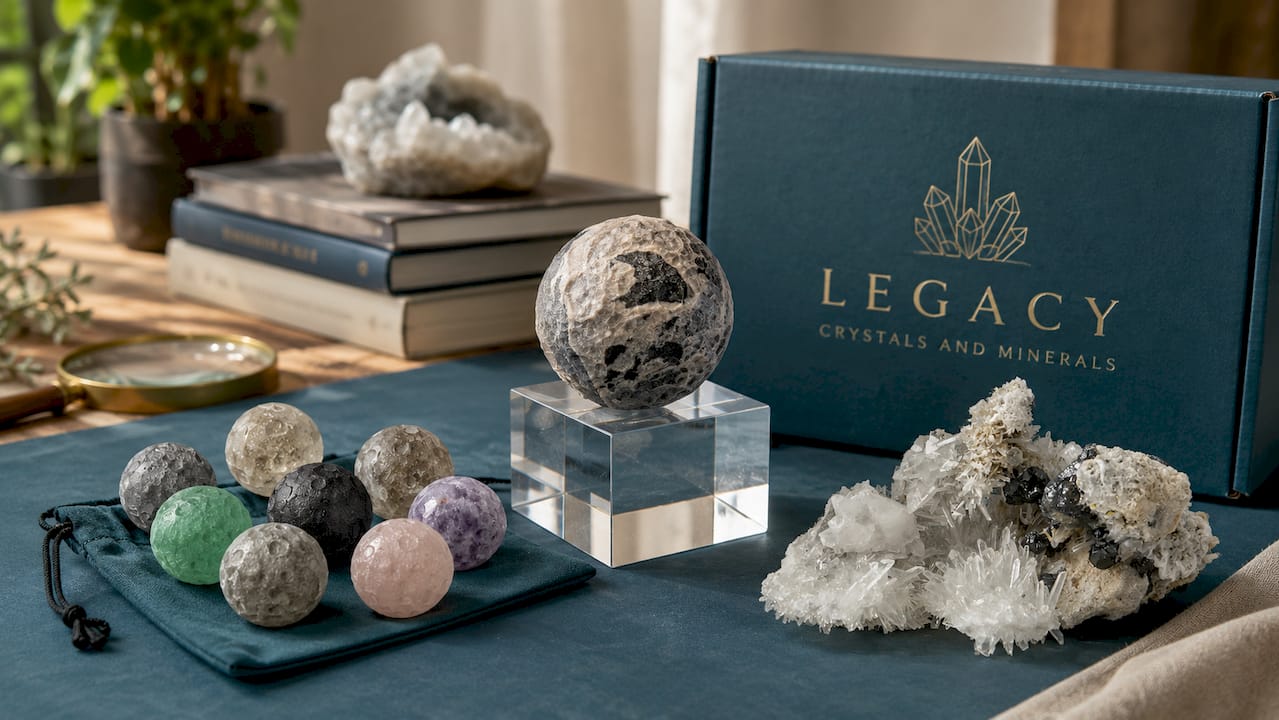
That matters most on the pieces where packing mistakes are expensive: dense specimens like the Stibnite with Sulfur, Quartz & Realgar Alteration from Jiangxi Province, tall pieces like the Mystery Crystal Tower generator obelisk, and smaller collector items like a Lapis Lazuli point or a Moonstone tumbled stone. Whether you’re buying a single tumbled piece or a heavy museum-grade cluster, the packing standard doesn’t change, and declared-value coverage is applied automatically above the site’s own $200 threshold.
Browse the current catalogue and check which specimens ship with box-in-box protection built into the order before you buy.
Sources
- USPS Ground Advantage FAQ
- Pirate Ship — postage aggregator
- Mineral Exchanges : Customs Problems for Traders
- How to Pack Crystals & Protect Them From Damage During Transit | Stonebridge Imports
- How to pack and ship fragile glassware and crystal
FAQ
What are mineral specimens, exactly?
A mineral specimen is a naturally formed crystal or mineral sample collected for its scientific, aesthetic, or educational value, ranging from a raw matrix cluster to a polished, cut, or tumbled stone.
What are the shipping requirements for exempt human specimens?
That question applies to biological or medical specimens, not geological ones. Mineral specimens follow entirely different rules: they’re physical, inorganic materials generally classified under mineral or crystal HS codes, not biohazard or human-tissue shipping regulations.
How do you ship samples preserved in formalin?
Formalin-preserved samples are biological specimens and fall under hazardous liquid and biohazard shipping rules, which are unrelated to mineral specimen shipping. Mineral specimens are dry, solid materials and never require liquid preservative handling.
What are the best minerals for collectors starting out?
Durable, visually striking, and reasonably priced specimens make the best starting point, think amethyst clusters, quartz points, and tumbled stones, since they tolerate handling and shipping better than delicate or hydrated minerals while still building a genuinely interesting collection.
Do I need insurance for every mineral shipment?
No. Low-cost tumbled stones and small bracelets rarely justify declared-value coverage, but any museum-grade cluster, rare-locality piece, or specimen you’d be upset to lose should carry coverage matched to its real value.


