

4 000 ans de cornaline : signification, histoire, géologie et conseils d’achat
La cornaline est une pierre chaude, axée sur l'action, liée à la vitalité, au courage et à la créativité, portée pendant des siècles comme un symbole de confiance et de protection. Minéralogiquement, c'est une variété translucide de calcédoine, une forme de quartz (SiO2), colorée de orange à rouge par l'oxyde de fer, avec une dureté Mohs d'environ 6,5 à 7. Cette combinaison de poids symbolique et de durabilité physique explique pourquoi on la retrouve partout, des tombes égyptiennes aux bijoux en perles modernes, et pourquoi il est important de comprendre ces deux aspects avant d'en acheter une pièce.
TL;DR:
- La couleur de la cornaline varie en raison du traitement à l'oxyde de fer, les pierres naturelles présentant des dégradés et un zonage nuageux que les acheteurs devraient vérifier.
- Elle est fréquemment traitée thermiquement ou teinte pour améliorer sa couleur, les vendeurs doivent donc divulguer ces traitements pour déterminer l'état naturel et la valeur d'une pierre.
- La provenance de régions comme l'Inde, le Brésil et l'Afrique est cruciale, car les pierres traitées ou teintes peuvent ressembler aux naturelles mais diffèrent considérablement en authenticité.
- La cornaline favorise la confiance, la motivation et le flux créatif, ce qui la rend adaptée au port quotidien, aux bijoux ou aux pratiques de définition d'intentions.
- Un entretien approprié implique un nettoyage doux avec de l'eau et du savon doux, et les pierres non traitées tolèrent mieux la lumière du soleil que les spécimens teints ou traités thermiquement.
Table des matières
- Ce que symbolise la cornaline et ses usages métaphysiques
- Géologie de la cornaline, identification et traitements courants
- L'histoire de la cornaline en Égypte, à Rome et dans le monde islamique
- Comment utiliser la cornaline au quotidien
- Pourquoi l'approvisionnement et l'artisanat sont importants pour les pièces en cornaline
- Où trouver des pièces de cornaline authentifiées
- Sources
- FAQ
Ce que symbolise la cornaline et ses usages métaphysiques
La réputation de la cornaline tourne autour d'une idée constante : le mouvement. Là où des pierres comme l'améthyste penchent vers le calme et l'introspection, la cornaline pousse à l'action. Elle est associée au courage, à la vitalité physique, à la motivation et à une couche de protection personnelle, et cette association apparaît dans des époques et des systèmes de croyance non liés plutôt que dans une seule tradition.
Dans le travail des chakras, la cornaline correspond au chakra sacré, ou Svadhisthana, le centre énergétique lié à la créativité, à la sexualité et à l'estime de soi. Les praticiens qui travaillent avec les associations élémentaires ont tendance à la placer avec le feu, ce qui correspond à sa gamme de couleurs chaudes et à sa réputation d'allumer plutôt que d'apaiser. En astrologie occidentale, elle est communément liée au Bélier, au Lion et à la Vierge, bien que le signe qui obtient la première place dépende de la tradition que vous lisez. Aucun de ces cadres ne s'accorde parfaitement, et il est important de le dire clairement : les systèmes de chakras, les correspondances élémentaires et les appariements astrologiques se sont développés indépendamment, alors traitez les chevauchements comme des thèmes vaguement cohérents plutôt que comme un ensemble de règles unique et unifié.
Sur un plan pratique, les gens se tournent vers la cornaline lorsqu'ils ont besoin d'un coup de pouce plutôt que d'une pause. Les intentions courantes incluent :
- Renforcer la confiance avant une présentation ou un entretien
- Surmonter la procrastination sur un projet bloqué
- Soutenir l'endurance pendant l'entraînement physique ou la récupération
- Ancrer un travail créatif qui est bloqué au stade de la planification
Il s'agit de soutiens symboliques, pas d'affirmations médicales. La cornaline ne remplace pas le traitement de l'anxiété, de la fatigue ou de la maladie. Ce qu'elle offre, c'est une ancre physique pour l'intention, de la même manière qu'un athlète pourrait porter un bracelet porte-bonheur avant une course.
Une partie de l'attrait de la cornaline pour une utilisation quotidienne est pratique : avec une dureté Mohs de 6,5 à 7, elle résiste aux rayures des clés, du sable et de la plupart des surfaces domestiques, de sorte qu'elle supporte d'être portée dans une poche ou tous les jours sans le soin que nécessitent les pierres plus douces comme la sélénite.
Astuce de pro : Si vous êtes nouveau dans la définition d'intentions, tenez la pierre pendant soixante secondes avant de commencer une tâche que vous avez évitée. La pause physique elle-même, et non la pierre seule, est souvent ce qui brise la procrastination.
Géologie de la cornaline, identification et traitements courants
La cornaline appartient à la famille des calcédoines, une forme microcristalline de quartz constituée de silice (SiO2) densément compactée. Sa couleur orange à rouge caractéristique provient de l'oxyde de fer dispersé dans la pierre, ce qui explique également pourquoi l'intensité de la couleur varie autant entre les spécimens extraits du même gisement.
La cornaline est souvent confondue avec deux proches parents :
- Sard — une variété de calcédoine plus foncée, d'un rouge plus brunâtre ; la distinction entre la sardoine et la cornaline est plus une question de convention commerciale que de minéralogie stricte
- Jaspe — une variété opaque de calcédoine ; la cornaline conserve une lueur translucide lorsqu'elle est tenue à la lumière, ce que le jaspe ne fait pas
Les principales régions d'approvisionnement comprennent l'Inde, le Brésil, l'Uruguay et certaines parties de l'Afrique, bien que les allégations de provenance ne soient aussi fiables que le vendeur qui les fait. Demandez où une pierre a été taillée et si elle a été traitée avant d'acheter.
Cette dernière question est plus importante que la plupart des acheteurs ne le réalisent. Parce que l'oxyde de fer est à l'origine de la couleur de la cornaline, la cuisson et la teinture avec des sels de fer sont des pratiques commerciales de longue date utilisées pour approfondir les matériaux pâles en un rouge plus commercialisable. Aucun de ces traitements n'est malhonnête lorsqu'il est divulgué, mais un traitement non divulgué affecte à la fois la valeur et le degré de « naturel » d'une pièce.
Astuce de pro : La cornaline naturelle présente généralement des dégradés et un zonage nuageux au sein d'une même pierre. Si un lot semble uniformément saturé sur chaque pièce, demandez directement au vendeur si elle a été traitée thermiquement ou teintée.
L'entretien est simple : la cornaline tolère mieux l'eau et la lumière du soleil que de nombreux cristaux, et un chiffon doux avec du savon doux et de l'eau suffit pour un nettoyage de routine. Évitez les nettoyeurs à ultrasons sur les matériaux teints, car la chaleur et les vibrations peuvent parfois affecter la couleur traitée.
L'histoire de la cornaline en Égypte, à Rome et dans le monde islamique
Le symbolisme de la cornaline n'est pas issu d'une seule culture. Il s'est construit sur environ quatre mille ans d'utilisation superposée à travers les continents.
- L'Égypte ancienne considérait la cornaline comme une pierre protectrice, la sculptant en scarabées et amulettes et la référençant dans des textes funéraires, y compris des sections du Livre des Morts comme protection pour le défunt lors de son voyage à travers l'au-delà.
- La Grèce et Rome appréciaient la cornaline pour les chevalières et les sceaux, et la raison est plus pratique que mystique : la cire à cacheter fondue n'adhère pas à la cornaline polie, ce qui la rendait idéale pour estamper des documents sans abîmer la gravure. Les intailles romaines sculptées dans la cornaline conservent encore leur poli aujourd'hui, et des exemples subsistent dans des collections institutionnelles telles que le Metropolitan Museum of Art.
- Les traditions islamiques et moyen-orientales ont perpétué l'utilisation talismanique, et la cornaline occupe une place particulière dans l'histoire islamique, liée à des récits d'une chevalière en cornaline portée pour sceller la correspondance, une tradition qui a renforcé l'association de la pierre avec l'autorité et la confiance.
- La culture lapidaire européenne a ensuite intégré la cornaline dans le folklore des pierres précieuses, y compris les traditions acrostiches du « langage des pierres » où les pierres se voyaient attribuer des vertus et étaient associées à des bijoux sentimentaux.
Le fil conducteur reliant les quatre époques est le même que celui qui apparaît dans la pratique métaphysique moderne : la cornaline représente constamment l'autorité, la protection et le mouvement vers l'avant, et non la chance passive. Cette continuité est inhabituelle parmi les pierres précieuses et explique en partie pourquoi la signification moderne semble ancrée plutôt qu'inventée.
Comment utiliser la cornaline au quotidien
La cornaline se présente sous plusieurs formes pratiques, et celle qui vous convient dépend de la façon dont vous souhaitez l'utiliser. Les pierres roulées et les perles conviennent bien pour être portées dans la poche ou en bracelet. Les pierres de paume conviennent à la méditation ou à la manipulation pendant un travail concentré. Les sculptures en forme de cœur et les pièces de style chevalière se prêtent davantage aux cadeaux ou à l'exposition sur un bureau.
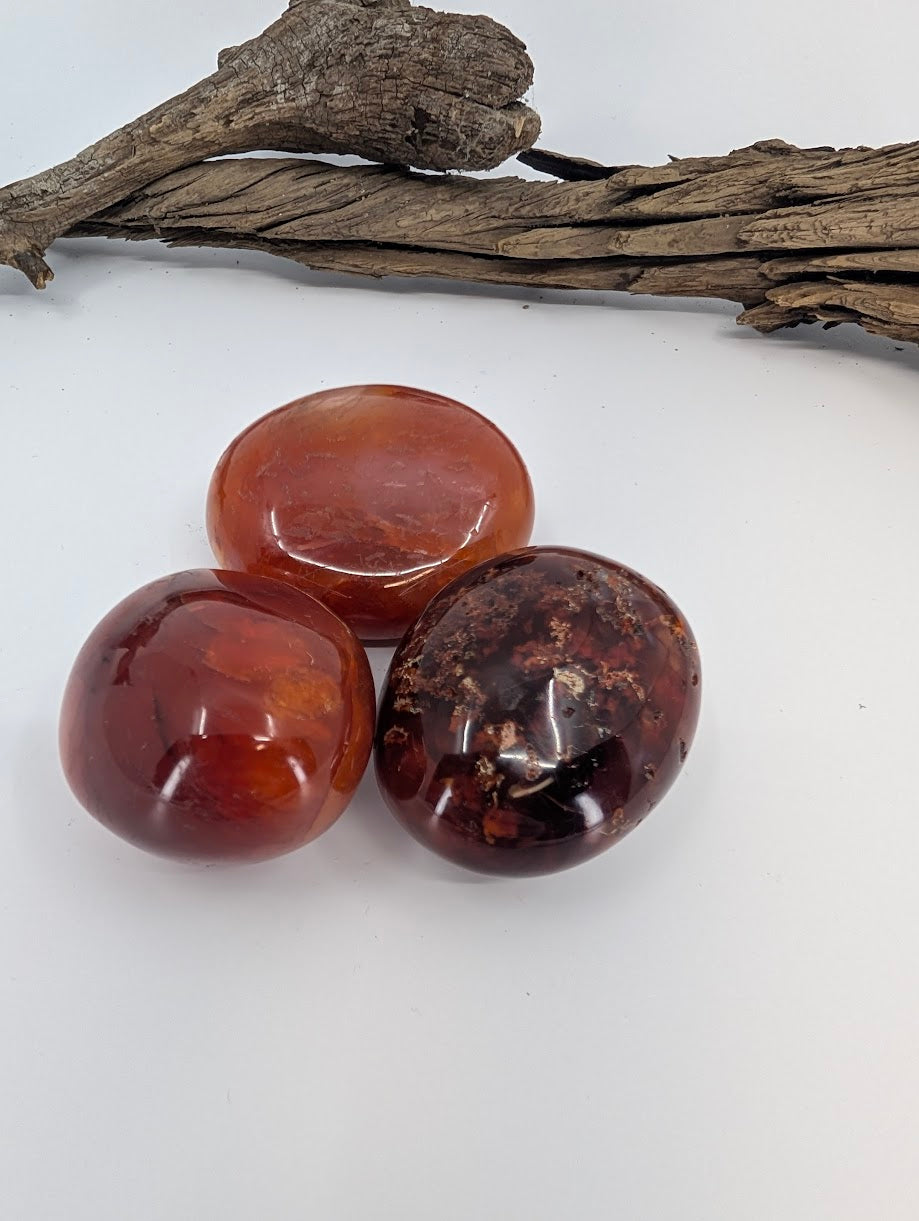
Une façon simple de commencer : tenez la pierre, nommez le résultat spécifique que vous souhaitez (terminer une tâche, aborder une conversation difficile, relancer un projet créatif), puis portez-la ou gardez-la sur vous pendant cette tâche. Il n'y a pas de durée de rituel requise. Certaines personnes préfèrent un bref pointage le matin avec la pierre en main ; d'autres la gardent simplement dans leur poche et la touchent lorsque la motivation diminue.
Associer la cornaline à d'autres pierres est une pratique courante, et la logique derrière chaque association se résume généralement à ce que vous essayez d'équilibrer :
- Citrine — souvent associée pour amplifier l'énergie créative et la motivation personnelle
- Quartz rose — équilibre le feu de la cornaline avec une énergie plus douce, axée sur les relations, comme on le voit dans des pièces comme un bracelet en quartz rose et cornaline
- Citrine ou œil de tigre — pour quiconque associe des pierres axées sur la motivation
Avant d'acheter, passez en revue une courte liste de contrôle : demandez si la couleur est naturelle ou traitée, posez des questions sur la provenance, demandez des photos claires à la lumière naturelle et confirmez la politique de retour du vendeur. Les prix varient considérablement selon la taille, la clarté et les détails de la sculpture, de sorte qu'une pierre roulée à 15 $ et une pièce sculptée à 200 $ peuvent toutes deux être légitimes selon ce que vous payez.
Quelques notes de sécurité s'appliquent quelle que soit la forme : ne pas ingérer d'eau infusée de cristal faite avec de la cornaline, car les pierres teintes ou traitées peuvent libérer des résidus, et traiter toute pièce décorative sculptée ou teinte comme un objet d'exposition et de port plutôt que quelque chose à mâcher ou à placer dans la bouche d'un enfant.
Pourquoi l'approvisionnement et l'artisanat sont importants pour les pièces en cornaline
La signification de la cornaline ne tient que si la pierre elle-même est réelle, correctement identifiée et honnêtement sourcée. Certains vendeurs réputés se concentrent sur des spécimens de qualité muséale et des pièces authentifiées, ce qui est plus important avec la cornaline qu'avec certains cristaux précisément parce que le traitement et la teinture sont si courants sur le marché.
Différentes pièces conviennent à différents objectifs :
| Produit | Idéal pour |
|---|---|
| Pierre roulée de cornaline — Grade A | Fabrication de bijoux, perlage, port en poche |
| Pierre de paume en cornaline rouge | Méditation, manipulation pendant un travail concentré |
| Cœur de cornaline – La pierre de la motivation | Cadeau, décoration de bureau, définition d'intention |
Si vous achetez en tant que collectionneur sérieux, privilégiez une provenance claire et un langage de classement cohérent plutôt que la seule couleur flashy. Si vous achetez pour un usage métaphysique personnel, l'ajustement et le toucher dans la main sont souvent plus importants que la symétrie parfaite, alors manipulez quelques options avant de décider, si possible.
Où trouver des pièces de cornaline authentifiées
Lire l'histoire de la cornaline et ses associations avec le chakra sacré est une chose. Trouver une pièce qui correspond réellement à ce que l'annonce prétend en est une autre, surtout avec une pierre aussi fréquemment teinte ou traitée thermiquement sans divulgation. Certains vendeurs se procurent des spécimens en accordant une attention particulière à la couleur naturelle et à l'origine vérifiable, ce qui est important si vous voulez une pierre dont le sens n'est pas sapé par l'incertitude quant à ce que vous tenez réellement.
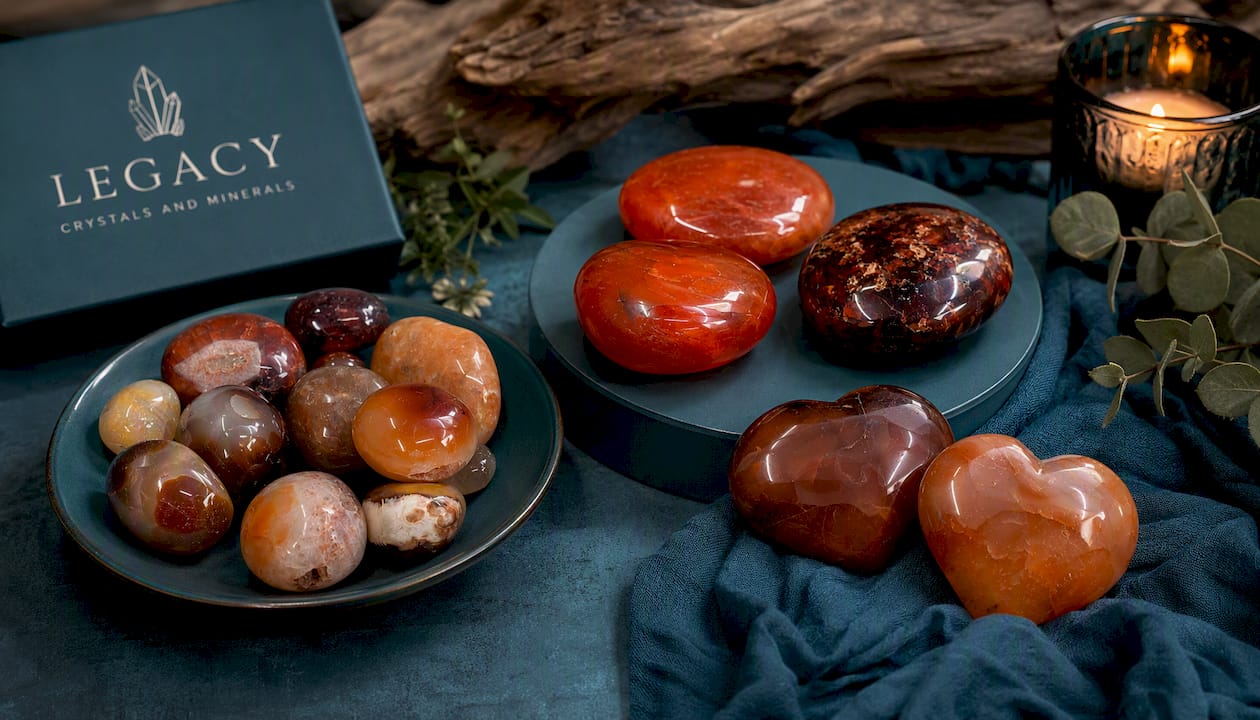
Pour un port quotidien ou des projets de perles, la Pierre roulée de cornaline — Grade A offre un point de départ durable et bien classé. Si votre objectif est la méditation ou la manipulation pendant les séances de travail, la Pierre de paume en cornaline rouge s'adapte mieux à cette pratique manuelle qu'une petite pièce roulée. Et pour quiconque achète avec une intention spécifique en tête, qu'il s'agisse d'une étape personnelle ou d'un cadeau pour quelqu'un qui retrouve son élan après un revers, le Cœur de cornaline – La pierre de la motivation est construit exactement autour de ce symbolisme. Parcourez la sélection actuelle de cornaline et consultez les photos des spécimens et les notes de provenance avant de choisir la pièce qui correspond à votre intention.
Sources
- Cornaline | Guérison, Protection & Force | Britannica
- Histoire et légende de la cornaline — Gem Society
- Minéraux
- Collection du Metropolitan Museum of Art — objet en cornaline
FAQ
Que symbolise la cornaline ?
La cornaline symbolise le courage, la vitalité, la créativité et la protection personnelle, des thèmes qui apparaissent constamment des amulettes égyptiennes antiques aux pratiques modernes du chakra sacré.
Quelle est la signification spirituelle de la cornaline ?
Dans la plupart des cadres métaphysiques, la cornaline est liée au chakra sacré et à l'élément feu, et elle est utilisée pour soutenir la confiance, la motivation et la créativité plutôt que le calme ou l'introspection.
À quoi sert une pierre de cornaline ?
La cornaline est couramment utilisée pour renforcer la confiance, surmonter la procrastination, soutenir l'endurance et ancrer les projets créatifs, en plus d'être portée quotidiennement en bijoux grâce à sa durabilité Mohs de 6,5 à 7.
Que signifie la cornaline dans la Bible ?
La cornaline apparaît dans certaines traductions bibliques parmi les pierres précieuses associées aux pectoraux sacerdotaux et à l'imagerie fondatrice, bien que les traductions varient et que certaines versions rendent le même terme hébreu ou grec par sardoine ou autre pierre rouge.
La cornaline est-elle une pierre naturelle ou est-elle toujours traitée ?
La cornaline est naturellement colorée en rouge-orange par l'oxyde de fer, mais la cuisson et la teinture sont des traitements commerciaux courants utilisés pour approfondir les matériaux pâles. La provenance et la divulgation du vendeur sont donc importantes lors de l'achat.


