

Les meilleurs cristaux pour le sommeil et comment les utiliser dès ce soir
L'améthyste, la lépidolite, la sélénite, la howlite, la pierre de lune et la tourmaline noire sont les six cristaux pour le sommeil qui méritent d'être essayés en premier. Chacun d'eux cible un problème de sommeil différent, de l'esprit agité aux rêves perturbés, et aucun ne nécessite de formation spéciale pour être utilisé.
L'action la plus efficace pour ce soir : placez une pierre roulée sur votre table de chevet, ou glissez un petit morceau roulé sous votre oreiller, et accompagnez-le de deux minutes de respiration lente avant d'éteindre la lumière. C'est tout. Le rituel compte autant que la pierre.
- Améthyste : calme un esprit hyperactif
- Lépidolite : apaise les réveils anxieux et les inquiétudes
- Sélénite : dissipe l'énergie lourde de la pièce (uniquement sur la table de chevet, jamais sous l'oreiller)
- Howlite : calme les pensées incessantes
- Pierre de lune : favorise un travail onirique plus doux
- Tourmaline noire : traditionnellement utilisée contre les cauchemars
Les cristaux sont des outils rituels, pas des traitements médicaux. Si l'insomnie persiste, consultez un professionnel de la santé.
Points clés à retenir
Un rituel de coucher cohérent, construit autour d'un ou deux cristaux apaisants, comme l'améthyste sur la table de chevet et l'howlite sous l'oreiller, favorise un meilleur sommeil en incitant le système nerveux à se détendre.
| Point | Détails |
|---|---|
| Commencez par l'améthyste | C'est la pierre de départ la plus recommandée pour calmer un esprit hyperactif avant de dormir. |
| Adaptez la pierre au problème | Associez la lépidolite à l'anxiété, la howlite aux pensées incessantes et la tourmaline noire aux cauchemars. |
| Respectez les minéraux fragiles | Gardez la sélénite, la célestine et le spath de satin sur la table de chevet, jamais sous l'oreiller. |
| Testez pendant deux semaines | Maintenez une configuration cohérente et enregistrez la qualité du sommeil avant de changer de pierres. |
| Achetez un ensemble prêt à l'emploi | Le cœur d'améthyste de rêve et les ensembles d'intentions de cristaux de guérison de Legacy Crystals and Minerals offrent un point de départ testé pour les nouveaux praticiens. |
Table des matières
- Quels cristaux pour le sommeil sont réellement retenus ?
- Comment créer un rituel du coucher autour de vos pierres de sommeil
- Associer des paires de cristaux à des problèmes de sommeil spécifiques
- Entretien et sécurité des cristaux près du lit
- Pourquoi les cristaux peuvent aider une routine de coucher
- Quels cristaux éviter près du lit
- Que dit réellement la science sur la guérison par les cristaux ?
- Essayez Legacy Crystals and Minerals pour votre ensemble de chevet
- Sources
- FAQ
Quels cristaux pour le sommeil sont réellement retenus ?
Tous les cristaux n'ont pas leur place près d'un lit. Ceux qui apparaissent encore et encore dans les collections axées sur le sommeil partagent quelques traits : ils sont calmants plutôt qu'énergisants, ils résistent à une manipulation nocturne, et ils sont largement disponibles sous forme de pierres roulées. Voici la liste annotée, classée approximativement par la fréquence à laquelle les praticiens des cristaux les utilisent en premier.
1. Améthyste
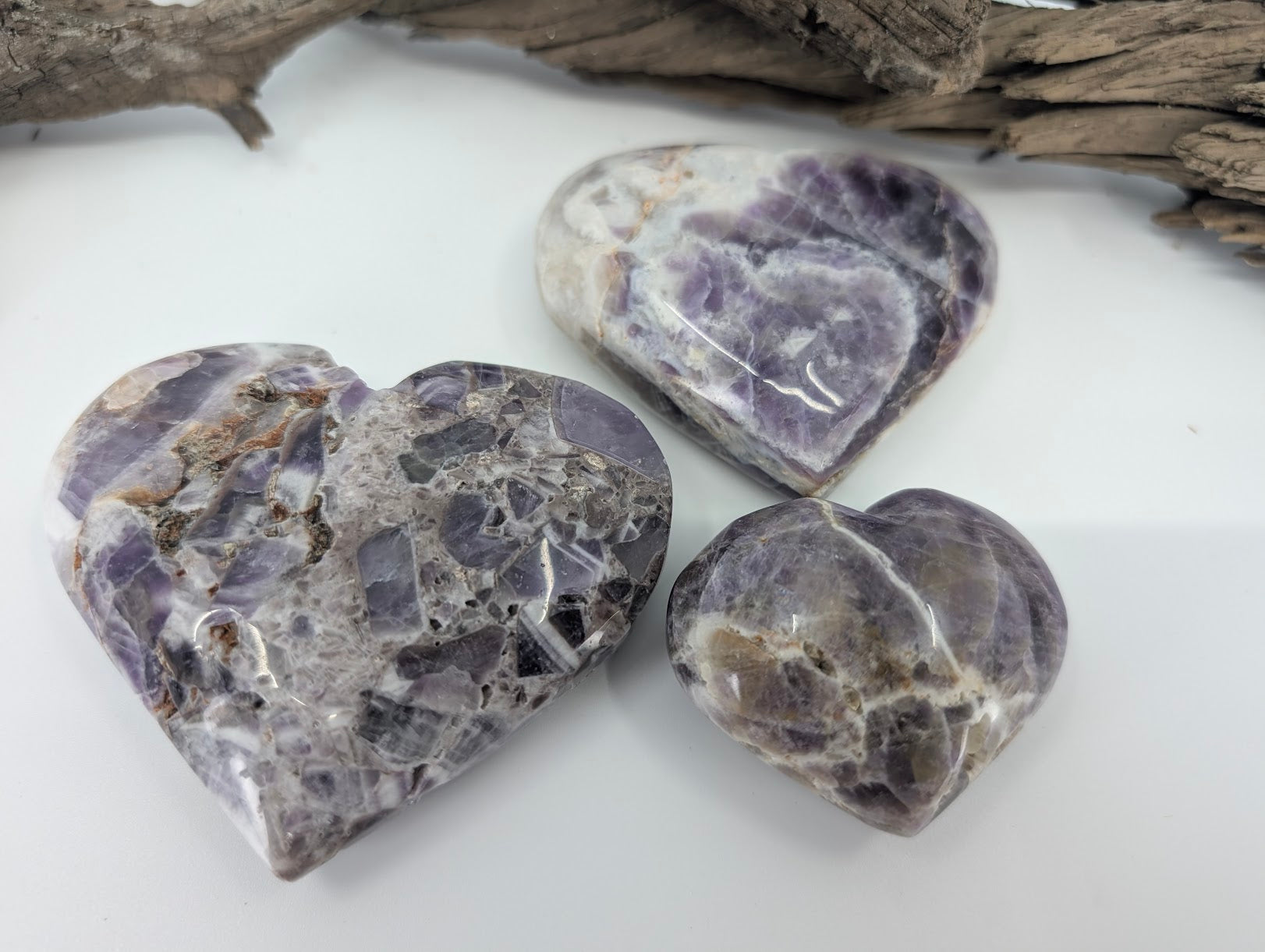
L'améthyste est le point de départ le plus largement recommandé pour le travail avec les cristaux axé sur le sommeil, et pour une bonne raison : elle est abordable, durable et associée à l'apaisement d'un esprit hyperactif plutôt qu'à un symptôme unique. Idéal pour : les pensées anxieuses générales et la difficulté à se détendre. Emplacement : sous l'oreiller (roulée) ou sur la table de chevet. Attention : les pointes brutes peuvent être coupantes pour la peau, il est donc préférable d'utiliser une pierre roulée pour une utilisation sous l'oreiller. Le cœur d'améthyste de rêve de Legacy Crystals and Minerals est spécialement conçu pour le travail intuitif au chevet du lit, ce qui en fait un premier achat pratique si vous n'achetez qu'une seule pierre.
2. Lépidolite
La lépidolite contient du mica lithinifère et est communément recommandée pour les nuits où l'inquiétude, et pas seulement une agitation générale, vous empêche de dormir. Idéal pour : l'éveil dû à l'anxiété. Emplacement : table de chevet. Attention : c'est un minéral tendre qui peut s'écailler, il faut donc le garder au sec et le manipuler délicatement.
3. Sélénite
La sélénite est appréciée pour la purification de l'espace, mais elle est douce et soluble dans l'eau, ce qui en fait un mauvais choix pour un contact direct avec la peau ou les pièces humides. Idéal pour : dissiper l'énergie lourde ou stagnante d'une chambre. Emplacement : rebord de fenêtre ou table de chevet uniquement, jamais sous un oreiller. Attention : tenez-la éloignée des humidificateurs et des zones éclaboussées.
4. Howlite
L'howlite est constamment recommandée pour calmer le bavardage mental, souvent associée à l'améthyste lorsque l'esprit ne veut tout simplement pas ralentir. Idéal pour : les pensées incessantes. Emplacement : sûre comme pierre roulée sous l'oreiller. Conseil d'achat : recherchez de petites howlite polies, de la taille d'un pouce.
5. Pierre de lune
La pierre de lune est liée au travail onirique et au traitement émotionnel pendant le sommeil. Idéal pour : les lecteurs qui souhaitent un rappel de rêve plus doux plutôt qu'intense. Emplacement : table de chevet, idéalement là où elle peut capter la lumière de la fenêtre. Attention : elle est modérément durable mais peut s'ébrécher si elle tombe sur des sols durs.
6. Tourmaline noire
Traditionnellement utilisée pour la protection, la tourmaline noire est une réponse courante à la question « qu'est-ce qui arrête les cauchemars ». Idéal pour : les cauchemars ou un sentiment général de malaise la nuit. Emplacement : près de la porte de la chambre ou dans un coin de la pièce. Conseil d'achat : les morceaux bruts conviennent ici, car vous ne les manipulez pas directement.
7. Quartz clair
Le quartz clair amplifie toute intention ou énergie à proximité, c'est pourquoi il doit être utilisé avec prudence. Idéal pour : définir une intention spécifique, mais évitez-le si vous êtes sujet aux rêves vifs ou lucides, car l'amplification peut intensifier l'activité onirique. Emplacement : table de chevet, à utiliser avec modération.
8. Quartz fumé
Le quartz fumé ancre l'énergie anxieuse ou dispersée. Idéal pour : l'associer à des pierres plus légères comme l'améthyste lorsque vous avez besoin à la fois de calme et d'ancrage. Emplacement : sous le lit fonctionne bien, car vous n'avez pas besoin de le voir ou de le toucher.
Le quartz rose (calme doux, centré sur le cœur) et la célestite (énergie douce et onirique) complètent la liste pour les lecteurs qui souhaitent quelques options secondaires une fois que l'ensemble de base leur est familier.
Pour ceux qui partent de zéro, une option pré-appariée élimine les conjectures. Les ensembles d'intentions de cristaux de guérison de Legacy Crystals and Minerals regroupent des pierres complémentaires afin que vous n'achetiez pas six pièces séparées en espérant qu'elles fonctionnent ensemble.

Conseil de Pro : Achetez des pierres roulées, pas des amas bruts, pour tout ce qui va sous un oreiller ou dans votre main. Les bords et pointes bruts sont pour la table de chevet, pas pour un contact direct avec la peau pendant la nuit.
Comment créer un rituel du coucher autour de vos pierres de sommeil
Un cristal posé dans un tiroir ne fait rien. Le rituel qui l'entoure est là où se trouve le véritable bénéfice, et il fonctionne parce que les routines de coucher cohérentes incitent le système nerveux à ralentir, qu'une pierre soit impliquée ou non.
Voici un simple rituel de relaxation de 60 à 90 minutes qui intègre naturellement un rituel de cristal dans la dernière ligne droite avant le sommeil :
- 60 à 90 minutes avant le coucher : tamisez les lumières, rangez le téléphone et commencez toute activité à faible stimulation qui vous convient (lecture, bain, étirements).
- 15 minutes avant le coucher : prenez votre pierre choisie et asseyez-vous ou allongez-vous dans un endroit calme.
- Respiration : inspirez en comptant jusqu'à quatre, expirez en comptant jusqu'à six, pendant huit à dix cycles. L'expiration plus longue est ce qui signale le calme à votre corps.
- Établissez une courte intention : une seule phrase, prononcée silencieusement ou à voix haute, comme « Je me libère des pensées d'aujourd'hui » ou « J'accueille un sommeil réparateur. »
- Placez la pierre : table de chevet par défaut, sous l'oreiller uniquement pour les pierres roulées comme l'améthyste ou l'howlite.
- Éteignez la lumière et laissez le rituel se terminer là. Pas de téléphone, pas de défilement.
L'emplacement n'est pas arbitraire. Sous l'oreiller ne conviennent que les petites pierres roulées et lisses. La table de chevet est le choix par défaut le plus sûr pour tout ce qui est fragile, brut ou plus grand. Sous le lit convient aux pierres d'ancrage comme le quartz fumé que vous n'avez pas besoin de voir ou de toucher. Les coins et les portes conviennent aux pierres protectrices comme la tourmaline noire. Les rebords de fenêtre sont à réserver aux pierres que vous souhaitez recharger à la lune, comme la pierre de lune ou la sélénite.
Testez une configuration pendant deux semaines avant de changer. Tenez un court journal nocturne, trois ou quatre mots suffisent, notant la vitesse à laquelle vous vous êtes endormi et si vous vous souvenez d'avoir rêvé. Deux semaines donnent au rituel lui-même le temps de devenir familier, ce qui est souvent ce qui entraîne l'amélioration.
Conseil de pro : Si vous oubliez le rituel la plupart des soirs, la pierre ne vous sera pas d'une grande aide. La régularité compte plus que le choix du cristal.
Associer des paires de cristaux à des problèmes de sommeil spécifiques
Les différentes difficultés de sommeil nécessitent des combinaisons différentes. Commencer avec une ou deux pierres et suivre les résultats pendant deux semaines est plus efficace que d'acheter huit pierres sans jamais savoir laquelle agit.
- Pensées incessantes au moment du coucher : améthyste sous l'oreiller, howlite sur la table de chevet.
- Cauchemars ou rêves agités : tourmaline noire près de la porte, quartz fumé sous le lit.
- Éveil dû à l'anxiété : lépidolite sur la table de chevet, associée à une baguette de sélénite pour purifier l'énergie de la pièce.
- Travail onirique intense ou rêves lucides : pierre de lune ou labradorite sur la table de chevet, introduites progressivement.
La combinaison d'une pierre apaisante avec une pierre d'ancrage ou protectrice est un schéma récurrent dans la pratique des cristaux car elle aborde à la fois un état interne (un esprit anxieux) et un état environnemental (une pièce qui semble perturbée). Si vous vous penchez spécifiquement sur l'aspect anxiété, un examen plus approfondi des cristaux pour l'anxiété peut vous aider à affiner davantage l'appariement.
Les pierres de travail onirique intense méritent une approche plus lente. La moldavite, la labradorite et la charoite peuvent augmenter la vivacité des rêves ou produire des rêves troublants chez certaines personnes, il faut donc les introduire une par une et consigner les résultats avant d'en ajouter une autre.
Entretien et sécurité des cristaux près du lit
Certaines pierres qui semblent robustes ne le sont pas du tout. La sélénite, le spath satiné, la célestite et la lépidolite sont toutes douces ou solubles dans l'eau, et elles doivent être placées sur la table de chevet, jamais sous un oreiller où la sueur ou l'humidité peuvent les dégrader.
- Évitez les pièces brutes, pointues ou de gros amas sous l'oreiller ; une petite pierre roulée est le seul format sûr pour un contact direct.
- Nettoyez les pierres de chevet mensuellement, ou toutes les deux semaines pendant une période stressante, en utilisant la lumière de la lune, un bol chantant, ou une fumée douce comme la sauge ou le palo santo.
- Rangez les pierres à l'abri de la lumière directe du soleil pour éviter la décoloration, et tenez les minéraux sensibles à l'eau éloignés des humidificateurs ou des rebords de fenêtres humides.
Un guide complet des méthodes de nettoyage et de stockage se trouve dans le guide de Legacy Crystals and Minerals sur l'entretien et le nettoyage de vos cristaux, à mettre en favori une fois que vous aurez constitué un ensemble de chevet complet.
Pourquoi les cristaux peuvent aider une routine de coucher
Aucune recherche évaluée par des pairs n'a montré que les cristaux guérissent l'insomnie ou modifient directement l'architecture du sommeil. Ce que la littérature sur l'hygiène du sommeil soutient, c'est que des routines cohérentes et apaisantes avant le sommeil améliorent les résultats du sommeil, et un rituel de cristal est exactement ce type de routine.
Les cristaux agissent ici comme des ancres, pas comme des médicaments. Une pierre donne à votre rituel du coucher un repère physique, quelque chose à tenir, à placer et à retrouver chaque nuit, ce qui est le même mécanisme derrière toute habitude de relaxation réussie.
Legacy Crystals and Minerals s'approvisionne en spécimens de qualité muséale avec une provenance documentée, et chaque description de produit sur le site distingue l'utilisation décorative et rituelle des allégations médicales. Si l'insomnie ou un trouble du sommeil diagnostiqué persiste, parlez-en à un professionnel de la santé plutôt que de vous fier uniquement aux pierres.
Quels cristaux éviter près du lit
Tous les cristaux n'ont pas leur place dans une chambre. Les pierres associées à l'énergie, à la motivation et à la concentration tendent à nuire au sommeil plutôt qu'à le favoriser. La cornaline, la citrine et le jaspe rouge sont couramment signalés pour augmenter la vigilance, c'est précisément pourquoi ils sont populaires sur les bureaux et dans les sacs de sport, mais mal adaptés à une table de chevet.
La logique est simple, même sans aucune donnée de laboratoire : ces pierres sont traditionnellement utilisées exactement pour l'objectif inverse, réveiller l'esprit plutôt que de le calmer. Si vous possédez déjà de la cornaline ou de la citrine pour le travail diurne axé sur la concentration, c'est très bien. Gardez-les simplement dans un espace de travail plutôt que dans une chambre.
Le quartz clair se situe dans une zone grise. Il n'est pas intrinsèquement stimulant, mais comme il amplifie l'intention et l'énergie environnante, il peut intensifier tout état dans lequel vous vous trouvez déjà, calme ou agité. Si vous avez le sommeil léger ou êtes sujet aux rêves vifs, il est conseillé d'essayer d'abord sans quartz clair, puis de l'ajouter uniquement si vous souhaitez un outil de définition d'intention plus puissant et délibéré.
Une règle simple couvre la plupart des incertitudes : si une pierre est commercialisée pour l'énergie, l'ambition ou la vivacité d'esprit, elle n'a pas sa place dans votre chambre. Réservez la table de chevet aux pierres décrites comme apaisantes, ancrantes ou protectrices à la place.
Que dit réellement la science sur la guérison par les cristaux ?
Il n'existe aucun essai clinique montrant que l'améthyste réduit le cortisol ou que la sélénite améliore la latence du sommeil. Aucune étude évaluée par des pairs ne démontre que les cristaux améliorent directement le sommeil, et les affirmations contraires doivent être lues avec scepticisme.
Ce qui a un solide fondement, c'est le côté comportemental de l'équation. La recherche sur l'hygiène du sommeil associe systématiquement un meilleur sommeil à des routines prévisibles, à une réduction de l'exposition aux écrans avant le coucher et à des rituels apaisants avant le sommeil, quel que soit l'objet qui ancre ce rituel. Un rituel de cristal emprunte cette même structure : une séquence d'actions fixes effectuées chaque nuit, se terminant par un moment de calme intentionnel.
Cela ne rend pas les cristaux insignifiants. Une améthyste roulée tenue pendant un exercice de respiration donne à vos mains quelque chose à faire et à votre esprit quelque chose sur quoi se concentrer, ce qui peut faciliter l'adhésion à l'exercice de respiration lui-même. La pierre est sans doute un accessoire pour l'habitude plutôt que l'ingrédient actif. Si vous abordez les cristaux pour le sommeil avec ce cadre, comme un outil qui soutient un comportement prouvé plutôt qu'un remède autonome, vous obtenez le réel bénéfice du rituel sans surestimer ce que le minéral lui-même fait.
Essayez Legacy Crystals and Minerals pour votre ensemble de chevet
Vous pourriez assembler un ensemble de sommeil en commandant des pierres auprès de plusieurs vendeurs et en espérant que les tailles, la qualité et les combinaisons fonctionnent ensemble. Legacy Crystals and Minerals élimine cette incertitude en sélectionnant des pierres spécifiquement pour un usage rituel, avec une provenance documentée derrière chaque spécimen au lieu d'une liste générique.

Si le plan de ce soir est une simple améthyste sur la table de chevet, le Cœur d'Améthyste de Rêve est façonné et dimensionné spécifiquement pour ce genre de travail intuitif au chevet. Si vous préférez commencer par un appariement assorti au lieu de deviner quelles pierres se complètent, les Ensembles d'Intention de Cristaux de Guérison regroupent des pierres apaisantes et d'ancrage afin que la combinaison soit déjà faite pour vous. Parcourez l'une ou l'autre option ce soir et préparez un rituel de chevet avant d'éteindre la lumière.
Sources
- Comment utiliser les cristaux pour le sommeil : Un guide complet pour des nuits réparatrices
- Cristaux pour le sommeil
- Guide des cristaux du soir : Meilleurs cristaux pour le sommeil | Thalira
- Meilleurs cristaux pour le sommeil : Ce qu'il faut savoir et comment les utiliser | Crystal Almanac
FAQ
Quelle pierre est la meilleure pour dormir ?
L'améthyste est la pierre de départ la plus communément recommandée car elle est associée au calme d'un esprit hyperactif, et elle est suffisamment durable pour une utilisation nocturne sous l'oreiller ou sur la table de chevet.
Quels cristaux devriez-vous placer près de votre lit ?
L'améthyste, la lépidolite, l'howlite, la pierre de lune et la tourmaline noire sont les pierres de chevet les plus fréquemment recommandées, chacune adaptée à un problème de sommeil différent, des pensées anxieuses aux cauchemars.
Quels cristaux peuvent aider à la fois au sommeil et à l'anxiété ?
La lépidolite et l'améthyste sont toutes deux couramment utilisées pour l'insomnie due à l'anxiété, la lépidolite étant spécifiquement recommandée pour les nuits où l'inquiétude est le principal obstacle à l'endormissement.
Puis-je dormir avec du quartz clair ?
Vous le pouvez, mais le quartz clair amplifie l'énergie et l'intention à proximité, il peut donc intensifier l'activité onirique ou l'agitation chez les dormeurs légers ; il vaut la peine d'essayer sans d'abord si vous êtes sensible aux rêves vifs.
Recommandé
- Cristaux pour les pratiques de méditation : un guide pratique – Legacy Crystals and Minerals
- Comment intégrer les cristaux dans votre routine de yoga – Legacy Crystals and Minerals
- Exemples de cristaux pour les rituels lunaires : 8 pierres et 3 modèles – Legacy Crystals and Minerals
- Cristaux pour les rituels de manifestation : votre guide 2026 – Legacy Crystals and Minerals


