

Comment incorporer les cristaux à votre routine de yoga
Les cristaux sont les plus efficaces en yoga lorsqu'ils sont utilisés comme ancres d'intention, comme frontières énergétiques et comme points focaux pendant les postures et la méditation. Les méthodes les plus directes sont les suivantes : placer des pierres au périmètre de votre tapis pour définir votre espace de pratique, en poser une en haut de votre tapis pour la visibilité, ou poser des pierres roulées lisses sur le corps pendant le Savasana. Les zones de placement courantes comprennent le front, le centre cardiaque, les paumes et le ventre. Quatre cristaux couvrent la plupart des intentions de yoga :
- Améthyste — calmante, favorise la méditation et le travail sur le chakra couronne
- Quartz clair — amplifie l'intention, aligne tous les chakras
- Quartz rose — ouvre le cœur, favorise l'auto-compassion, idéal pour les extensions arrière
- Sélénite — dissipe le bruit mental, favorise la réinitialisation énergétique avant ou après la pratique
Commencez avec une pierre. Tenez-la avant le cours, définissez une intention claire, puis placez-la là où elle restera visible ou en contact avec le corps pendant les postures statiques.
Table des matières
- Comment le yoga et les cristaux fonctionnent ensemble
- Comment les chakras se connectent aux cristaux dans le yoga
- Quels cristaux fonctionnent le mieux pour la pratique du yoga
- Guide étape par étape pour utiliser les cristaux pendant le yoga
- Comment les cristaux soutiennent la pleine conscience pendant le yoga
- Personnaliser l'utilisation des cristaux pour votre pratique du yoga
- Points clés
- Où trouver des cristaux de qualité pour votre pratique du yoga
- FAQ
Comment le yoga et les cristaux fonctionnent ensemble
Le yoga est une pratique corps-esprit-âme. Ses postures physiques (asanas), ses exercices de respiration (pranayama) et sa méditation travaillent ensemble pour construire l'équilibre, la concentration et le flux énergétique. Ce sont ces mêmes qualités que les cristaux sont utilisés pour soutenir.
Des styles comme le Hatha et le yoga réparateur, avec leur rythme plus lent et leurs tenues plus longues, créent des opportunités naturelles pour l'utilisation des cristaux. Les flows Vinyasa sont plus actifs, donc les cristaux fonctionnent mieux comme outils d'intention avant le cours ou pendant le Savasana final plutôt que pendant la séquence elle-même. Le Yin yoga, avec ses tenues prolongées au sol, est particulièrement bien adapté au placement de pierres directement sur le corps.
Les bénéfices des cristaux en yoga s'alignent étroitement avec ce que le yoga cultive déjà : la clarté mentale, la régulation du système nerveux et un sentiment de présence ancrée. Les cristaux ne remplacent pas la respiration ou la discipline. Ils créent un environnement qui rend ces états plus accessibles.
Comment les chakras se connectent aux cristaux dans le yoga
Le système des chakras décrit sept centres d'énergie principaux qui s'étendent le long de la colonne vertébrale. Chaque chakra a un emplacement, une association de couleur et une fonction énergétique. Les cristaux sont associés aux chakras principalement par la couleur et la qualité vibratoire, bien que les traditions varient.
- Chakra racine (Muladhara) — base de la colonne vertébrale, rouge/noir ; pierres d'ancrage comme la Tourmaline noire ou l'Hématite
- Chakra sacré (Svadhisthana) — bas-ventre, orange ; Cornaline ou Citrine
- Chakra du plexus solaire (Manipura) — haut de l'abdomen, jaune ; Citrine ou Œil de tigre
- Chakra du cœur (Anahata) — poitrine, vert/rose ; Quartz rose, Aventurine verte ou Jade
- Chakra de la gorge (Vishuddha) — gorge, bleu ; Aigue-marine ou Lapis-lazuli
- Chakra du troisième œil (Ajna) — front, indigo ; Améthyste ou Lapis-lazuli
- Chakra couronne (Sahasrara) — sommet de la tête, violet/blanc ; Améthyste ou Quartz clair
Les pratiques contemporaines des cristaux associent des pierres spécifiques à ces sept centres. Pendant le yoga, placer une pierre au niveau ou à proximité de son chakra correspondant pendant une posture ou le Savasana est une façon directe de travailler avec ce système. Un Quartz Rose sur le sternum pendant une extension arrière ouvrant le cœur, ou une Améthyste sur la couronne pendant la méditation assise, sont deux des applications les plus courantes.
Pour un aperçu plus approfondi des associations pierre-chakra, Legacy Crystals and Minerals propose un guide d'alignement des chakras dédié qui vaut la peine d'être mis en favori.
Quels cristaux fonctionnent le mieux pour la pratique du yoga
Tous les cristaux ne conviennent pas à toutes les pratiques. Les pierres suivantes sont les plus couramment utilisées, choisies pour leurs propriétés vibratoires et leur adéquation pratique avec les intentions du yoga.
- Améthyste — calme l'esprit, favorise l'intuition et le repos. Idéale pour la méditation, le travail sur le chakra couronne et les pratiques du soir. Ouvre et active le chakra couronne et aide à éliminer les schémas de pensée négatifs.
- Quartz clair — un amplificateur fondamental. Il renforce toute intention fixée et peut aligner tous les chakras, ce qui en fait la pierre la plus polyvalente pour tout style de yoga.
- Quartz rose — associé à l'amour de soi, à la compassion et à la conscience centrée sur le cœur. Particulièrement utile pendant les extensions arrière et les méditations axées sur la compassion. S'harmonise bien avec le travail sur le chakra du cœur.
- Sélénite — purifiante et clarifiante. Utilisée pour éclaircir l'esprit avant la pratique ou pour réinitialiser l'énergie d'un espace. La sélénite est également utilisée pour nettoyer d'autres cristaux.
- Tourmaline noire — fortes propriétés d'ancrage et de protection. Utile pour les pratiquants qui se sentent dispersés ou surstimulés. Placée à la base du tapis ou près des pieds.
- Hématite — active le chakra racine. Favorise l'équilibre et la concentration, particulièrement utile pendant les postures debout ou d'équilibre.
- Citrine — associée à l'abondance et à l'optimisme. Utile pendant les flows énergisants ou lorsque la motivation est faible. Remarque : de nombreux vendeurs font passer de l'améthyste traitée thermiquement pour de la citrine, alors achetez avec prudence.
Les pratiquants utilisent couramment l'améthyste, le quartz clair, le quartz rose et la sélénite comme ensemble de base, avec la tourmaline noire ou l'hématite ajoutées pour l'ancrage et l'aigue-marine pour une auto-réflexion ciblée. Une petite collection bien choisie est plus efficace qu'une grande. Moins de pierres signifie une intention plus claire.
Guide étape par étape pour utiliser les cristaux pendant le yoga
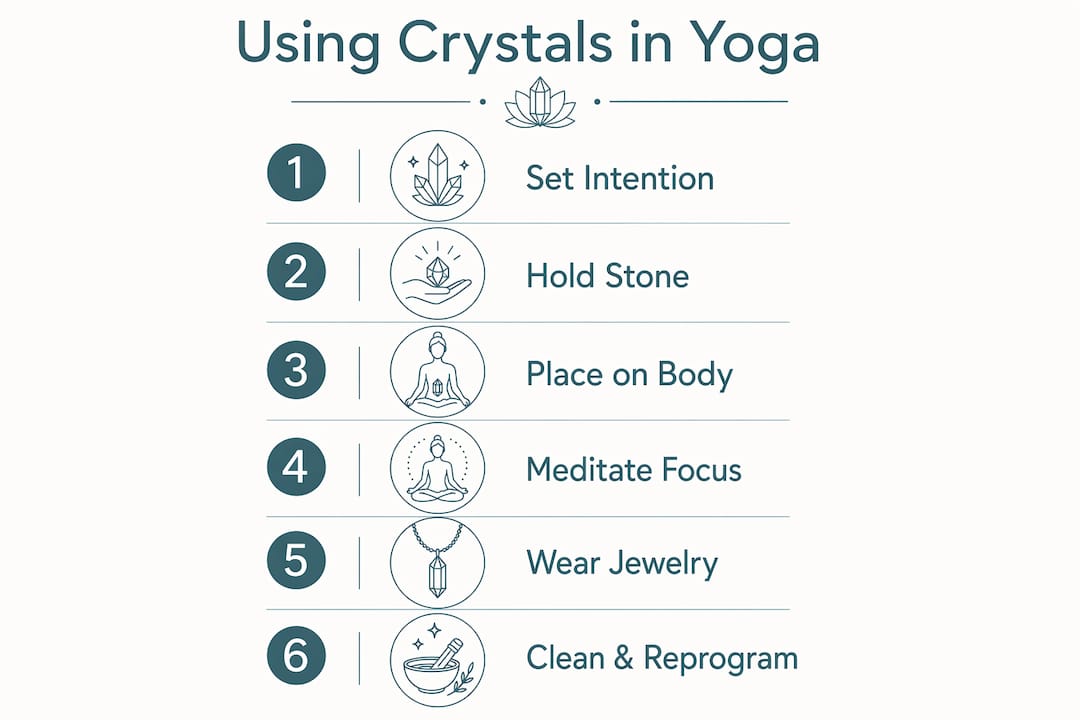
1. Définissez votre intention avant le cours
Tenez le cristal choisi dans les deux mains. Fermez les yeux, respirez lentement et visualisez l'objectif ou la qualité spécifique que vous souhaitez apporter à votre pratique. C'est ce qu'on appelle programmer la pierre. Il n'y a pas de phrase ou de formule requise. Le processus est une ancre personnelle et tangible pour la pleine conscience. Vous pouvez répéter une courte affirmation alignée sur les propriétés de la pierre tout au long de votre séance pour renforcer l'intention.
2. Placez les cristaux sur ou autour de votre tapis
Les placements courants incluent :
- En haut du tapis — maintient la pierre visible et présente tout au long de la séance
- Périmètre du tapis — quatre pierres aux coins créent une frontière énergétique
- Motif de grille de cristaux — pour les pratiquants qui travaillent avec plusieurs pierres, les disposer selon un motif géométrique autour du tapis amplifie l'intention collective
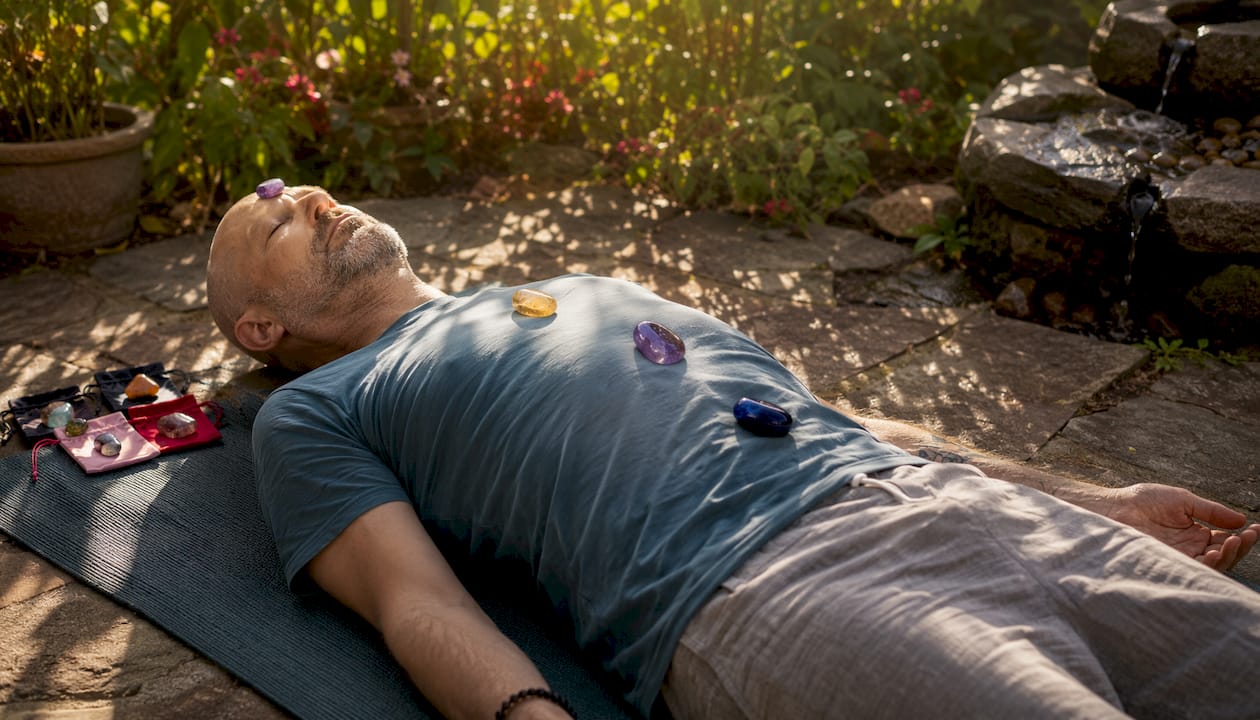
3. Placez les pierres sur le corps pendant le Savasana
Le front, les paumes, le centre du cœur et le ventre sont les placements les plus réceptifs. N'utilisez que des pierres lisses, roulées ou polies pour le placement sur le corps. Les pointes aiguisées ou les amas bruts sont dangereux près du corps pendant toute posture. C'est un point de sécurité non négociable : les cristaux grands ou pointus doivent rester hors du tapis pendant les asanas actifs.
4. Utilisez les cristaux comme points focaux de méditation
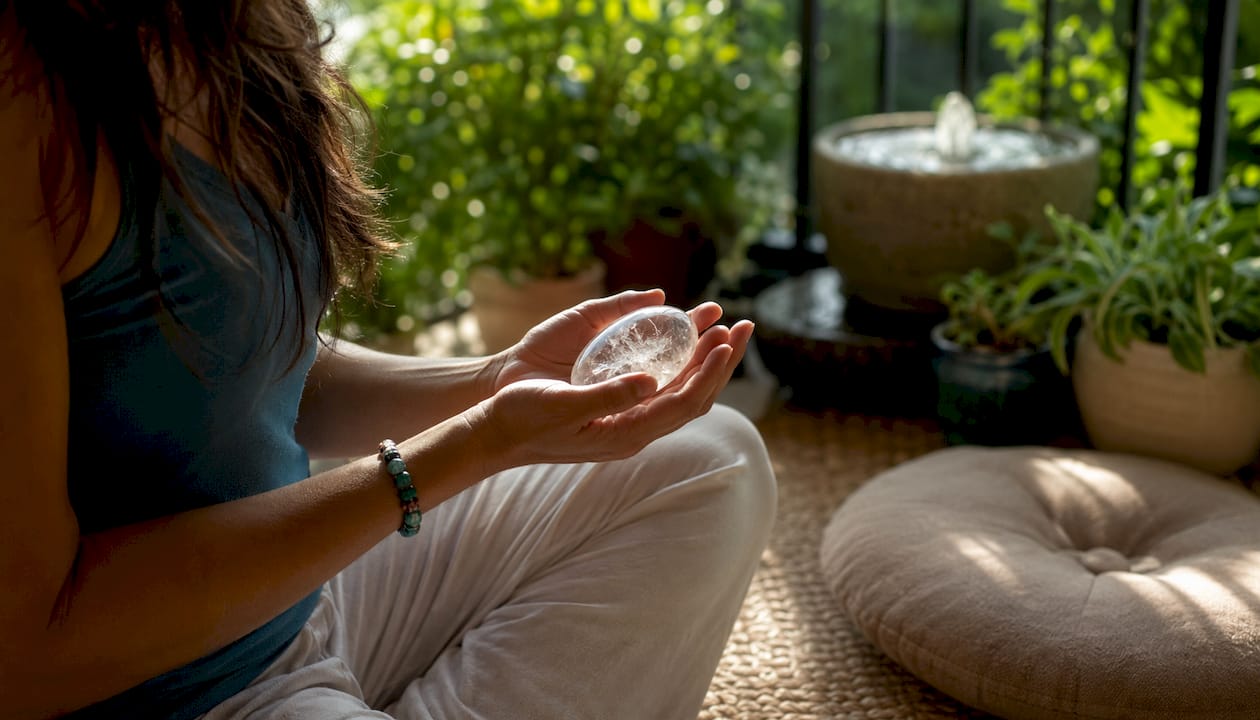
Pendant les exercices de respiration assis ou la méditation, tenez une seule pierre dans la paume ou placez-la au niveau des yeux. Concentrez-vous sur sa texture, son poids ou sa couleur comme ancre de concentration. Cette technique est particulièrement efficace pour calmer le bavardage mental pendant les tenues plus longues ou les séquences de pranayama.
5. Portez des bijoux en cristal pendant la pratique
Un bracelet en quartz rose ou un mala en pierres précieuses porté pendant la pratique maintient l'énergie de la pierre en contact continu avec le corps. Choisissez des pièces légères et lisses qui n'entraveront pas le mouvement.
6. Nettoyez et reprogrammez régulièrement
Les méthodes de nettoyage courantes incluent la fumée (sauge ou palo santo), le son (diapasons ou carillons), le clair de lune et la lumière du soleil. La méthode dépend des propriétés de la pierre — certains minéraux se décolorent ou se dégradent en plein soleil ou dans l'eau, alors recherchez chaque pierre avant de la nettoyer. Après le nettoyage, reprogrammez le cristal avec une nouvelle intention en utilisant le même processus de visualisation de l'étape 1.
Conseil de pro : Simplifiez l'entretien des cristaux. L'intention et l'attention maintiennent l'efficacité énergétique plus fidèlement que des rituels élaborés. Vérifiez chaque pierre périodiquement et réinitialisez-la lorsqu'elle semble "lourde" ou lorsque vos objectifs de pratique changent.
Comment les cristaux soutiennent la pleine conscience pendant le yoga
Les cristaux fonctionnent mieux comme rappels tangibles pour le travail intérieur. Tenir une pierre fraîche et lourde pendant la respiration donne au système nerveux quelque chose de concret à enregistrer, ce qui peut faciliter la transition vers un état concentré et présent. Cette qualité physique — le poids, la texture, la température — fait partie des raisons pour lesquelles les cristaux fonctionnent comme outils de pleine conscience, indépendamment de la croyance métaphysique.
Pendant la méditation ou le Savasana, un cristal placé sur le corps offre un point de repos à l'esprit. Le bavardage mental a tendance à se calmer lorsque l'attention a une ancre sensorielle spécifique. C'est le même principe que le comptage des respirations ou la répétition de mantras, appliqué à travers un objet physique.
Le rituel lui-même est important. Installer des cristaux avant la pratique, les choisir avec soin et les placer délibérément signalent tous à l'esprit que la séance commence. Cette transition de l'activité ordinaire à la pratique intentionnelle est là où se trouve une grande partie du bénéfice. Les cristaux ne remplacent pas la respiration, la présence ou la discipline, mais ils peuvent aider à créer un environnement où ces états sont plus accessibles.
Pour les pratiquants intéressés par l'extension de cette approche au-delà du tapis, Legacy Crystals and Minerals propose un guide pratique sur les cristaux pour la méditation qui couvre en détail la définition des intentions et l'intégration de la pleine conscience.
Personnaliser l'utilisation des cristaux pour votre pratique du yoga
Le facteur le plus important dans le choix des cristaux est l'intuition personnelle. Les guérisseurs certifiés par les cristaux soulignent que les pierres doivent être choisies en fonction des intentions et des besoins quotidiens plutôt que de règles strictes. Ce qui résonne un jour peut ne pas résonner un autre, et cette flexibilité est une caractéristique, pas un défaut.
Conseils pratiques pour construire une pratique personnelle :
- Commencez par une ou deux pierres. Une collection minimale favorise une intention ciblée. Ajouter plus de pierres n'approfondit pas automatiquement la pratique.
- Choisissez au ressenti. Dans un magasin, remarquez quelles pierres attirent votre attention ou sont chaudes dans votre main. Cette réaction est une donnée utile.
- Adaptez-vous à mesure que votre pratique évolue. Une pierre d'ancrage comme l'Hématite peut être la priorité pendant une période stressante ; le Quartz Rose peut prendre le pas pendant un travail axé sur le cœur. Laissez la collection évoluer avec vos besoins.
- Équilibrez les attentes. La recherche scientifique sur la guérison par les cristaux reste limitée, et les bénéfices sont largement attribués à l'effet placebo et au rituel conscient impliqué dans une utilisation intentionnelle. Cela ne diminue pas la valeur. Le rituel, le symbolisme et l'attention focalisée produisent des effets réels sur la concentration et la présence.
- Choisissez soigneusement votre fournisseur. L'authenticité est importante tant pour le travail énergétique que pour éviter les pierres mal représentées (l'améthyste traitée thermiquement vendue comme citrine est un exemple courant).
- Entretenez et nettoyez régulièrement. Les cristaux utilisés fréquemment bénéficient d'un nettoyage périodique. Des méthodes simples fonctionnent. La complexité n'est pas nécessaire.
Les conseils des experts soulignent constamment que l'intuition personnelle et la fluidité sont la voie vers une connexion plus profonde, et non l'adhésion à des correspondances prédéfinies. Le système est un point de départ, pas un manuel de règles.
Points clés
Les cristaux fonctionnent en yoga comme ancres d'intention, outils de pleine conscience et supports énergétiques, les bénéfices les plus constants provenant du rituel d'une utilisation intentionnelle et focalisée.
| Point | Détails |
|---|---|
| Méthodes de placement de base | Placez les pierres au périmètre du tapis, en haut du tapis, ou sur le corps pendant le Savasana à des points comme le front, le cœur ou les paumes. |
| Quatre pierres fondamentales | L'améthyste, le quartz clair, le quartz rose et la sélénite couvrent les intentions de yoga les plus courantes. |
| La sécurité d'abord | N'utilisez que des pierres lisses et polies sur le corps ; les pointes aiguisées ou les amas bruts sont dangereux pendant les postures actives. |
| Ancre de pleine conscience | Les cristaux calment le bavardage mental en offrant à l'esprit un point focal tangible et sensoriel pendant la respiration et la méditation. |
| Cristaux et Minéraux de l'Héritage | Propose des ensembles d'intention de cristaux de guérison conçus pour la définition d'intentions et le travail énergétique dans la pratique du yoga. |
Où trouver des cristaux de qualité pour votre pratique du yoga
L'approvisionnement en pierres authentiques est l'étape la plus sous-estimée par la plupart des praticiens. La différence entre une améthyste véritable et un substitut teint ou traité thermiquement n'est pas toujours visible, et les pierres mal représentées sont courantes dans le commerce de masse.
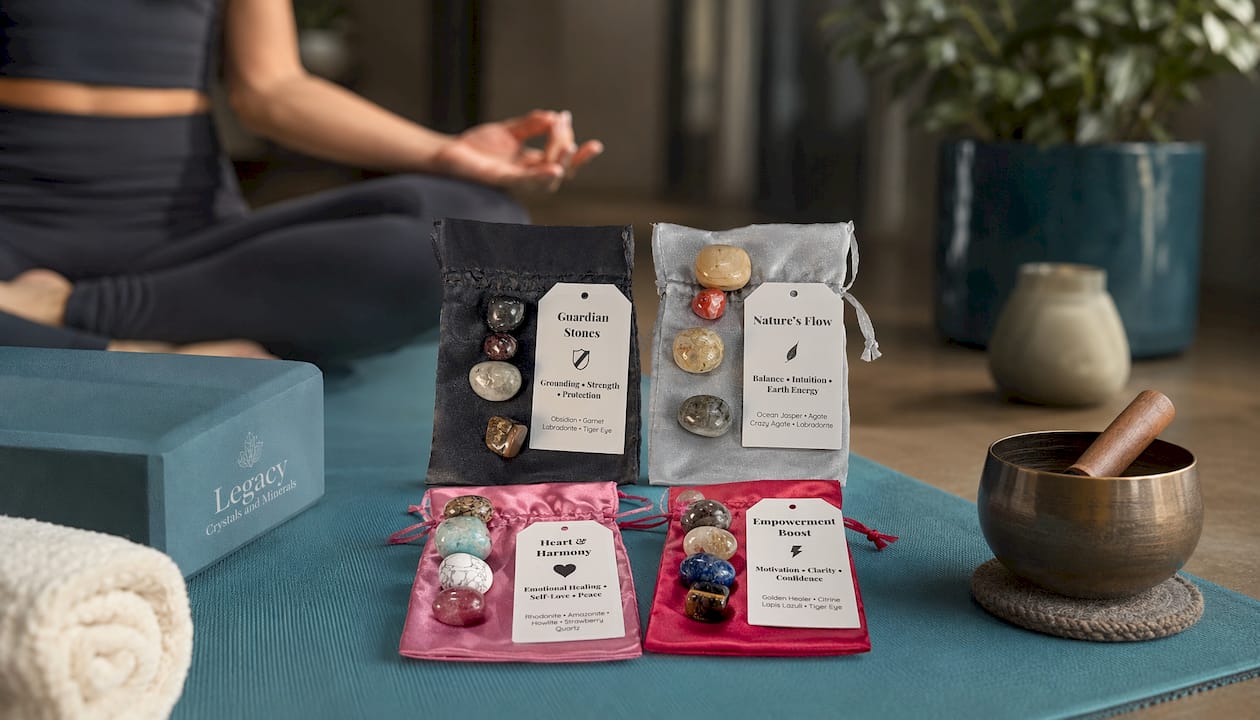
Legacy Crystals and Minerals propose des cristaux de qualité musée, des pierres polies et des pièces à porter, sélectionnées pour leur authenticité et leur but énergétique. Les ensembles d'intention de cristaux de guérison sont un point de départ pratique pour les pratiquants de yoga : des collections sélectionnées autour d'intentions spécifiques, de sorte que le travail de sélection est déjà fait. Chaque ensemble est adapté au travail énergétique, à l'alignement des chakras et au type de pratique ciblée et rituelle décrite dans ce guide.
Pour les pratiquants qui préfèrent les options à porter, le site propose des bijoux en cristal, notamment des bracelets et des pendentifs qui maintiennent l'énergie de la pierre en contact avec le corps tout au long d'une séance. Parcourez la collection complète sur Legacy Crystals and Minerals et utilisez les ressources éducatives pour associer les pierres à vos objectifs de pratique actuels.
FAQ
Comment utiliser les cristaux en yoga ?
Placez des pierres lisses et roulées en haut de votre tapis, autour de son périmètre, ou directement sur le corps pendant le Savasana à des endroits comme le front, le cœur ou les paumes. Tenez une pierre pendant la respiration ou la méditation comme point focal d'intention.
Quels cristaux sont bons pour la pratique du yoga ?
L'améthyste, le quartz clair, le quartz rose et la sélénite sont les plus couramment utilisés. La tourmaline noire et l'hématite sont ajoutées pour l'ancrage ; l'aigue-marine favorise une auto-réflexion ciblée.
Comment activer ou programmer un cristal pour le yoga ?
Tenez la pierre, fermez les yeux et visualisez votre intention spécifique pour la pratique s’y déverser. Répétez une courte affirmation alignée sur les propriétés de la pierre pendant votre séance pour renforcer cette intention.
Quels sont les sept principaux cristaux de guérison ?
Les traditions varient, mais un ensemble de départ largement référencé comprend le Quartz clair, l'Améthyste, le Quartz rose, la Tourmaline noire, la Citrine, la Sélénite et l'Hématite, chacun étant associé à des propriétés énergétiques distinctes et à des correspondances avec les chakras.
Les cristaux doivent-ils être nettoyés avant d'être utilisés dans le yoga ?
Le nettoyage avant utilisation est une pratique courante. Les méthodes courantes incluent la fumée (sauge ou palo santo), le son (diapasons), le clair de lune ou la lumière du soleil, choisies en fonction des propriétés de la pierre, car certains minéraux se dégradent avec l'eau ou une exposition prolongée au soleil.
Recommandé
- Comment intégrer les cristaux dans la pratique du Reiki – Legacy Crystals and Minerals
- Cristaux pour les pratiques de méditation : un guide pratique – Legacy Crystals and Minerals
- Les bienfaits du port de bijoux en cristal : un guide de bien-être – Legacy Crystals and Minerals
- Cristaux pour l'alignement des chakras : votre guide 2026 – Legacy Crystals and Minerals


